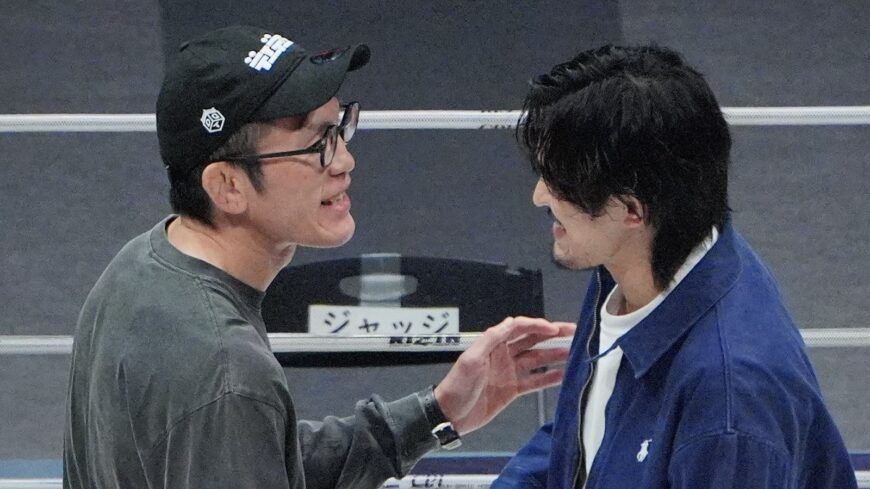
Shinya Aoki Fighting Style: The Flying-Submission Legend’s Last Fight
On November 8, 2026, Shinya Aoki walked to the center of the ring at RIZIN.55 in Chiba, bowed to a crowd that has watched him fight since 2003, and told them this was almost over. Three weeks out from his 44th birthday, coming off a knockout loss to Mikuru Asakura just two months earlier, he didn’t need the moment to be dramatic. He’s broken an opponent’s arm on pay-per-view and then flipped off the crowd. He’s submitted a murderers’ row of Japanese and Southeast Asian lightweights across three different promotions. A quiet retirement announcement was never going to be the strangest thing he’s done in a cage.
The Grappling Blueprint Behind Aoki’s Fighting Style
Aoki’s nickname, Tobikan Judan, translates roughly to “The Grand Master of Flying Submissions,” and it undersells how layered his base actually is. He holds a third-dan black belt in Kosen judo — the newaza-heavy variant built around ground control rather than standing throws — and a Brazilian jiu-jitsu black belt under Yuki Nakai, one of the most respected grapplers to come out of Japan’s Shooto scene. Add an A-class Shootist rank in shoot wrestling and a long-running relationship with Eddie Bravo’s 10th Planet system, and you get a fighter who treats the ground as home address rather than a fallback plan.
What makes the blend dangerous is sequencing. Aoki doesn’t look to strike his way into exchanges; standing, he closes distance with judo trips, chain-wrestles from the clinch, or simply pulls guard and starts working. Once the fight hits the mat, he cycles between shoot wrestling scrambles, judo pins, and 10th Planet’s rubber-guard entries so fast that opponents are often still playing defense against the last position when the next submission attempt arrives. Armbar into omoplata into a leg entanglement, all inside one scramble, is a normal sequence for him — not a highlight-reel outlier.
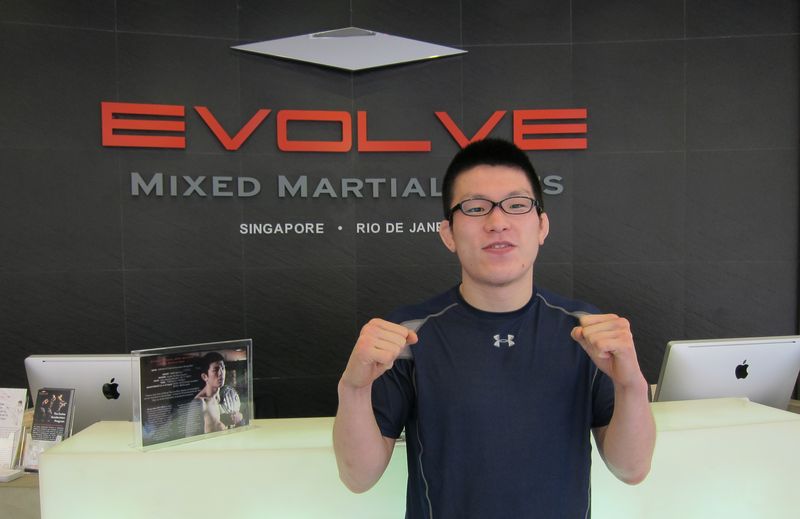
Aoki has trained and taught out of Evolve MMA in Singapore for over a decade, building the technical base behind his fighting style.
The Aoki-Plata and the Submissions That Carry His Name
Most fighters get a nickname. Aoki got a submission. The “Aoki-plata,” a mounted gogoplata, is exactly as uncomfortable as it sounds — he traps an opponent’s head and arm from the mount, slides a shin across the throat, and locks the position down before most lightweights even recognize the setup. He’s finished fights with it against Joachim Hansen in 2006 and Katsuhiko Nagata in 2008, and used a related flying triangle to finish Clay French that same era.
His flying attacks are the signature, but they’re also a trap for anyone studying him on film. Against Russia’s Rasul Yakhyaev, Aoki leapt for a flying armbar, missed the finish by inches, and converted the failed attempt directly into an omoplata sweep on the way down — turning a miss into a dominant position without his feet touching the mat in between. That’s the real skill underneath the highlight-reel label: he’s not gambling on flashy submissions, he’s using them as connective tissue between positions. Leg locks round out the arsenal too. His heel hook finish of Eddie Alvarez at the end of 2008, and an Achilles lock that ended a Dream lightweight title defense against Tatsuya Kawajiri in under two minutes in 2010, show he was hunting legs years before the rest of MMA caught up to leg-lock metas.

The Hirota Arm Break That Still Defines Him
No single fight explains Aoki’s reputation better than December 31, 2009, against Mizuto Hirota at Dynamite!! 2009. Aoki caught Hirota in a hammerlock early in round one. Hirota, then Sengoku’s lightweight champion and openly hostile toward Aoki in the build-up, refused to tap. Aoki kept cranking. The sound of the break carried through the arena before the referee could get in to stop it, and Hirota’s arm hung limp as Aoki dismounted.
What happened next is the part people actually remember. Aoki stood over his beaten opponent, stuck out his tongue, flashed a middle finger, and ran a lap around the ring flipping off the crowd. The backlash was immediate — his own gym, Paraestra Kasai, cut ties with him over the display, even as he continued fighting under its banner in some circles. It’s the ugliest moment of his career and also the clearest demonstration of his actual approach to finishing: Aoki doesn’t look for taps, he looks for breaks, and he’s been upfront for years that forcing a fighter to choose between submitting and getting hurt is the point, not a side effect.

Four Belts, Three Promotions, One Lightweight Division
Aoki’s resume reads less like a fighter’s and more like a division’s entire history compressed into one man. He won the DREAM Lightweight Championship at Dream 11 in October 2009, beating Joachim Hansen for a title he’d defend twice, including the Achilles-lock finish of Kawajiri. Before that, he’d already claimed the Shooto Welterweight title and the short-lived WAMMA Lightweight Championship, giving him a case as the most accomplished Japanese lightweight of his generation before he’d even left for Southeast Asia.
The move to ONE Championship extended the run rather than slowing it down. He won the ONE Lightweight World Championship in April 2013 with a second-round rear-naked choke over Kotetsu Boku, then reigned for 1,316 days before losing the belt — only to reclaim it against Eduard Folayang in March 2019. Across both reigns and every promotion combined, 32 of his 49 career wins have come by submission, a finish rate most grapplers in the sport’s history can’t touch.

Longevity is its own part of the resume. Aoki turned pro in 2003 and was still booking fights against opponents born after his debut two decades later, including a 2022 crossover bout with judoka-turned-fighter Yoshihiro Akiyama at ONE X — a spectacle card built around legacy names rather than title implications. He won that one too, by submission, at 39 years old. Very few fighters stay technically relevant across three separate eras of a sport that was still inventing its own rulebook when they started; Aoki spent his entire career being the one opponents had to specifically game-plan for, not a name they could overlook on the way to someone else.

Aoki at a ONE Championship weigh-in, one of dozens of staredowns across a career that spanned Shooto, DREAM, ONE, and RIZIN.
Why His Final Fight Against a Sakuraba Fits
RIZIN didn’t need to manufacture symbolism for Aoki’s send-off — it already existed. At RIZIN’s launch event on December 29, 2015, Aoki beat Kazushi Sakuraba, the godfather of Japanese MMA, by first-round TKO. Eleven years later, his retirement fight on December 31 at Vantelin Dome Nagoya is against Taisei Sakuraba, Kazushi’s son, in a three-round, 71-kilogram contest. RIZIN CEO Nobuyuki Sakakibara announced the booking from inside the ring during the RIZIN.55 intermission, with Aoki walking out to his own entrance music to confirm it himself.
It’s a fitting closing argument. Aoki’s career opened as part of the generation that inherited the sport from the Sakurabas and the Gracies — he lost to Kron Gracie by guillotine at a 2013 Metamoris submission-only match, a reminder that even legends get caught — and it closes against the next generation of the family whose father he beat to help launch the promotion that’s now sending him out. He’s 49-13-1, chasing his 50th career win in his actual last fight, which is a cleaner ending than most 23-year careers get.

Building an Aoki-Style Grappler in TKO Tycoon
If you’re drafting a fighter in TKO Tycoon around this archetype, the Aoki blueprint says invest everything in submission offense and scramble recovery before you touch striking power. A low-power, high-grappling build looks weak on paper against a knockout artist, but Aoki spent two decades proving that a fighter who can turn every clinch and every ground exchange into a live submission threat doesn’t need to win the standup at all — he just needs to get the fight to the mat once. Prioritize guard retention and submission chaining attributes over raw strength, and treat takedown defense as optional if your ground offense is live enough to make opponents regret taking you down in the first place.
A Legacy That Outlasts the Final Scorecard
Whatever happens against Taisei Sakuraba on New Year’s Eve, Aoki’s submission total and his influence on how Japanese MMA approaches the ground game aren’t getting erased by one more result. He’s the rare fighter whose style — flying, aggressive, occasionally reckless, always finish-first — actually changed how opponents prepared for him, forcing a generation of lightweights to study leg entanglements and rubber guard defense specifically because of what he did to people who didn’t. Coaches at gyms across Japan and Singapore built entire scramble curricula around stopping him, which is a strange kind of tribute for a fighter who spent half his highlight reel getting booed for how he celebrated.
Bet on Aoki here, and it’s hard to argue with the logic even at 43: he’s finishing fights off scrambles most lightweights half his age can’t recognize in time, and a three-round 71-kilogram contest against an opponent making his high-profile debut against a legend is exactly the kind of fight where experience and timing beat youth and power. Win number 50 is there to be taken. Whether he gets it or not, that part of the ledger — the part that actually matters for how this era of MMA remembers him — is already settled.
Sources
- Shinya Aoki — Wikipedia — career record, titles, and technical background
- 5 Of Shinya Aoki’s Best Submission Victories — ONE Championship — signature finishes and submission history
- Shinya Aoki To Retire From MMA After Taisei Sakuraba Fight At Super RIZIN 6 — MiddleEasy — retirement fight announcement details
- Shinya Aoki fighter profile — Tapology — full professional MMA record