Flying Knee in MMA: The Highlight-Reel Finish That Still Catches Everyone
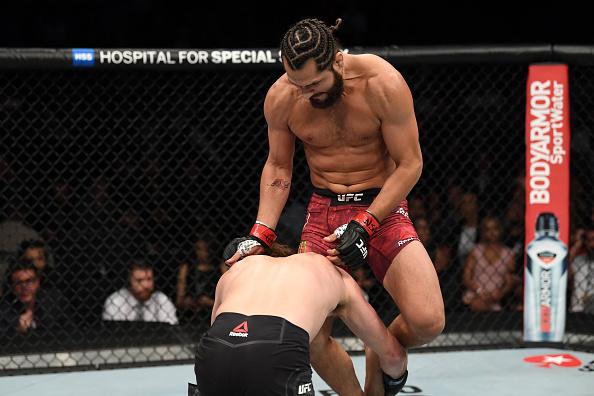
Five seconds. That’s all it took Jorge Masvidal to end Ben Askren’s night at UFC 239 — a flying knee timed so perfectly to Askren’s takedown entry that the broadcast team barely got the opening bell call out before the referee was waving it off. It remains the fastest knockout in UFC history, and it’s also the cleanest example of why the flying knee is one of the most feared — and most misunderstood — weapons in MMA. It isn’t a trick. It’s a counter, and it keeps working because fighters keep giving it the exact opening it’s built to punish.
Why the Flying Knee Works
A flying knee isn’t a fighter jumping around looking for a highlight. At its core, it’s a timing weapon built to punish a very specific mistake: a level change. When an opponent drops his head and shoots forward for a takedown, or simply leans in with his chin dropping into range, he’s unknowingly lined up the exact trajectory a leaping knee needs. The attacker reads the forward motion, drives off the back leg, and meets the incoming head with the point of the knee before the takedown ever arrives.
That’s the mechanical secret behind almost every famous flying knee knockout: the knee isn’t chasing the target, the target is running into it. The strike only needs to travel a short, direct line because the opponent’s own momentum closes most of the distance. That’s also why it looks so much more violent than a normal knee strike — two bodies are colliding instead of one strike landing on a stationary target.
The Counter Nobody Sees Coming: Masvidal vs. Askren
Masvidal–Askren is the textbook case because the setup was so obvious in hindsight. Askren, an unbeaten welterweight champion in both Bellator and ONE Championship before he ever signed with the UFC, opened the fight by closing distance and dropping his level almost immediately — his entire game plan was built on getting the fight to the floor. Masvidal, a battle-tested veteran who had seen every version of that entry, sprinted forward to close the gap first and left his feet right as Askren’s head dipped. The knee landed flush on the chin, Askren was unconscious before he hit the canvas, and Masvidal threw a handful of follow-up punches before the referee could even get between them. Total time: five seconds. It turned Masvidal into a pay-per-view headliner overnight and gave the sport its most replayed flying knee ever.
The Modern Standard: Cory Sandhagen vs. Frankie Edgar
If Masvidal’s knee was about beating a takedown to the spot, Cory Sandhagen’s finish of Frankie Edgar showed the pure striking version of the technique. At UFC Fight Night in February 2021, Sandhagen — a lanky, high-volume bantamweight kickboxer — used Edgar’s forward pressure against him, jumping into a knee that connected flush as Edgar advanced. The finish came just 28 seconds into the fight, the second-fastest flying knee knockout in UFC history behind only Masvidal’s. Unlike Askren, Edgar wasn’t shooting a takedown — he was simply pressing forward behind his hands, and that was enough of an opening. It’s a reminder that the flying knee doesn’t only punish wrestlers; any fighter who closes distance in a straight line without covering the center of the cage can walk into it.


Not a New Weapon
It’s tempting to treat the flying knee as a product of the current, more athletic generation of fighters, but it’s been a finishing move since the UFC’s earlier years. Jose Aldo used one to defend his featherweight title against Chad Mendes at UFC 142 in January 2012, turning out of a clinch exchange in the final second of round one and catching Mendes clean as he came forward — a knockout so abrupt it’s still shown in “greatest knockouts” reels more than a decade later. Even earlier, B.J. Penn closed out a lightweight title defense over Sean Sherk at UFC 84 in 2008 with a flying knee and follow-up ground strikes. The athleticism required hasn’t changed; what’s changed is how often fighters are willing to throw it, because tape study has made the setup more recognizable and more fighters are drilling it specifically instead of stumbling into it.

How Fighters Actually Train It
Despite how spontaneous it looks, the flying knee is a drilled technique with a specific checklist, not an improvised leap. Coaches teach fighters to load the strike off the rear leg the same way they’d load a rear kick, driving the hips forward and up rather than jumping straight up and hoping gravity does the work. The free leg tucks tight to protect the groin and keep the body compact in the air, and the arms either guard the face or reach to post on the opponent’s shoulders for extra lift and control on landing. Most of the drilling happens on pads and in sparring against a partner who’s told to shoot in on command — the goal isn’t raw athleticism, it’s recognizing the exact half-second window where a head drops into range and reacting without hesitation. Fighters who throw it well, like Romero and Sandhagen, aren’t more explosive than everyone else in the room; they’ve simply drilled the read until it’s automatic.
How to Defend Against It
The counter to a flying knee is almost insultingly simple on paper: don’t give the opponent a dropped head to aim at. Wrestlers are coached to change levels off an angle instead of charging straight down the pipe, and to keep at least one hand up to intercept a knee even mid-shot. Strikers are told to walk opponents down behind a high guard rather than leaning the chin forward, since a knee can’t find a target that isn’t there. The other defense is pure spacing — staying just outside the range where a jump can close the distance, since the flying knee’s power comes from the attacker’s forward momentum meeting the defender’s own. Fighters who get caught by it on tape almost always made the same error: they closed distance with their head leading instead of their hands.
The Risk Behind the Highlight
For every flying knee that ends a fight in five seconds, there are dozens that miss, get checked, or get the attacker taken down hard. Leaving your feet means committing your full weight to one strike with no way to change direction mid-flight — if the opponent slips the angle or simply doesn’t close distance the way the attacker expects, the fighter throwing it lands awkwardly, off-balance, and directly in range for a takedown or a counter punch. That’s the actual risk/reward trade that makes it a highlight-reel move instead of a base technique: it only works when the read is right, and a wrong read can hand the opponent exactly what the knee was trying to prevent. Coaches generally teach it as a counter to be set up by a specific opponent tendency, not a strike to throw on instinct.
Who’s Still Landing It
The flying knee hasn’t slowed down as a counter-wrestling tool, either. Yoel Romero built part of his reputation on it, most notably stopping former champion Chris Weidman at UFC 205 in November 2016 — Weidman shot a double-leg with 24 seconds left in the third round, and Romero met him in the air before the takedown ever landed, ending the fight on the spot. It’s the same read as Masvidal’s, just against a bigger, more decorated wrestler, which is part of why it’s still held up as one of the great counter-wrestling knockouts in the sport.
And it’s still producing fresh highlights. At UFC Vegas 115 in April 2026, 20-year-old prospect Alice Pereira rendered Hailey Cowan unconscious with a flying knee 4:24 into the second round, becoming the youngest female fighter to win — and finish — a fight in UFC history. Cowan had actually rocked Pereira and scored a takedown earlier in the fight, but the moment the action returned to the feet, Pereira found the same opening fighters have been finding for two decades: a dropped guard, a forward lean, and one clean strike to end it.

Building a Flying-Knee Finisher in TKO Tycoon
The same risk/reward math shows up if you’re managing a roster in TKO Tycoon. A fighter built around a flying knee counter wants high explosiveness and timing attributes paired with solid chin durability — because every miss leaves them exposed exactly the way Masvidal or Romero would be if the read were wrong. It’s a build that pays off against opponents with heavy takedown tendencies or pressure-forward strikers, but it’s a bad fit for a cautious, counter-heavy game plan that never gives the attacker a clean entry to jump into. The lesson from the real cage applies in the game too: the knee is only as good as the opponent’s willingness to walk into it.
The Takeaway
The flying knee survives in MMA for the same reason calf kicks and guillotines do: it directly punishes a mistake fighters keep making. As long as wrestlers keep dropping their heads on entries and strikers keep pressing forward without covering up, there’s going to be a window for someone athletic enough to jump into it. Expect the next truly viral UFC knockout to come from exactly this setup — it’s not a gimmick move fading out of the sport, it’s one of the few finishes that gets more dangerous as fighters get more athletic, not less.