Forrest Griffin vs Stephan Bonnar: The Fight That Saved the UFC
Six months before that fight, Zuffa had already burned through roughly $34 million trying to keep the UFC alive, and the company’s owners were reportedly prepared to shut it down if The Ultimate Fighter failed to draw an audience on Spike TV. Nobody in that building on April 9 knew they were about to watch the fight that would decide it.
The UFC Was Nearly Bankrupt Before This Fight Happened
By late 2004, the Fertitta brothers and Dana White had sunk their own money into a promotion that couldn’t get sanctioned in most states, couldn’t land a cable deal, and couldn’t turn a profit on pay-per-view buys alone. Senator John McCain had spent years calling the sport “human cockfighting” and lobbying all 50 governors to ban it; by the early 2000s, 36 states still had laws on the books restricting it, and the Nevada Athletic Commission — the gatekeeper to the UFC’s home market and its casino money — had refused to sanction events for years before finally relenting in 2001.
The Ultimate Fighter was a last roll of the dice: a reality show pitching unknown fighters living in a house together, competing for a UFC contract, airing for free on Spike TV in a slot nobody expected to perform. If the ratings didn’t hold through the finale, there was no guarantee of a second season — or a company to make one. That finale needed a main event that justified the gamble. Instead, it got a fight that outperformed every expectation anyone in that building had.
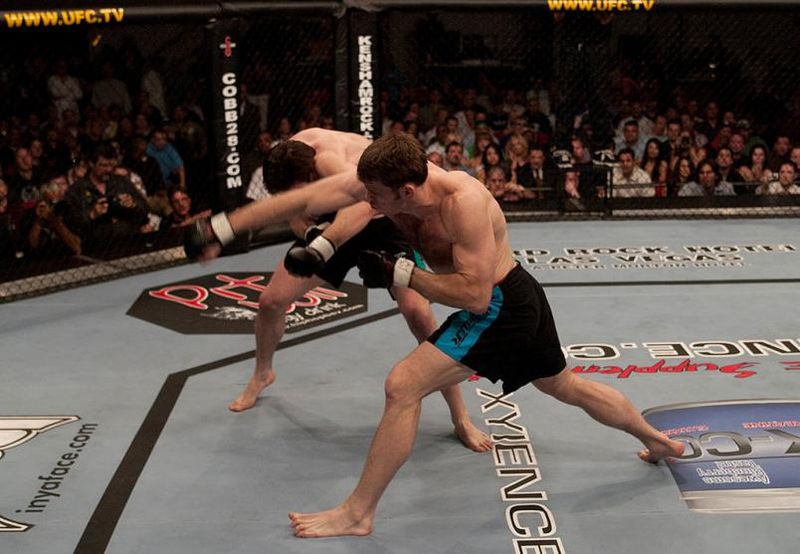
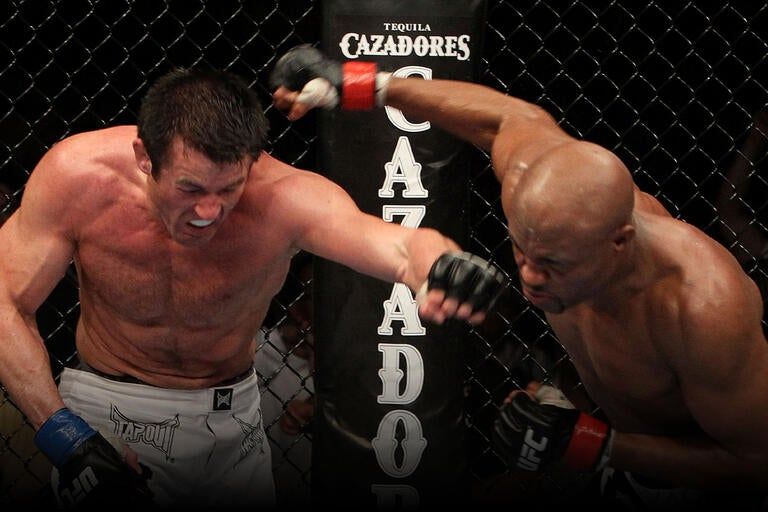
Griffin and Bonnar traded at a pace neither man let up for fifteen straight minutes. Photo: UFC.com
Two Fighters Nobody Outside the Gym Had Heard Of
Forrest Griffin wasn’t even supposed to still be fighting by 2005. He’d broken his arm in a fight the year before, quit mixed martial arts, and taken a job as a police officer in a small Georgia town. A friend, Frank Bishop, talked him into trying out for the show by telling him UFC matchmaker Joe Silva was looking for him — Griffin had to be talked onto the plane. Stephan Bonnar, nicknamed “The American Psycho,” came from a kickboxing and Muay Thai background and threw volume nobody his size should have been able to sustain over three rounds. Neither man had a win that meant anything outside the sport’s small core audience. Both were on the show because the UFC needed house fighters, not because anyone projected stardom.
That lack of pedigree is exactly what made the fight work. Griffin and Bonnar weren’t protecting a reputation or playing it safe for a judges’ decision they assumed they’d win. A cop who’d already quit the sport once and a kickboxer with something to prove fought like men who understood this was the only shot they were going to get, and they fought that way for all three rounds.
Fifteen Minutes That Rewrote What a UFC Main Event Could Be
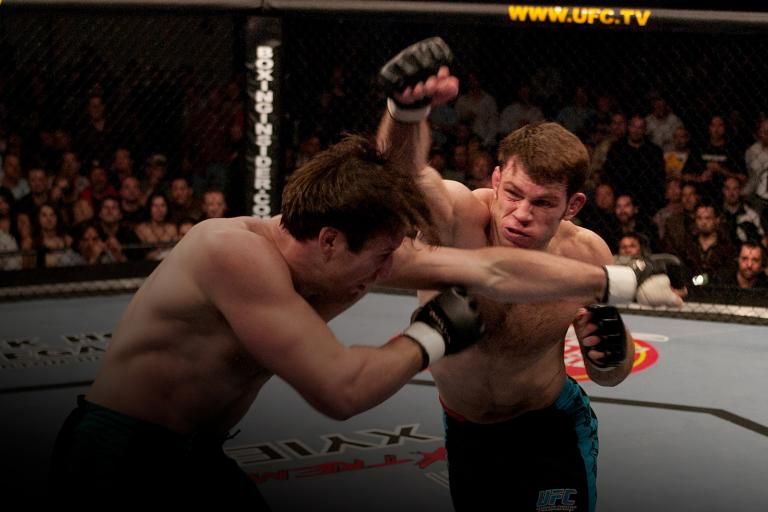
There was no feeling-out process. From the opening exchange, both men stood in the pocket and traded, refusing to clinch for a breather or shoot for a takedown to steal a round on volume alone. By the second round both fighters were bleeding, and by the third, both were visibly exhausted — chests heaving, hands dropping between exchanges — and neither one stopped throwing. Dana White has said in multiple interviews that it’s the only fight in UFC history where he was certain the crowd would have accepted either man’s hand being raised.
All three judges scored it 29-28 for Griffin, the kind of tight, defensible scorecard that most fans still misunderstand when they assume a close decision means a bad one. When Bruce Buffer read the decision, Griffin’s own reaction was closer to surprise than celebration — by his own account afterward, he genuinely thought the fight could have gone either way.
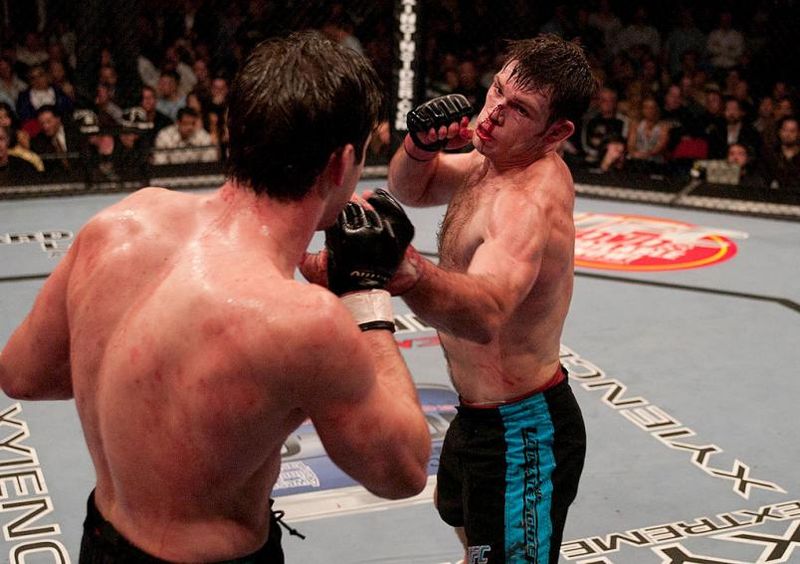
By the third round, both fighters were bleeding and exhausted — and neither one slowed down.
Dana White Hands Out Two Contracts Instead of One
Under the show’s original rules, only the winner of the TUF 1 finale was guaranteed a UFC contract. White tore that plan up on the spot. Standing in the cage after the decision, he announced that both Griffin and Bonnar were getting six-figure deals — not as a scripted TV moment, but because he judged, correctly, that the fight itself had just done more for the company than any marketing campaign could.
The numbers backed him up almost immediately. The live finale pulled 2.6 million viewers on Spike TV, a 1.9 household rating, and a 562% jump in the men 18-34 demo over the same period a year earlier. It was the single most-watched program with young men that night across every channel on television, broadcast networks included. The Spike TV partnership that followed was cemented within days of the finale airing, and the UFC had, for the first time, hard proof that an audience existed beyond the pay-per-view die-hards who already knew the sport.
That single decision to pay both fighters — reward the performance, not just the outcome — became something close to UFC doctrine. Fighters who lose Fight of the Night bonuses still get paid. Prospects who lose exciting fights get rebooked faster than prospects who win boring ones. Griffin and Bonnar wrote that rule in real time, in the cage, without either of them realizing it.
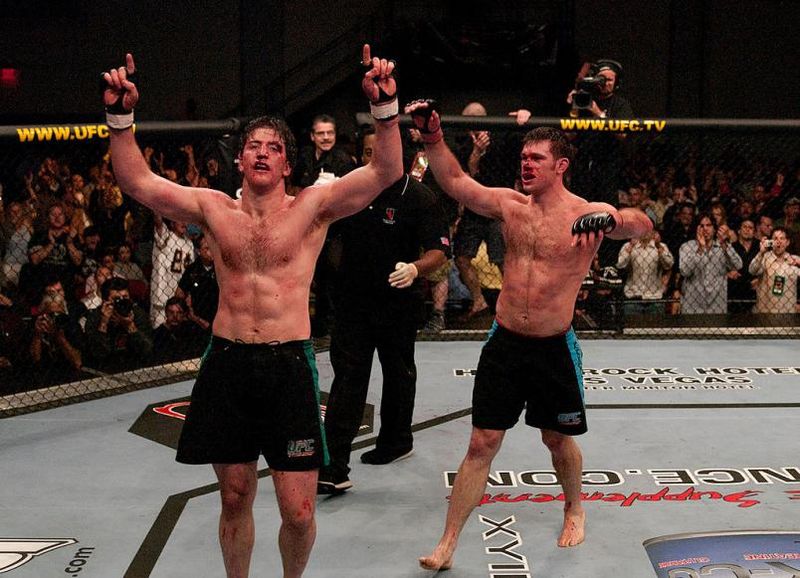
Both fighters raised their arms after the final bell — neither one sure who had won.
What Happened to Both Men Afterward
Griffin’s UFC run turned out to be the better of the two on paper. He beat Quinton “Rampage” Jackson by unanimous decision at UFC 86 in July 2008 to win the light heavyweight title, a result few people picked given Jackson had finished him on the feet in an earlier meeting. Bonnar never captured gold, but he built a long, durable UFC career and became one of the promotion’s most trusted ambassadors, coaching on later TUF seasons and representing the brand at events for years after he stopped competing.
The two men fought a rematch at UFC 62 in August 2006. Griffin won again, sweeping all three rounds on the scorecards — a far less dramatic affair than the first, which tells you how much of the original fight’s magic came from two completely unproven fighters with nothing to lose. In July 2013, Griffin and Bonnar were inducted into the UFC Hall of Fame together, and the fight itself — not just the fighters — was enshrined in the promotion’s Fight Wing, one of the few bouts ever honored that way instead of a career.
Bonnar died on December 22, 2022, at age 45. The UFC initially attributed his death to presumed heart complications; the Clark County coroner’s office later confirmed, in April 2023, that it was an accidental overdose involving fentanyl and related substances. Dana White called him, without qualification, one of the most important fighters in the sport’s history.
Why This Still Matters More Than Almost Any Title Fight Since
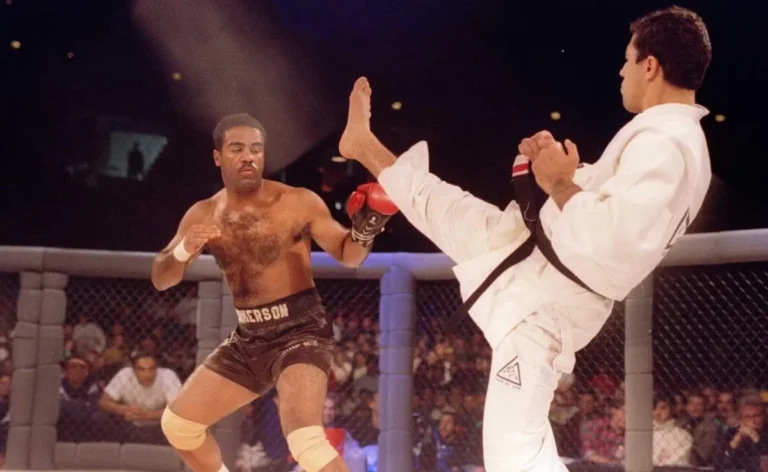
Every UFC title fight that’s happened since 2005 exists because the promotion survived long enough to sell them. The UFC’s actual first fight, Royce Gracie’s run through UFC 1, proved the sport could work technically. Griffin and Bonnar proved it could work commercially — and that’s the harder problem the promotion actually needed solved in 2005. Compare that to how MMA history usually gets told — through title reigns, highlight-reel finishes, pound-for-pound rankings — and Griffin-Bonnar doesn’t fit the mold at all. Nobody walked away with a belt. Nobody set a record. Two replaceable house fighters just refused to stop trading until the final bell, and it turned out that was worth more to the sport than any championship bout on the books that year.
If you’re building a roster in TKO Tycoon, the lesson transfers cleanly: a fighter who delivers in a close, violent, crowd-pleasing fight is worth more to a promotion’s long-term value than a fighter who wins safe and boring. Griffin and Bonnar never had the better record. They had the better fight, at the exact moment the company needed one, and that’s the entire reason either name means anything today.
Sources
- UFC.com — Griffin, Bonnar and the Night that Changed Everything — official UFC retrospective on the fight’s business impact
- MMADecisions.com — Forrest Griffin vs. Stephan Bonnar judges’ scorecards — full scorecard breakdown, TUF 1 Finale
- Sherdog — Bonnar Granted UFC Contract After Close Decision — contemporaneous 2005 report on the dual-contract decision
- CBS Sports — Stephan Bonnar dies at 45 — UFC statement and coverage of his death
- ESPN — Forrest Griffin, Stephan Bonnar inducted into UFC Hall of Fame — 2013 induction coverage
- The Futon Critic — TUF 1 Finale Spike TV ratings — original April 2005 ratings report