Omoplata in MMA: The Submission That Almost Never Finishes
Two finishes. Thirty-three years. That is the entire UFC omoplata ledger, and it hasn’t moved since April 2018. Fighters attempt the position constantly — it shows up in highlight reels, in Brazilian jiu-jitsu training footage, in nearly every grappling-heavy fighter’s guard game — and almost none of them ever get the tap. The omoplata is not rare because fighters don’t know it. It’s rare because finishing it requires an opponent to make a mistake that trained fighters are specifically taught not to make.
What an Omoplata Actually Is
The setup starts from the bottom, inside an opponent’s guard. The attacking fighter swings one leg up and over the opponent’s shoulder, hooks the foot across their back, and controls the far wrist or sleeve so the trapped arm can’t slide free. From there the attacker sits up, swivels the hips perpendicular to the opponent’s body, and drives forward — the torque runs through the shoulder joint the same way an armbar runs through the elbow, except the lever is a leg instead of a hip-to-hip squeeze.
In the gi, grips on the collar and belt make the position far easier to hold still. No-gi — which is what the UFC, Bellator, and every MMA promotion actually is — strips those anchors away. Sweat replaces fabric. The only thing stopping a 200-pound opponent from simply standing up and walking out of the hold is hip control, and hip control is the single hardest part of the position to teach.
Why the Omoplata Almost Never Finishes a Fight
Ask ten black belts why the omoplata doesn’t finish and nine of them will say the same thing: the opponent rolls out. The moment the trapped fighter rotates toward their own trapped shoulder instead of away from it, the shoulder pressure disappears and they end up stacked on top of the attacker, free to posture up and pass. Stopping that roll requires blocking the far hip before the attacker ever tries to finish — a detail easy to describe and brutally hard to execute live, especially against a bigger opponent with eighteen inches of reach and zero interest in tapping to a position most fighters have never been caught in before.
That difficulty is exactly why elite grapplers increasingly treat the omoplata as a sweep rather than a submission. Ride the roll instead of fighting it, and the attacker lands in top position with the opponent’s back exposed — a worse outcome for the defender than if they’d just stayed still. On a card already congested with heel hooks, guillotines, and leg locks fighters still underestimate, the omoplata quietly does its best work without ever showing up on the stat sheet as a submission attempt.
Ben Saunders: One Month With Eddie Bravo, One Historic Finish
Ben Saunders spent time training at 10th Planet Jiu-Jitsu headquarters with Eddie Bravo, polishing the rubber guard — Bravo’s signature no-gi guard system built around trapping an opponent’s posture with the legs instead of the arms. Saunders left that camp with one specific weapon loaded: the simplest entry into the omoplata that the rubber guard offers.
He used it on August 23, 2014, against Chris Heatherly at UFC Fight Night 49 in Tulsa. Saunders wrapped Heatherly up in rubber guard, swung his leg over the shoulder, and finished the submission in the first round — the first omoplata finish in UFC history, more than twenty years into the promotion’s existence. It earned Saunders a Performance of the Night bonus and, six years later, a 10th Planet Jiu-Jitsu black belt promotion directly from Bravo in recognition of exactly this kind of execution under pressure.
What makes the Heatherly finish notable isn’t just that it happened first. It’s that Saunders wasn’t improvising. He trained one specific sequence against one specific reaction and waited for the moment to use it — a far narrower approach than most fighters take into a cage.

Adam Wieczorek Needed Four Years to Make It Happen Again
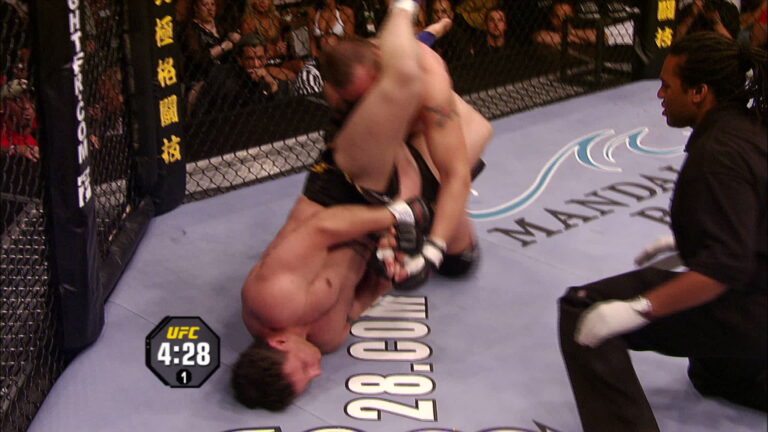
No one duplicated Saunders’ finish until April 14, 2018, when Adam Wieczorek caught Arjan Singh Bhullar at UFC on FOX 29 in Glendale, Arizona. The circumstances were almost the opposite of Saunders’ camp-built setup — Wieczorek threw the omoplata up defensively, during a second-round scramble where Bhullar was the one controlling position. He adjusted his angle mid-transition, cranked the shoulder, and forced the tap at 1:59 of round two.
Wieczorek collected a $50,000 Performance of the Night bonus for the finish. According to FightMetric’s records, it remains the second and last successful omoplata in UFC history — a submission that has now gone unrepeated inside the Octagon for longer than the gap between the first two finishes combined.
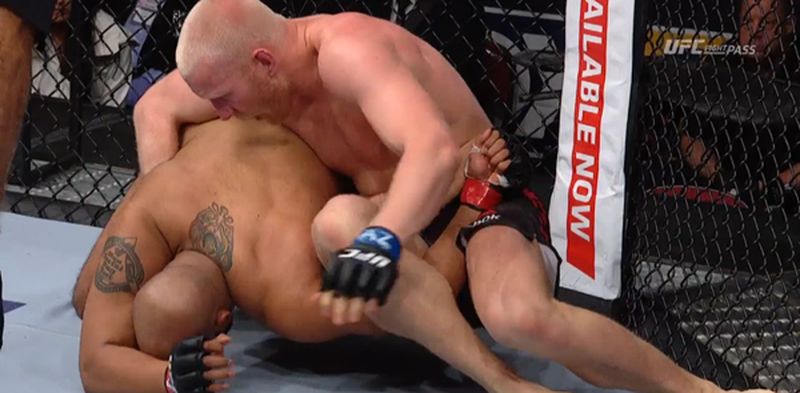
Demian Maia Attempted It Constantly and Still Never Finished One
If any UFC fighter should have a third name on that short list, it’s Demian Maia. A fourth-degree Brazilian jiu-jitsu black belt who built his entire UFC run on the ground, Maia put together omoplata sequences against Ed Herman at UFC 83 in 2008 that looked close to a finish before Herman wrestled his arm free — Maia pivoted straight into a mounted triangle instead and won Submission of the Night anyway.
That pattern defined Maia’s career. He used the omoplata constantly as a transition tool — a way to off-balance an opponent, advance position, or force a scramble he could win — without it ever being the actual finishing hold. Maia retired in 2021 with a 28-11 professional record and zero submission losses across 39 fights. He simply never made the position his kill shot, because against UFC-level athletes, almost nobody does.

The Most Famous Omoplata Photo Has Nothing to Do With MMA
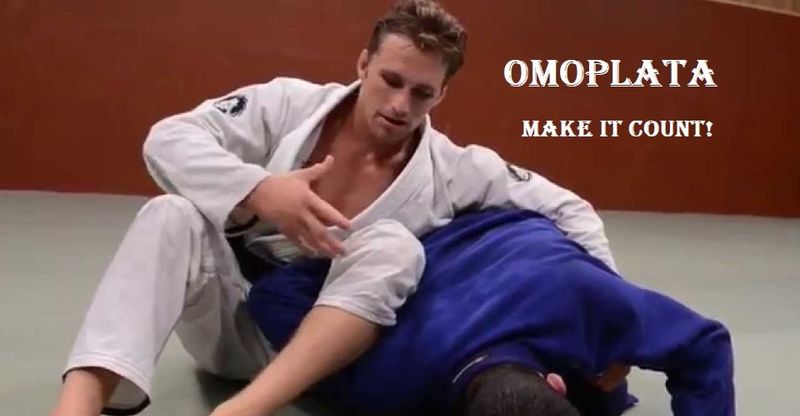
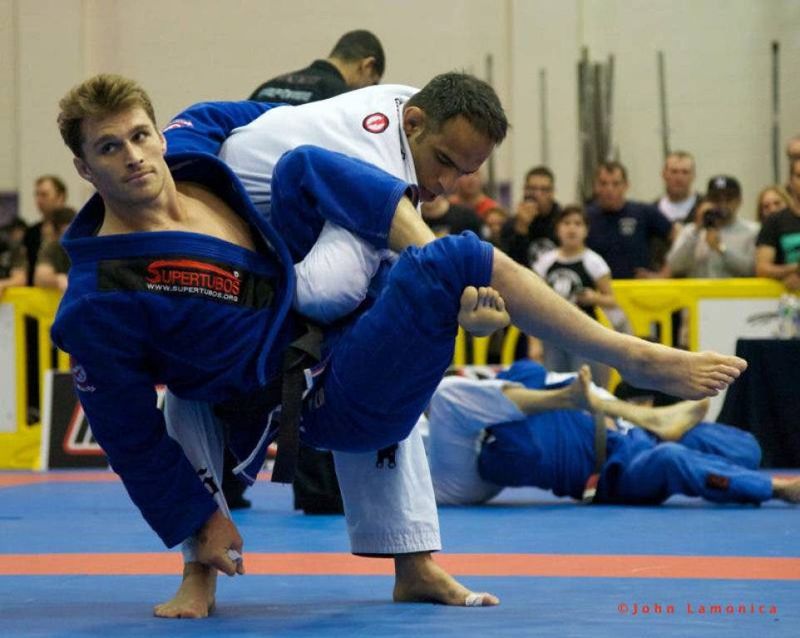
Search “omoplata” anywhere online and odds are good the first image that surfaces isn’t from the UFC at all. In 2012, a photographer caught Brazilian jiu-jitsu black belt Clark Gracie mid-omoplata against Ken Primola at the New York Open, his expression calm and his form textbook. The photo went viral on Reddit the following year, earned Gracie the nickname “the ridiculously photogenic jiu-jitsu guy,” and landed him on national television — all because of a single frame of a submission that, by the numbers above, almost never actually ends a fight.
Gracie backed the image up with substance. Thirteen of his twenty-six recorded submission wins have come by omoplata, making him one of the only competitors at any level — gi or no-gi — who treats the position as a legitimate finishing weapon rather than a scramble starter. That gap between Gracie’s gi-competition numbers and the UFC’s two total finishes says plenty about how much a collar grip and a stalled-out ruleset do for a submission’s success rate.
Louis Glismann Just Proved the Technique Isn’t Finished Evolving
MMA’s two UFC finishes might suggest the omoplata has run its course as a weapon. Oktagon MMA said otherwise in 2023. Danish welterweight Louis Glismann caught Melvin van Suijdam with an inverted omoplata at Oktagon 43 in Prague — spinning into the position without even securing the far-side arm first, a detail instructors generally call mandatory for the standard version. Glismann forced the tap at 4:57 of round one anyway, in what is widely considered the first inverted omoplata finish in MMA history.
The finish picked up close to a third of the vote in polls for the year’s best MMA submission, not because the mechanics were flashy but because almost nobody had seen the inverted entry land clean before. Fifteen years after Maia’s near-misses, and nine years after Saunders’ first finish, a fighter still found a version of the position nobody had successfully used on camera. It’s the featured image at the top of this article for exactly that reason — it is still the newest entry in a thirty-year-old file.
Why This Matters for Building a Fighter’s Style
The omoplata is a useful case study for anyone thinking about fight IQ in terms of risk and reward — including inside a game like TKO Tycoon, where a fighter’s submission arsenal is only as valuable as the openings it actually produces. A grappler who drills the omoplata purely as a finishing move is betting on an opponent’s mistake that happens roughly twice a career, if ever. A grappler who drills it as a sweep and a scramble tool gets value from the position in almost every guard exchange. The lesson translates directly: build a style around the techniques most likely to be used, not the ones most likely to look spectacular on a highlight reel.
That’s also why guard passing stays such a premium skill against any fighter who plays an active bottom game — the fighters who avoid getting swept by an omoplata attempt in the first place are usually the same ones with airtight passing fundamentals, not the ones hunting counters to a submission they’ll rarely see.
The Takeaway
Two finishes in over thirty years isn’t a coincidence and it isn’t bad luck — it’s what happens when a submission requires an opponent to make one specific, well-known mistake under full resistance. Saunders and Wieczorek didn’t get lucky; they got a defender who rotated the wrong direction at the wrong moment, and they’d drilled the finish enough times to not waste it. Everyone else gets a sweep, a scramble, or a missed opportunity. Until MMA sees a third name on that list, the omoplata belongs more to the sport’s rarest-submission conversation than to anyone’s actual finishing arsenal — and that’s precisely what makes the next one worth watching for.
Sources
- LowKick MMA — Ben Saunders Scores First-Round Omoplata — recap of the first UFC omoplata finish.
- TheSportster — MMA Fighters Who Trained at 10th Planet Jiu-Jitsu — Saunders’ 10th Planet training and black belt promotion.
- MMA Weekly — Adam Wieczorek Lands Rare Omoplata Submission — Wieczorek vs. Bhullar fight details and bonus.
- Sherdog — Adam Wieczorek Taps Arjan Singh Bhullar with Omoplata — official highlight confirmation.
- BJPenn.com — Louis Glismann’s Submission of the Year Candidate — Oktagon 43 inverted omoplata finish.
- Patch — La Jolla’s “Ridiculously Photogenic” Jiu-Jitsu Meme — origin of the viral Clark Gracie omoplata photo.
- The Allstar — Demian Maia MMA Record and Career Highlights — final 28-11 record and submission history.