Triangle Choke: The Submission MMA Still Can’t Solve
Chael Sonnen out-struck Anderson Silva by a margin of roughly 100 significant strikes to 40 across four rounds at UFC 117, and Silva still won. He won because a choke that needs no hands, no space, and almost no energy was waiting the entire time, and Sonnen walked into it with under two minutes left on the clock. That single submission tells you everything about why the triangle choke has outlasted every rule change, every sprawl-and-brawl era, and every generation of fighters who swore they’d trained around it.
How the Triangle Choke Actually Works
Strip away the gi talk and the triangle choke is a simple mechanics problem. The attacker traps one of the opponent’s arms across their own body and clamps both legs around the opponent’s neck, locking one leg behind the knee of the other to form a loop. From there, the choke comes from two directions at once: the attacker’s own calf and hamstring press into one side of the neck, while the opponent’s own trapped shoulder gets dragged into the other carotid artery. The opponent is, in a very real sense, choking themselves with their own arm.
That’s what separates it from a rear naked choke or a guillotine choke — both of those need the attacker’s hands locked in a specific grip, which can be peeled apart with enough strength or the right angle. A tight triangle doesn’t rely on grip strength at all. Once the legs are locked and the hips are rotated toward the trapped shoulder, the compression holds even if the attacker’s hands are empty, throwing punches, or setting up an armbar on the side. That’s exactly what Silva did to Sonnen — he had the choke locked before he ever touched Sonnen’s arm, then hyperextended it as a bonus on the way to the tap.
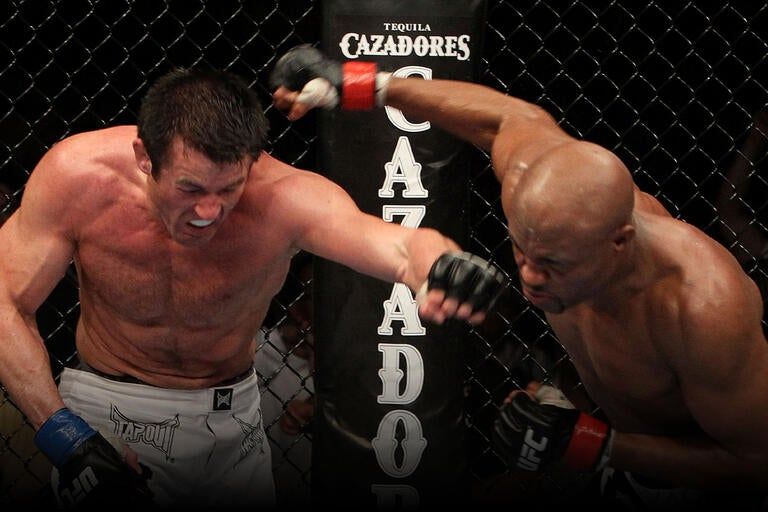
Silva’s triangle at UFC 117 remains the biggest statistical comeback in UFC title-fight history.
The Comeback That Made It Famous: Silva vs. Sonnen
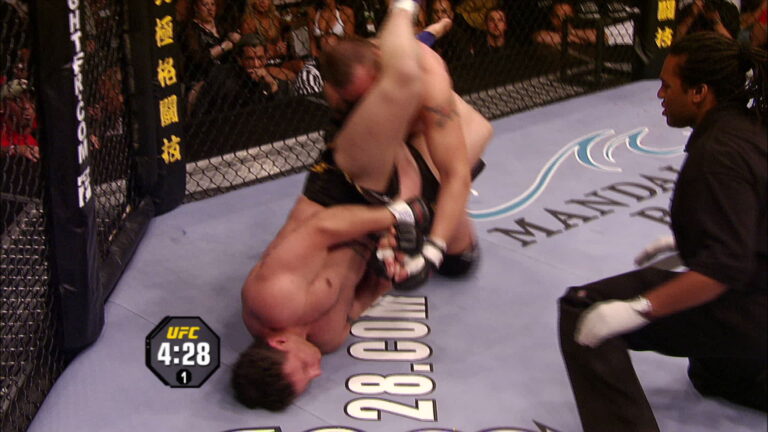
Sonnen had already clinched Silva against the fence, taken him down in every round, and opened a cut over his eye by the time round five started. Most fighters down that badly start looking for a miracle right hand. Silva looked for a miracle leg lock instead. Sonnen postured up to throw ground strikes with 2:05 left, exposed his head and one arm in the process, and Silva snapped his legs around the opening before Sonnen could recover his base. The choke locked in roughly ten seconds. By the time referee Yves Lavigne pulled Sonnen off, he was unconscious on his feet, still trying to posture out of a position that no longer had an escape.
The UFC inducted that fight into its Hall of Fame in 2024, and the submission is the reason, not the four rounds that came before it. A fighter getting dominated for twenty-three minutes and still winning is the single best advertisement the triangle choke has ever gotten, and it’s why every broadcast crew since has treated a fighter’s open guard as a live threat instead of a lost position.
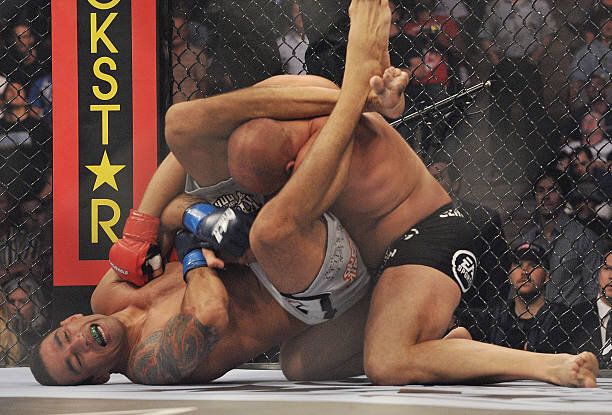
Werdum’s 69-second triangle ended Fedor Emelianenko’s decade-long unbeaten run.
The 69-Second Upset: Werdum Shocks Fedor
Fedor Emelianenko hadn’t lost in ten years and twenty-eight fights when he walked into the cage against Fabricio Werdum at Strikeforce in 2010. Werdum was a two-to-one underdog with a reputation as a durable gatekeeper, not a threat to the best heavyweight alive. Then Fedor made the mistake that ends careers against black belts: he mistook a slip for a knockdown, jumped into Werdum’s guard to finish the fight on the ground, and gave Werdum exactly the range he needed. The triangle was locked before Fedor realized what had happened, and he tapped 69 seconds into the fight.
What makes that finish instructive, not just shocking, is what it exposed about elite strikers who treat the ground as a formality. Fedor had real submission wins on his own résumé, but he’d spent a decade knocking people out before the ground game mattered. Against a guard specialist, that habit of chasing a finish on top turned into the fastest ending of his career. The lesson held up: dropping into someone’s open guard to land ground-and-pound is still one of the most common ways a triangle gets set up at every level of the sport, from regional cards to UFC main events.
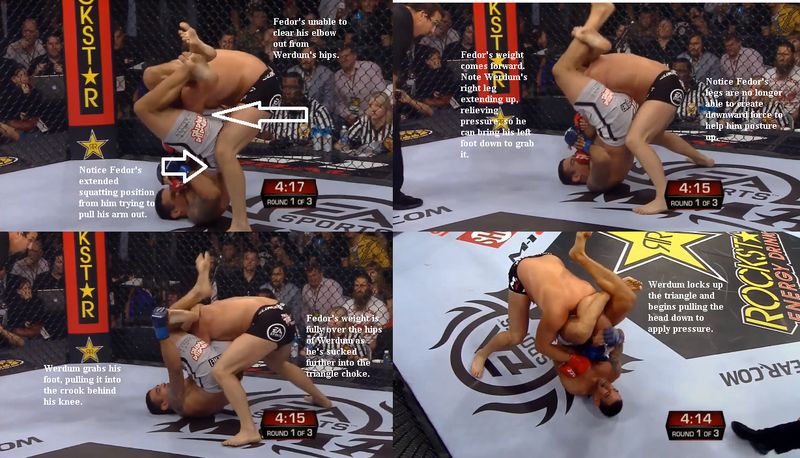
The setup sequence: Fedor postures inside Werdum’s guard, exposing the arm and head that end the fight seconds later.
Interim Titles and Highlight Reels: Ferguson and Pimblett
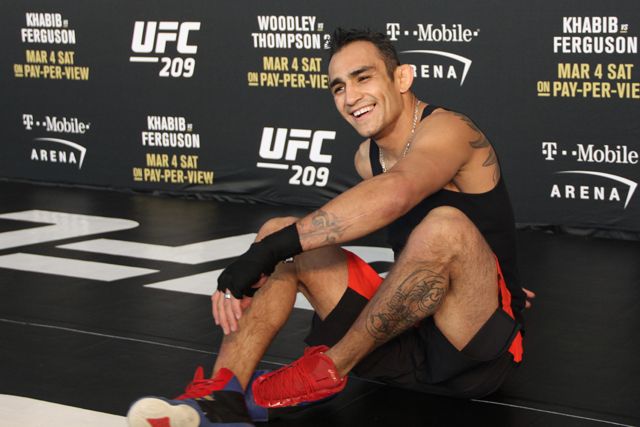
Tony Ferguson’s triangle on Kevin Lee at UFC 216 won him the interim lightweight title, and it came from almost nowhere. Lee was landing elbows from top position with under a minute left in round three when Ferguson, flat on his back and seemingly out of answers, hooked a leg over Lee’s shoulder and locked the triangle mid-scramble. Lee tried to posture through it the way wrestlers are trained to, which only tightened the compression. He tapped at 4:02 of the third round, and Ferguson’s reputation as a threat from literally any position was made.
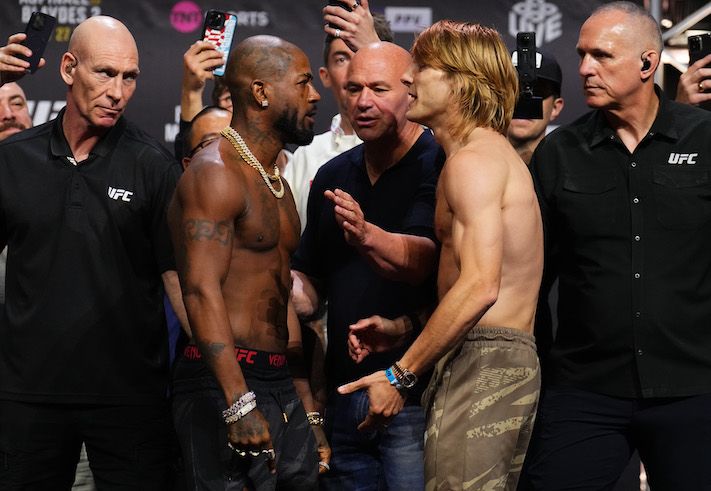
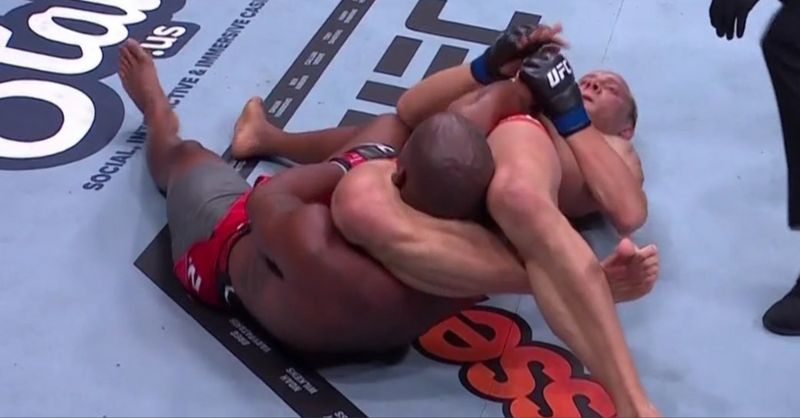
Paddy Pimblett’s finish of Bobby Green at UFC 304 told a different version of the same story. Green shot a double-leg, Pimblett met it with a guillotine attempt, the two scrambled, and Pimblett ended up with a triangle he’d never set up on purpose. Green tapped at 3:22 of round one. Neither fighter walked into the cage planning to finish that way — and that’s the real throughline across almost every famous triangle finish in this sport. It’s rarely the primary game plan. It’s the choke that’s sitting there waiting when a scramble goes slightly wrong for the fighter underneath.
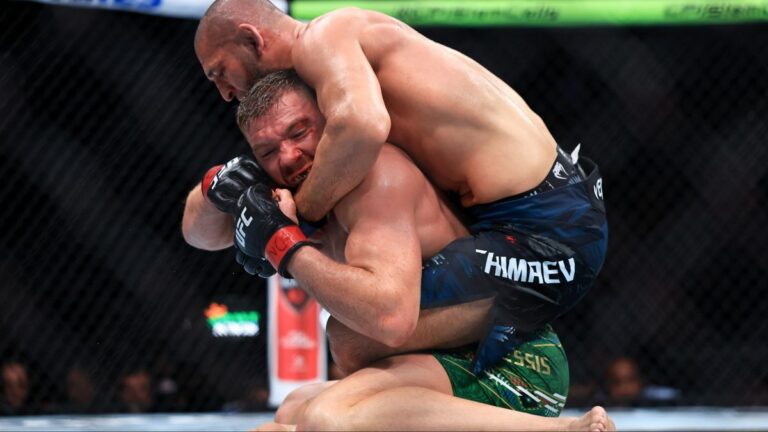
Khabib’s Retirement Masterclass
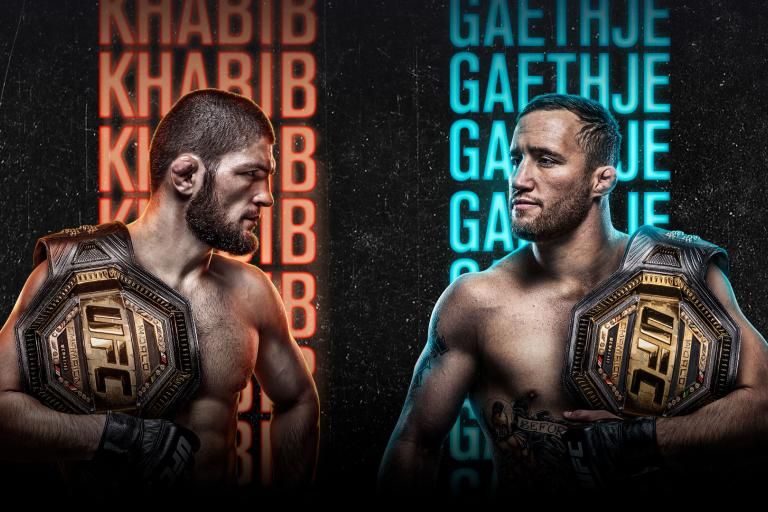
Khabib Nurmagomedov’s last walk to the cage ended with a triangle choke on Justin Gaethje at UFC 254, and the story behind it is almost as good as the finish itself. Nurmagomedov had an armbar available first — Gaethje’s arm was already isolated and straightening — but with Gaethje’s parents watching from the arena, Khabib switched to a choke instead of risking a break. He finished with the triangle at 1:34 of round two, then announced his retirement in the cage, still undefeated at 29-0. It remains one of the only times a fighter has visibly chosen a less damaging finish mid-fight, and it’s a detail that gets lost next to the highlight-reel memory of the submission itself.
Nurmagomedov wasn’t primarily known as a triangle specialist — five of his finishes came by triangle across a career built on suffocating top position — which says something about how versatile the choke is. It isn’t just a bottom-guard tool for BJJ purists. It works from mount, from back control, and from the scrambles that follow a stuffed takedown, which is a big part of why it keeps showing up in title fights two decades after Royce Gracie first made it famous.
How to Escape a Triangle Choke
The golden rule among coaches is simple to say and hard to execute under pressure: keep both arms in or both arms out of the opponent’s legs. The moment one arm gets isolated across the body, the choke is live, and most escape windows have already closed. Fighters who train this correctly fight the position before the legs ever lock — posting a hand on the hip, stepping over rather than through, and refusing to posture up with their head low and their arm exposed, which is precisely the mistake that cost Fedor, Kevin Lee, and Bobby Green their fights.
Once the legs are actually locked, the first job is defensive, not offensive: tuck the chin, turn toward the trapped shoulder to find an angle where the carotid isn’t fully compressed, and buy a few seconds to think instead of panicking into a worse position. The stack — driving forward and down to fold the attacker’s own knees toward their head — can break a loose triangle, but it has to be timed before the choke tightens, because stacking into a fully set compression just adds the attacker’s own bodyweight to the squeeze. This is also where guard passing fundamentals matter more than raw strength — clean hip and knee positioning prevents the choke from ever getting this far.
Why Fighters Still Get Caught in 2026
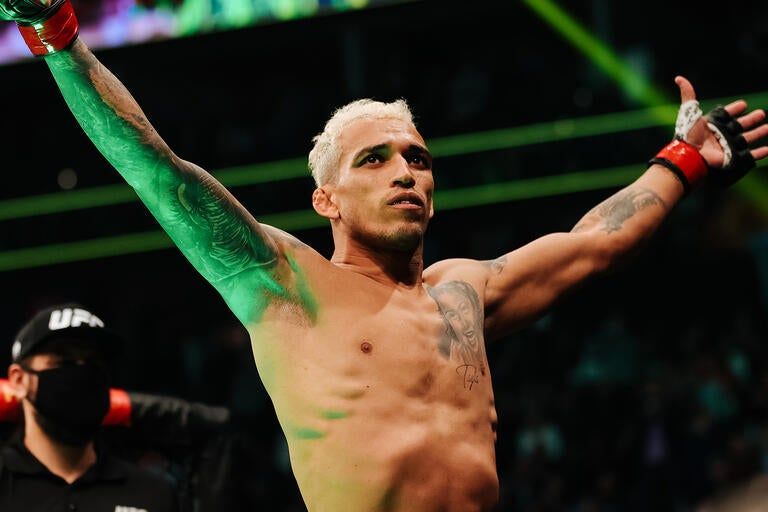
MMA coaching has never been more sophisticated, and fighters still get caught in triangles because the choke doesn’t punish bad jiu-jitsu — it punishes good instincts that happen to be wrong in this specific spot. Posturing up to strike, driving forward to finish a takedown, chasing a scramble with your head down: all of it is correct technique in ninety-five percent of grappling exchanges and a live submission threat in this one. That mismatch is exactly why the triangle still ends careers at the highest level of the sport instead of fading out as a lower-belt tool that gets coached away. The rear naked choke might finish more fights overall, but nothing else flips a fighter’s own aggression into their downfall quite the same way. Charles Oliveira, the UFC’s all-time submission leader, has one of his own triangle finishes on the record (Andy Ogle, 2014) buried among a career built mostly on guillotines and rear chokes — proof that even specialists in other finishes keep this one in the bag because the opportunities show up whether a fighter hunts for them or not.
Build a guard-heavy grappler in TKO Tycoon and the triangle threat should factor into how you call ground strategy — a fighter who can’t finish standing but owns a live bottom game is never truly losing a fight, he’s waiting on a mistake. That’s not a stat line. That’s the exact dynamic that let a four-round loser become a Hall of Fame finish.
Sources
- UFC.com — UFC 117 Fight Between Anderson Silva and Chael Sonnen to Be Inducted Into UFC Hall of Fame — official recap and induction details.
- The Fight Site — Submission Breakdown: Fabricio Werdum’s Triangle That Shocked the MMA World — technical breakdown of the Fedor finish.
- Combat Press — UFC 216: Ferguson Chokes Lee, Johnson Dominates Borg — fight result and round-by-round detail.
- Cageside Press — Statement Made: Paddy Pimblett Chokes Out Bobby Green at UFC 304 — fight recap.