Guard Passing in MMA: The 3 Passes That Win Fights
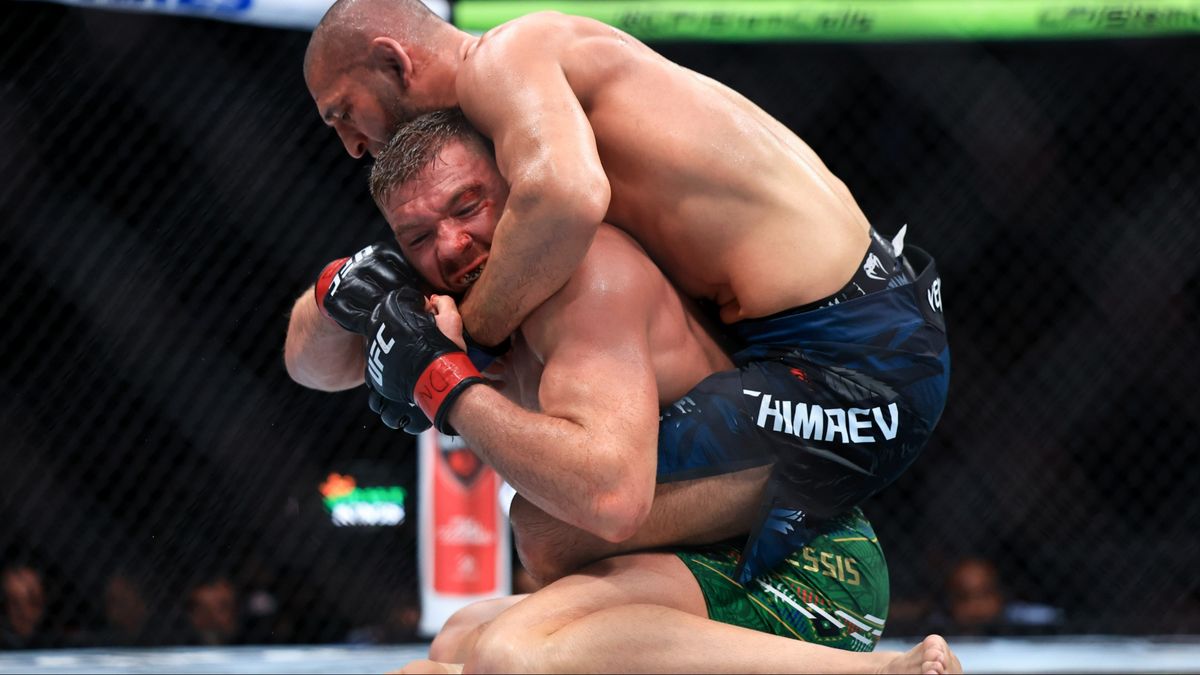
Khamzat Chimaev spent 21 minutes and 40 seconds in control of Dricus du Plessis across 25 minutes at UFC 319. He landed 12 of 17 takedowns and never let the South African find his feet long enough to throw a meaningful strike. Some fans called it boring. The judges called it a shutout, and anyone who understands guard passing in MMA understood exactly what they were watching: a fighter who had already solved the hardest problem in the sport before the fight even started.
Guard passing gets treated as a BJJ nerd topic, something for grappling purists arguing about underhooks on a forum. In the cage, it’s closer to a cheat code. The fighter who controls the floor controls the fight, the scorecards, and often the finish. This breaks down why passing works differently in MMA than it does in pure grappling, walks through the three passes that show up over and over at the highest level, and looks at three champions who built entire careers on top of someone else.
Why Guard Passing Matters More in MMA Than in Pure BJJ
In a jiu-jitsu match, guard passing earns points and advances position toward a submission. In MMA, it does something else entirely: it removes the opponent’s ability to hurt you while opening every tool in the arsenal — ground-and-pound, submissions, and the clock itself. A fighter pinned under full mount isn’t just losing position. He’s eating elbows, burning cardio trying to escape, and watching the round slip away on every judge’s card.
The cage changes the geometry too. There’s no out-of-bounds, no stalling warning that resets the action the way some grappling rulesets do. Referees in MMA let a dominant top position play out as long as damage or advancement looks live, which means a fighter who passes guard well can sit in a controlling position for minutes at a time without being stood up. Compare that to IBJJF rules, where a stalled position gets penalized. The incentives are reversed, and it’s a huge reason wrestlers with average submission skills but excellent top control — think prime Khabib Nurmagomedov — become nearly unbeatable in the cage even though they’d lose a straight grappling match to a specialist.
The Three Passes Every Elite Fighter’s Game Is Built Around
Walk into any high-level MMA gym’s grappling session and you’ll see the same three passes drilled on repeat, because between them they cover almost every scramble a fighter runs into.
The knee slice (also called the knee cut) is the most common pass at every level of competition, gi or no-gi. The passer drives a knee across the opponent’s thigh while controlling the far-side collar or shoulder, using downward pressure to flatten the hips and slide through to side control. It’s a pressure pass — slow, heavy, and almost impossible to escape once the weight lands correctly. It works against both open and half guard, which is exactly why it shows up so often against cage-wrestling MMA fighters who are more comfortable scrambling than defending stationary pressure.
The toreando, or bullfighter pass, is the speed option. Instead of grinding through, the passer grips both of the opponent’s legs near the ankles or pants and redirects them hard to one side while stepping around — the same motion a matador uses to sidestep a charging bull. Done right, it beats open guard before the opponent can re-establish a frame or grip. It’s the pass most associated with standing, athletic grapplers who want distance and angles rather than a slow grind.
The leg drag splits the difference. The passer isolates one of the opponent’s legs, drags it across his own body, and pins it flat — which kills the opponent’s ability to re-guard and creates an angle where the passer is almost already behind him. Of the three, it’s the one most directly tied to back takes, which makes it a favorite for fighters who want the finish, not just the position.
Most elite competitors build a system around one pressure pass and one speed pass — knee slice plus toreando covers almost every scramble that comes up. The leg drag gets layered in as the finishing piece once the other two have done the work of breaking the guard open.
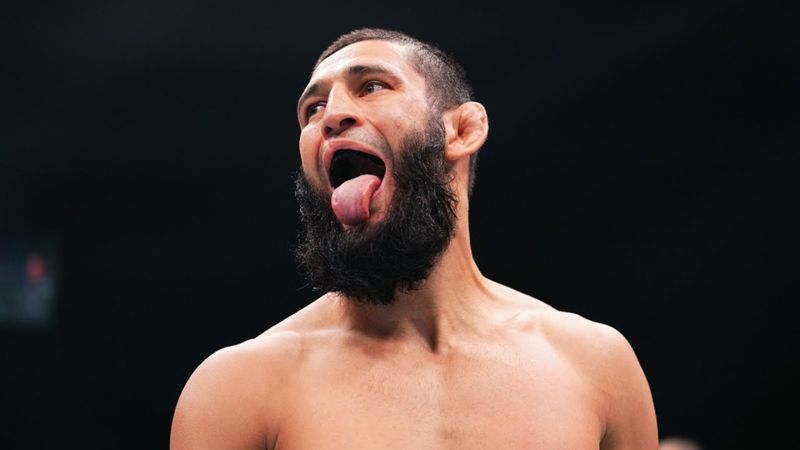
Khamzat Chimaev: Skipping the Level Change Entirely
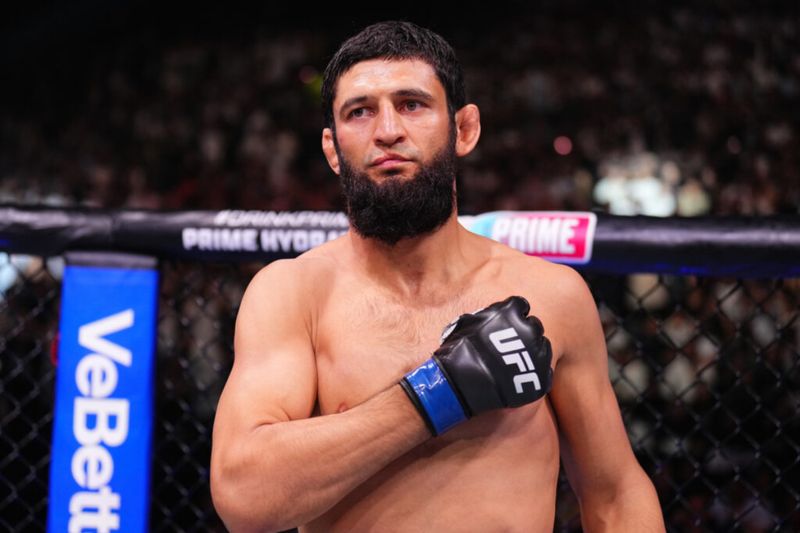
Most wrestlers set up a takedown with a level change, then fight through the scramble to land in a dominant spot. Chimaev’s version at UFC 319 skipped a step. He used body-lock mat returns — tying up du Plessis in the clinch, lifting, and returning him to the floor already past his legs — instead of shooting for a traditional double or single. The effect is brutal in a very specific way: it bypasses wrestling defense entirely, because there’s no shot to sprawl on. Du Plessis never got the chance to defend a takedown in the way he’d trained for because the takedown he was facing didn’t look like one.
From there, Chimaev advanced to crucifix position — pinning both of du Plessis’s arms while raining down strikes from an angle that’s almost impossible to frame against. Twelve takedowns from seventeen attempts isn’t just volume. It’s a fighter who had already won the positional battle before the horn, leaving du Plessis to survive rather than compete.
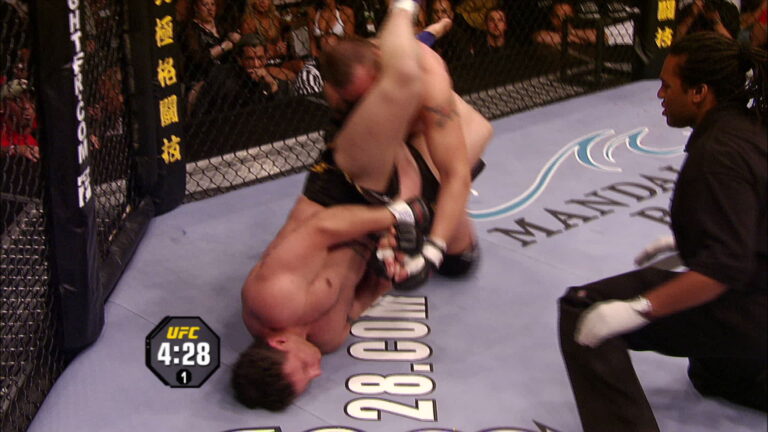
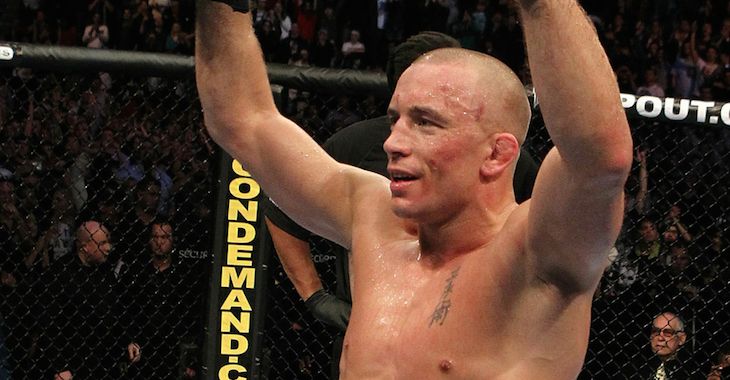
Georges St-Pierre: The Standing Passer Who Rewrote the Position
GSP built his entire late-career game plan around a passing sequence that looked almost identical every time he used it, and opponents still couldn’t stop it. He’d stuff an opponent’s leg into three-quarter guard, step over into half guard, then hip-switch into reverse half or lock up a tight cross-face to finish clearing the legs. What made it unstoppable wasn’t novelty — everyone knew it was coming — it was that GSP loaded his weight onto the opponent’s head and neck throughout the sequence, killing their mobility before they could frame or shrimp away.
The detail that separated him from a pure grappler: GSP threw strikes throughout the pass. Short elbows and punches during the transition stopped opponents from creating the space they needed to defend, turning a jiu-jitsu sequence into something a wrestler couldn’t simply out-athlete his way out of. That’s the mild case for an unpopular opinion — GSP’s ground-and-pound gets less credit than his striking or wrestling, but his guard passing in MMA might be the single most replicable part of his entire game, and almost nobody in the welterweight division since has matched it.
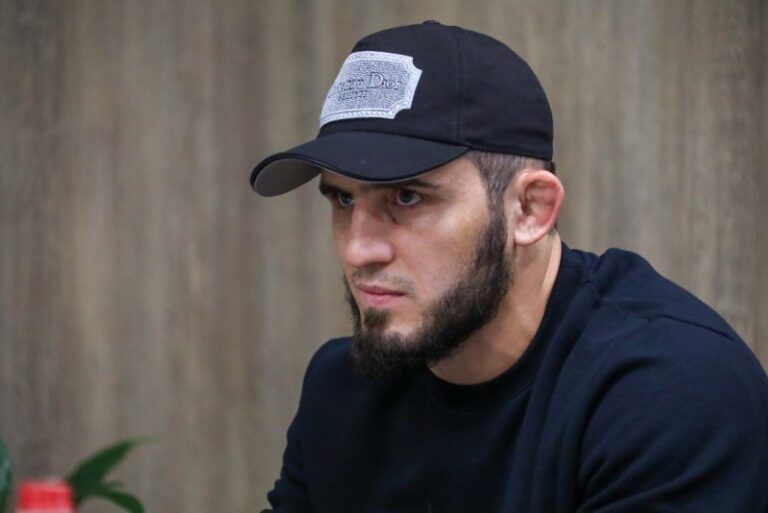
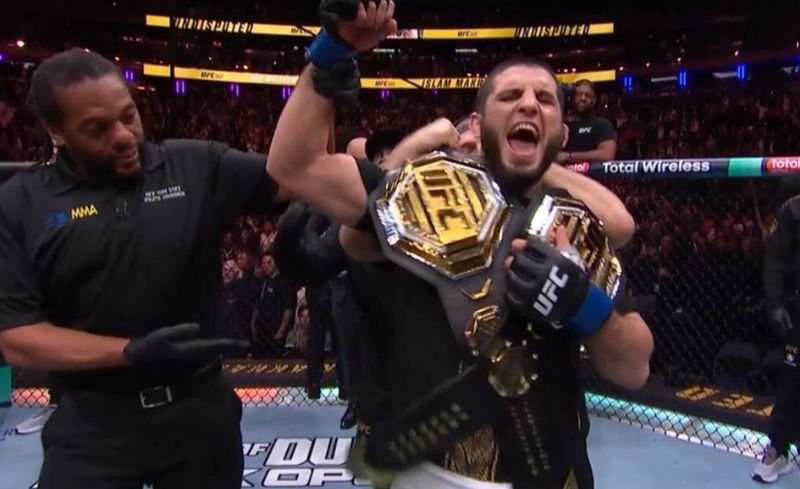
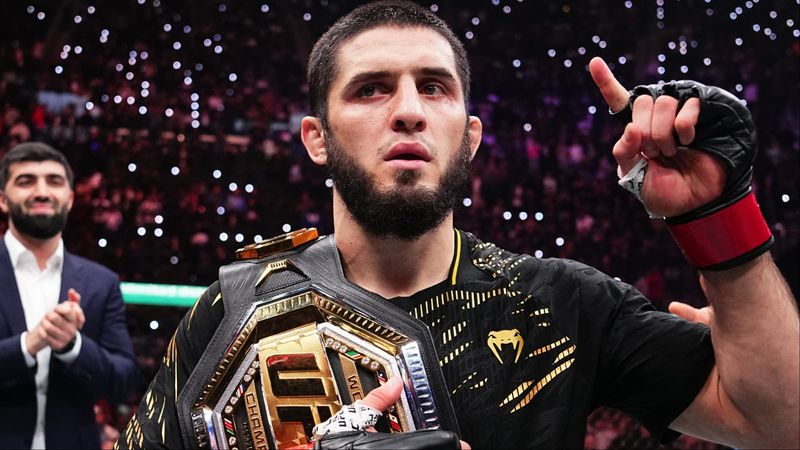
Islam Makhachev: Pin First, Finish Later
Where Chimaev skips steps and GSP strikes through the pass, Makhachev’s system is about what happens after he’s already through: suffocation. Training partner Belal Muhammad put it bluntly — “Islam on top is very hard to get up from.” At UFC 322 against Jack Della Maddalena, that wasn’t an exaggeration. JDM spent more than 19 of 25 minutes on the bottom, unable to stop a single takedown and unable to do much besides survive once Makhachev had passed.
The Dagestani system Makhachev learned from Khabib Nurmagomedov isn’t flashy. It’s about controlling the arms and hands first, pinning the opponent flat so he has to carry the passer’s full weight just to attempt an escape. Gordon Ryan — not an MMA fighter, but arguably the most dominant grappler of his generation — has said publicly that Granby rolls are the real technical counter to this style, because most opponents try to bridge or shrimp straight into more pressure instead of rolling through it. Nobody at the welterweight or lightweight limit has shown they can execute that counter against Makhachev in real time, which is a big part of why he’s run through two divisions with barely a scare.
How Passing Sets Up Ground-and-Pound and Finishes
Passing guard isn’t the finish. It’s the permission slip for the finish. Once a fighter is in side control, mount, or has taken the back, the opponent’s two best defensive tools — distance and guard retention — are gone. Elbows land clean because there’s no leg to push off the hip. Chokes tighten because there’s no frame to fight the choke off the neck. Even when a pass doesn’t end the fight outright, it exhausts the opponent fighting to survive, which is its own kind of damage that doesn’t show up on a highlight reel but shows up on a scorecard every time.
That’s the part casual fans miss watching a fight like Chimaev-du Plessis or Makhachev-Della Maddalena. The takedown gets the highlight clip. The guard pass that comes two seconds later is the actual fight-ending event, because it’s the moment the fighter on bottom stops having options.
The Verdict: Whose Passing Game Is Most Dangerous Right Now
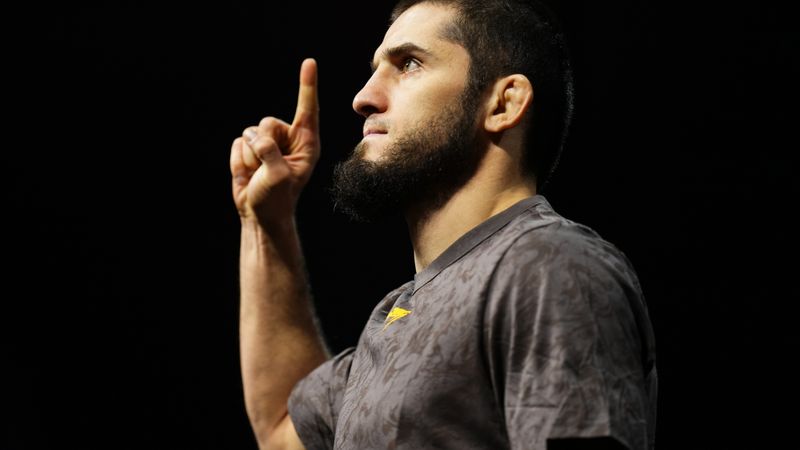
Chimaev’s mat returns are the scarier style for a pure finish because they skip a defensive layer most fighters have actually trained against. But Makhachev’s is the harder problem to solve, because it doesn’t rely on one gimmick — it’s a complete system built from wrestling through passing through suffocating top control, and nobody has shown an answer to any part of it, let alone all three. Bet on Chimaev if you want the highlight. Bet on Makhachev if you want to win your prediction pool, because dominant-but-boring control time is exactly the kind of skill the sport still undervalues relative to how often it actually wins fights.
Fighters who build their games around passing and control rather than knockout power tend to get labeled boring right up until they’re holding the belt. That undervaluation is worth remembering next time a style-vs-style debate breaks out — and it’s the same logic that should guide how you build a roster in TKO Tycoon: a fighter who can grind out control time wins more fights over a career than one who only threatens finishes.
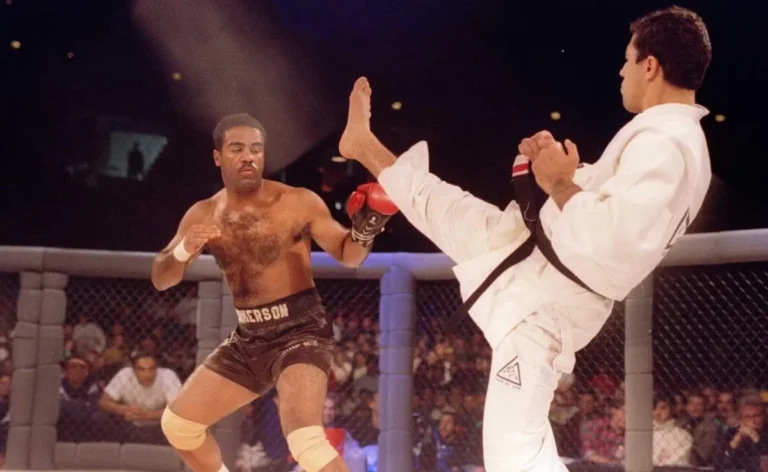
For more on how top control connects to other dominant positions, see our breakdown of the body triangle in MMA, or go back to where ground control entered the sport in the first place with Royce Gracie’s fighting style at UFC 1.
Sources
- Yahoo Sports — UFC 319 takeaways: Khamzat Chimaev flings Dricus du Plessis around — control time and takedown statistics from UFC 319.
- UFC.com — UFC 322: Della Maddalena vs. Makhachev — official event page and result.
- CBS Sports — UFC 322 results and scorecard analysis — ground control time breakdown for Della Maddalena vs. Makhachev.
- BJPenn.com — Khamzat Chimaev’s dominant UFC 319 win — post-fight analysis of Chimaev’s grappling approach.