Guillotine Choke MMA: Why the Sport’s Second-Most-Common Finish Fails More Than It Lands
Roughly one in six MMA submissions is a guillotine. It’s the second-most-common finish in the sport behind the rear naked choke, and it’s the one you see most often because it doesn’t need a dominant position to work. A guy shoots a lazy takedown, drops his head, and three seconds later he’s tapping. No back mount, no passing the guard, no scramble. Just a neck in the wrong place at the wrong time.
That accessibility is exactly why the guillotine gets misunderstood. Fans see the tap and assume it was a clean choke. Half the time it was a stalled attempt that drained the attacker’s arms while the defender waited it out. The guillotine is either the fastest finish in the fight or the fastest way to gas your own forearms. There’s very little middle ground.
Let’s break down why it works, where it fails, and why the arm-in version is the one that actually ends fights in the cage.
What Is the Guillotine Choke in MMA and How Does It Work?
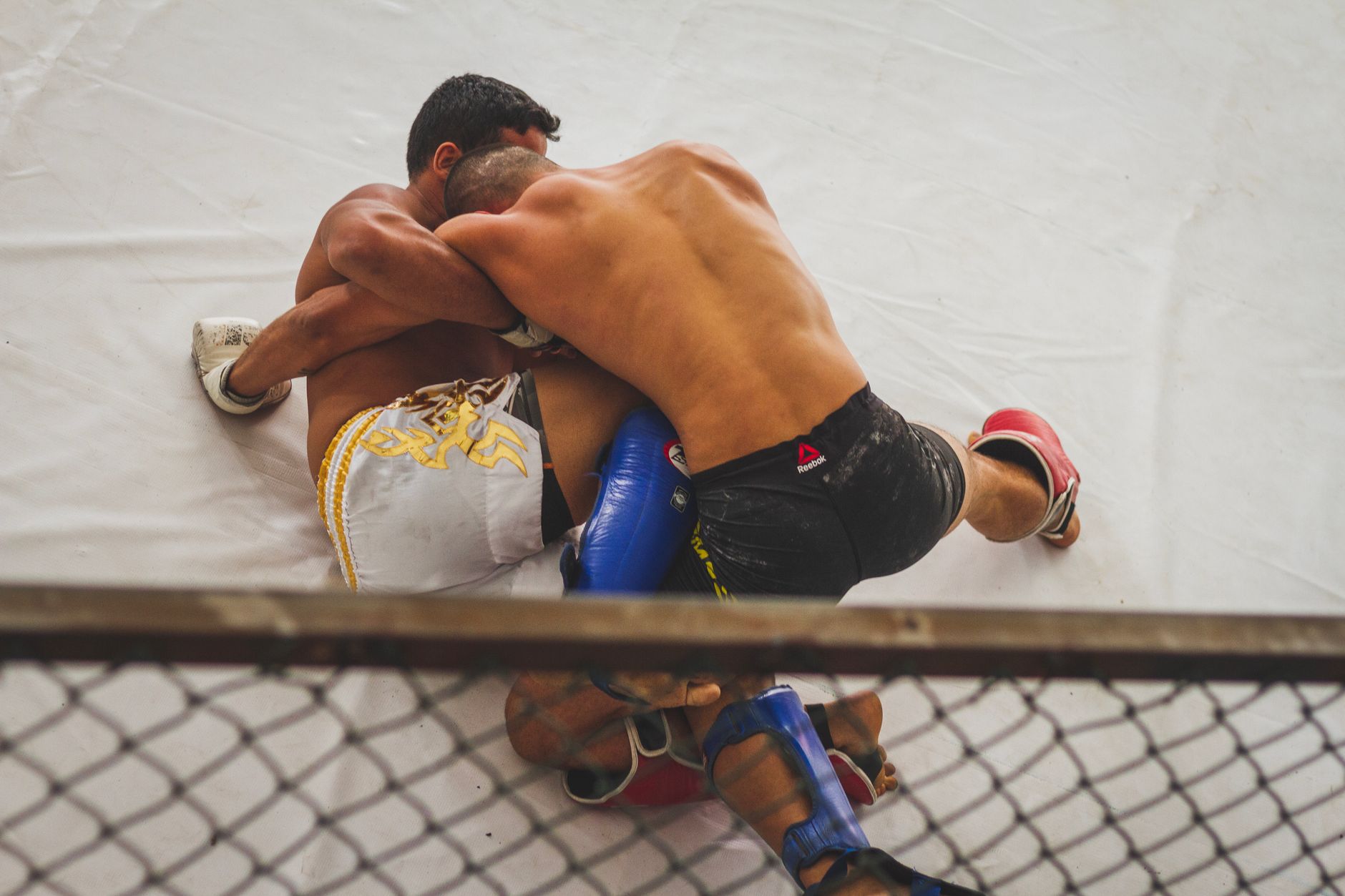
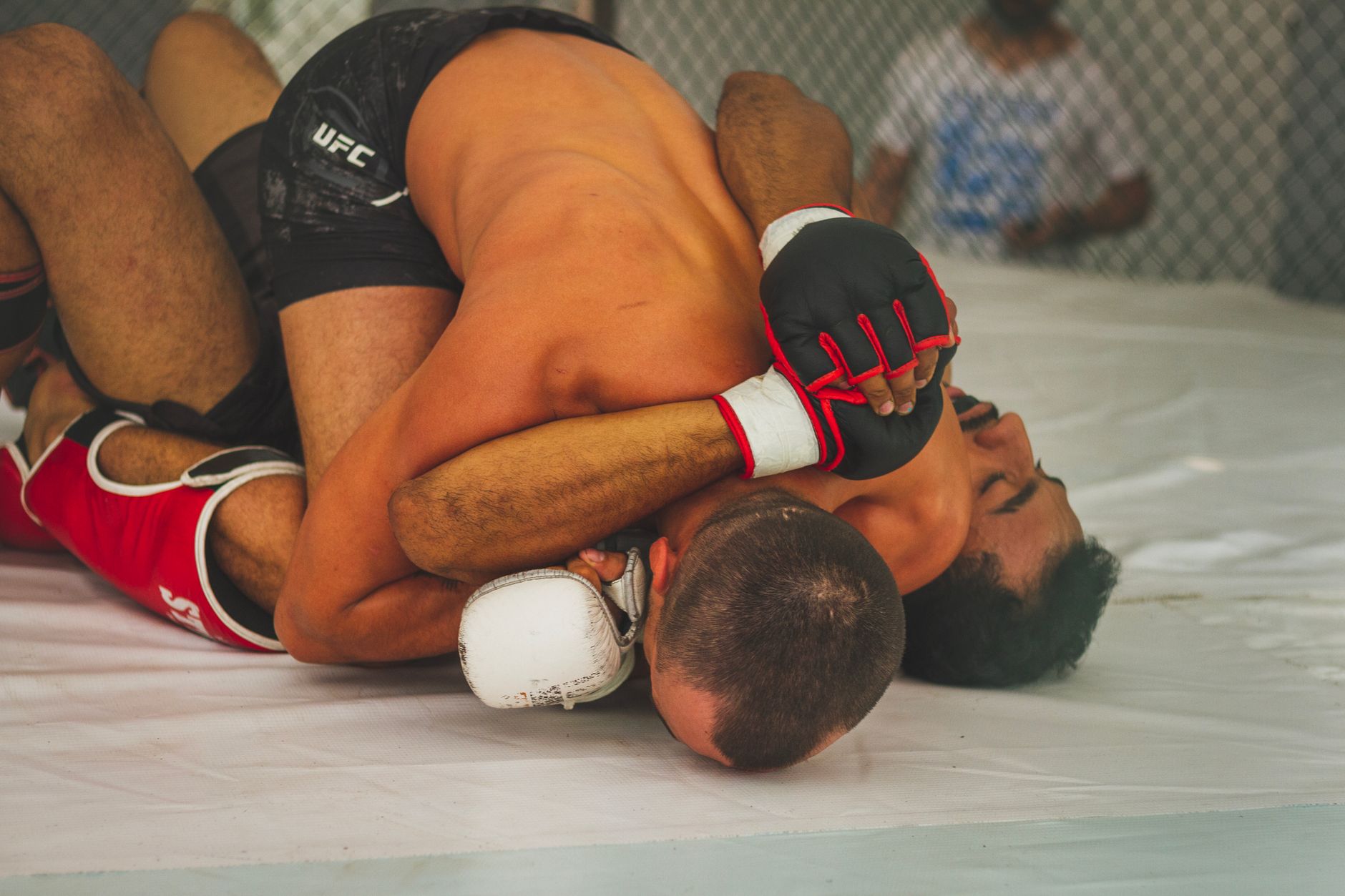
The guillotine is a front-headlock choke. You wrap an arm under your opponent’s chin, grip your own hands or wrist, and squeeze the neck upward while pulling the head into your chest. Depending on the grip, it cuts off blood to the brain or air to the lungs. It works from standing, from guard, or off a failed takedown.
The mechanics are simpler than most submissions. There’s no joint to isolate and no limb to trap. You need the head lower than the shoulders and a forearm blade jammed against the throat or under the jaw. That’s the entire recipe. The hard part isn’t getting the position — it’s finishing before the position gets stolen back.
Why the Guillotine Choke Ends So Many MMA Fights
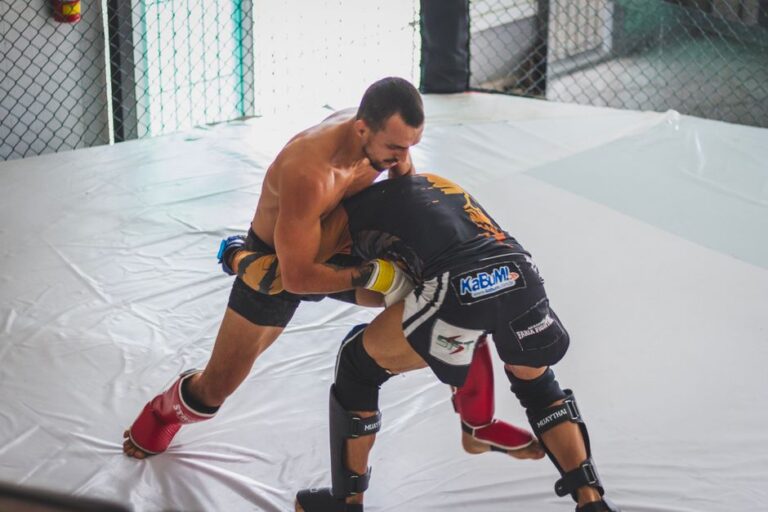
The guillotine punishes bad wrestling. Every time a fighter shoots a takedown with his head on the wrong side or ducks in without changing levels, his neck is served up on a plate. Because so many MMA takedowns are sloppy under fatigue, the guillotine stays busy all night, especially in the later rounds when shots get desperate.
Think about how many fights you’ve watched where the momentum flipped on a single takedown attempt. The wrestler shoots, the striker sprawls and snatches the neck, and now the guy who was supposed to be safe on top is fighting for his life. It’s the great equalizer between grapplers and strikers. A boxer with six months of jiu-jitsu can still catch a Division I wrestler who gets greedy.
It also travels well between disciplines. The same front headlock shows up in wrestling, in judo, in no-gi grappling, and in self-defense. That crossover is why it’s usually one of the first three submissions any gym teaches — right alongside the rear naked choke, which we broke down in our piece on why one hold ends a third of all UFC submissions.
Arm-In vs Arm-Out Guillotine: Which One Actually Finishes
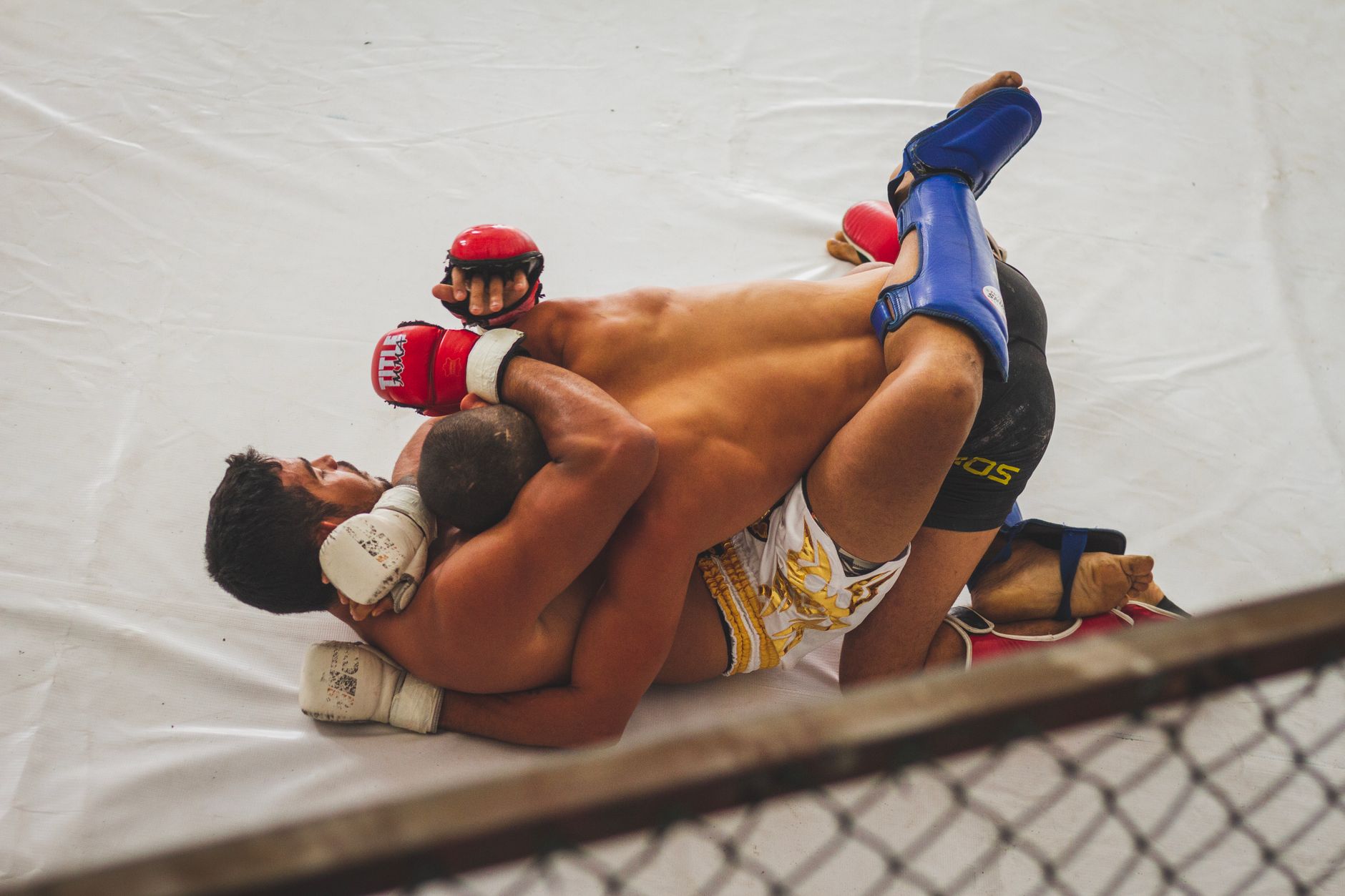
The arm-out guillotine traps only the head and relies on a pure throat squeeze. The arm-in version traps the head and one arm, using the shoulder as an extra wall against the neck. In MMA, arm-in wins. Wrestlers shoot with an arm already inside, so the arm-in catch is what you get naturally off a stuffed takedown.
Here’s the honest trade-off. The arm-out guillotine looks tighter and finishes fast when it lands, but a good defender pops his head out the second your grip slips. The arm-in is slower to lock but nearly impossible to escape by posturing, because the trapped shoulder blocks the head from sliding free. If I had to bet on one finishing in a title fight, it’s arm-in every time.
The high-elbow guillotine — where you drive your choking elbow toward the ceiling — is the modern refinement that made the arm-in version so nasty. It stops the opponent from stacking you and keeps blood-choke pressure on even from bottom guard. That’s the grip most black belts finish with today.
How to Finish the Guillotine Choke Without Gassing Out
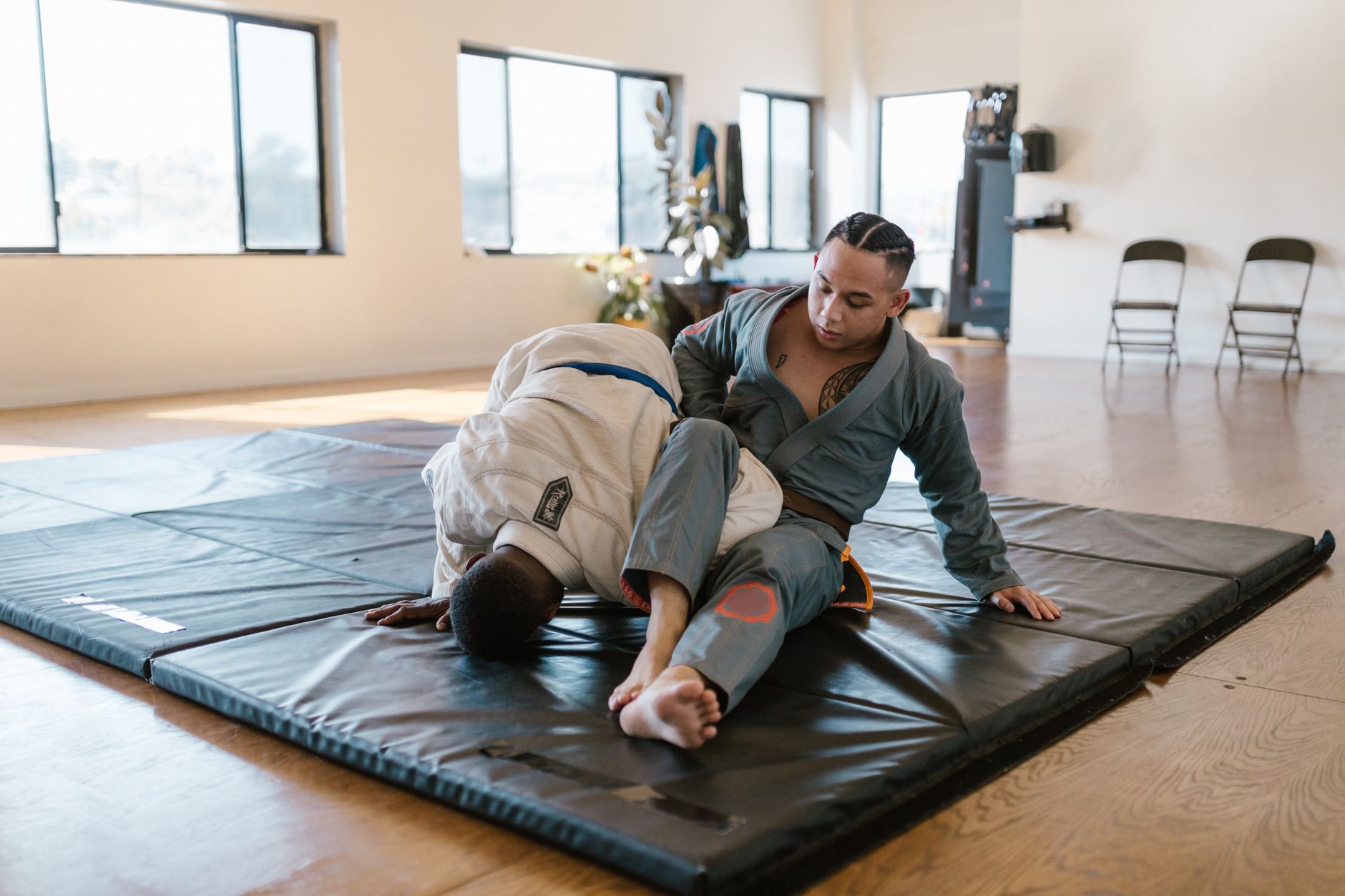
Finishing a guillotine is about connection, not arm strength. Lock your hands, pull your elbows tight to your ribs, and use your whole torso to curl the head in — not a bicep curl. Squeezing with the arms alone burns your grip in seconds and hands the position right back. Legs and core do the real work.
This is where most amateurs lose the fight. They clamp the choke, squeeze with everything they have for ten seconds, and when it doesn’t tap they’re too gassed to hold top position. Now they’re stuck in the opponent’s guard with dead arms. A patient defender knows this and simply survives the initial surge.
The fix is the guard pull or the leg connection. From bottom, a high guard or a leg over the shoulder pins the opponent in place so your grip does less work. From standing, you jump guard or drag the man down so he can’t posture out. Great guillotine finishers make the position do the squeezing so their arms don’t have to.
The Guillotine’s Biggest Weakness: Escaping the Choke
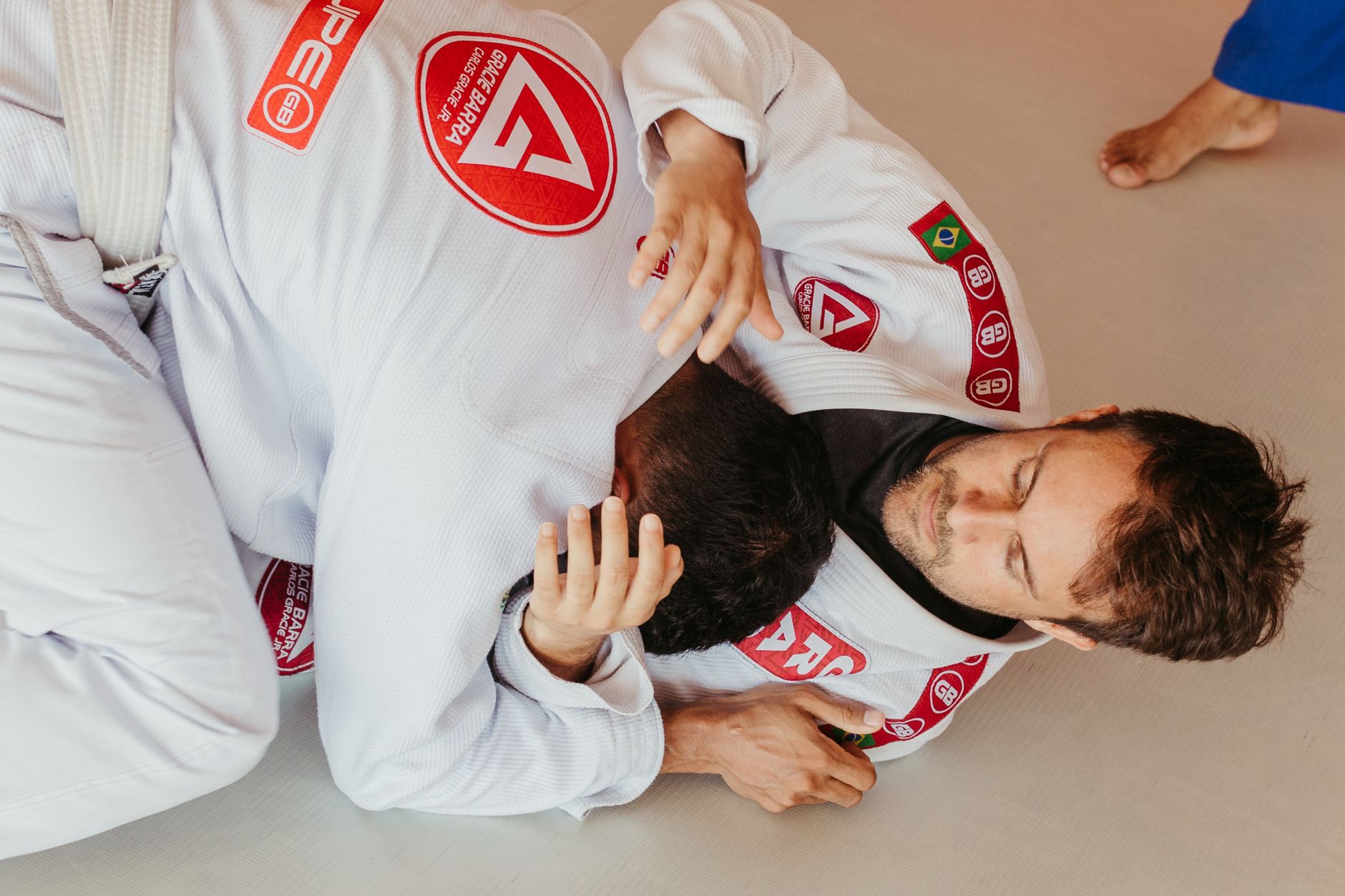
The classic guillotine escape is to walk to the choking-arm side, drive your shoulder into the opponent’s chest, and pin the choking hand to the mat with your head. Once the head is trapped, the attacker can’t finish and burns out his grip trying. Then you pass to side control on the freed side. Posture and hand-fight early — the choke only tightens if you let your head drop.
The mistake defenders make is panicking and pulling on the arm. You can’t muscle out of a tight guillotine by yanking the wrist; the choke is stronger than your grip. The escape is positional. Get your head to the safe side, drop your weight, and wait. A guillotine that isn’t finishing in ten seconds is a guillotine that’s about to lose the fight for the guy who threw it.
This is why coaches yell “chin down, hands fighting” the instant they see a front headlock. Prevention beats escape. If your chin is buried and your hands are peeling the grip before it locks, the choke never gets deep enough to matter.
How the Guillotine Choke Fits Into TKO Tycoon Strategy
In TKO Tycoon, the guillotine rewards fighters built around grappling defense and cardio, not raw submission stats. A fighter with strong takedown defense catches more front headlocks because he’s meeting shots with a sprawl. Pair that with high conditioning and the finish sticks instead of stalling out.
The game models the same gas-tank problem real fighters face. Throw a guillotine with a low-cardio fighter and you’ll watch the attempt drain his stamina bar without a tap — exactly like the amateur who squeezes himself out of the fight. Build a grappler with the conditioning to hold the position, and the guillotine becomes a round-ending weapon off every stuffed takedown your opponent throws. It’s a small mechanic that quietly decides a lot of close fights.
Frequently Asked Questions About the Guillotine Choke
Is the guillotine a blood choke or an air choke?
It can be either. A high, tight grip under the jaw compresses the arteries for a fast blood choke and a quick tap. A lower grip across the windpipe becomes an air choke, which is slower and more painful but easier to survive. Fighters aim for the blood-choke version.
Why do so many guillotines fail in the UFC?
Most fail because the attacker squeezes with his arms alone and gasses out before the choke finishes. Elite defenders know a guillotine that doesn’t tap in about ten seconds is beatable, so they posture, walk to the choking-arm side, and wait for the grip to die.
Can you finish a guillotine from bottom guard?
Yes, and it’s one of the safest positions to try it. From closed or high guard, your legs pin the opponent so he can’t stack and posture out. The high-elbow arm-in grip is the standard finish from bottom because it keeps blood-choke pressure without needing to be on top.
What’s the fastest way to defend a guillotine?
Prevent it before it locks. Keep your chin tucked when you shoot, change levels so your head stays up, and hand-fight the grip immediately. If it’s already on, drive to the choking-arm side, pin the hand with your head, and pass to side control.
Ready to Build a Grappler Who Actually Finishes?
The guillotine is the perfect proof that MMA is a game of positions, not just power. Want to test it yourself? Build a fighter around takedown defense and cardio in the TKO Tycoon game and watch how many fights end the moment your opponent shoots a careless takedown. Manage the gym, train the tank, and let the front headlock do the rest.
References
- ESPN MMA – UFC submission statistics and finish-rate reporting
- Sherdog – fight databases and submission records used to rank the guillotine among top MMA finishes
- Bloody Elbow – technical breakdowns of front-headlock and high-elbow guillotine mechanics
Into BJJ? TaipeiBJJ.com covers training resources and BJJ content.
Need no-gi training gear? RashguardGuy.com reviews the best rashguards for BJJ and MMA.
Play TKO Tycoon — the MMA management game for fight fans.
Shop on Amazon
MMA & Boxing Gear on Amazon →
As an Amazon Associate we earn from qualifying purchases.
Shop on eBay
MMA & Boxing Gear on eBay →
We may earn a commission when you shop through our eBay links.