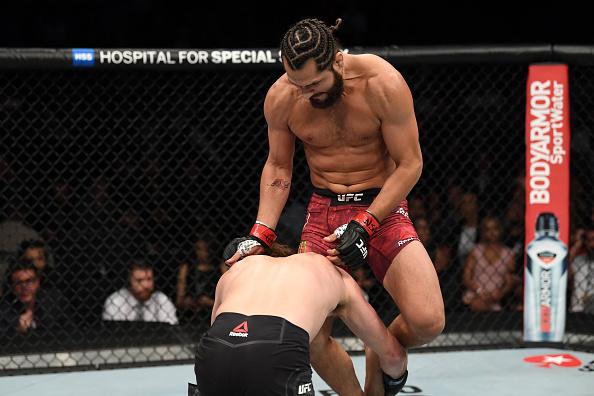
Kimura Lock in MMA: The Shoulder-Wrecking Submission That Stops Scrambles
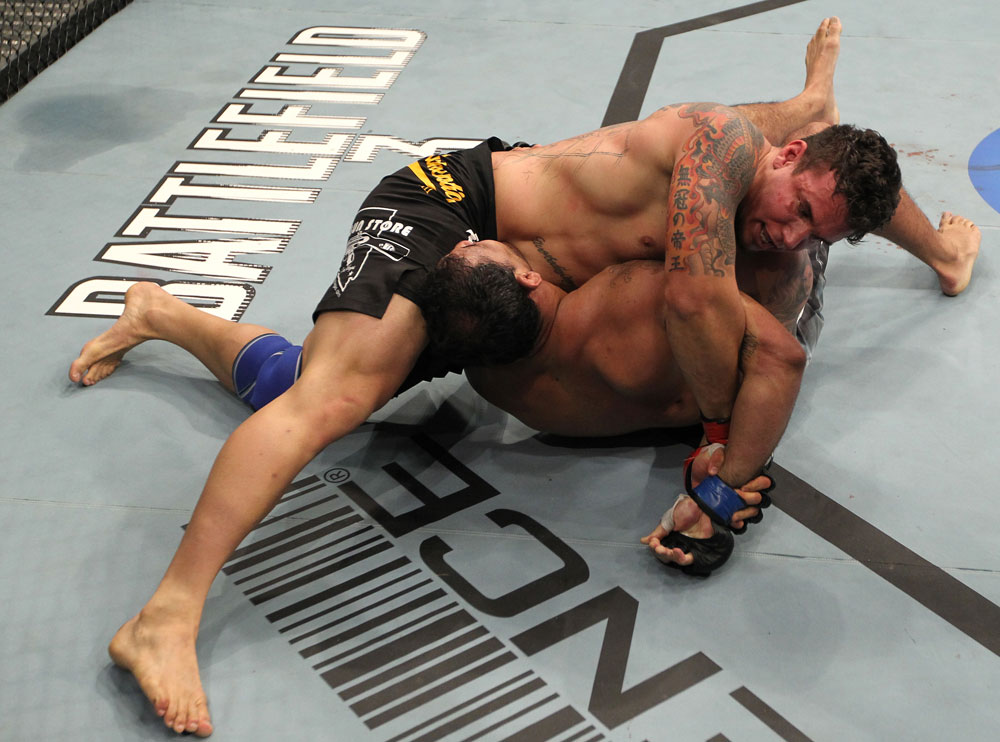
In the first round of UFC 140, Frank Mir caught a scrambling Antonio Rodrigo Nogueira in a kimura lock, torqued it past the point most fighters tap, and the broadcast picked up an audible crack as Nogueira’s humerus snapped. Nogueira never tapped. Mir didn’t need him to. That single image — one fighter’s shoulder bent at an angle it was never built for — is the reason the kimura lock has a reputation no other submission quite matches in MMA. It’s not the most common finish in the sport. But it might be the most feared, because unlike a rear-naked choke or an armbar, a kimura can be fought off for a long time before it suddenly isn’t survivable at all.
What Is a Kimura Lock?
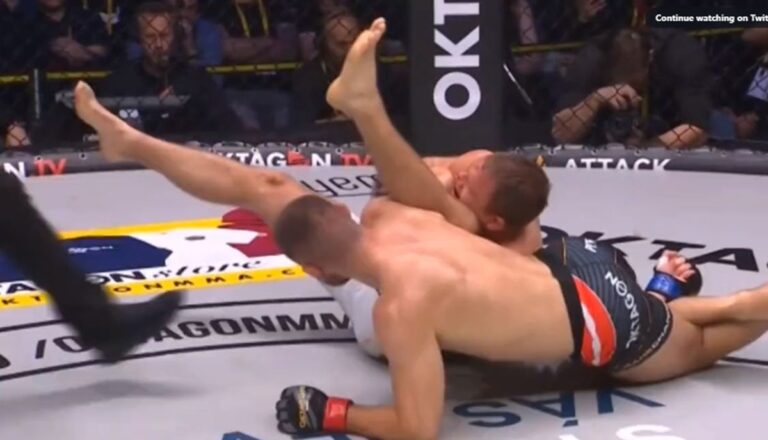
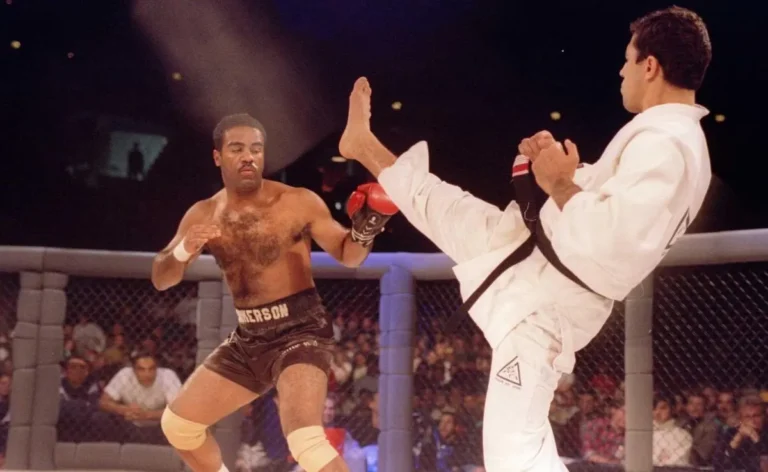
The kimura is a shoulder lock, not an elbow lock, which is the detail most casual fans get wrong. The attacker traps an opponent’s wrist and threads their own arm underneath, grabbing their own wrist to form a figure-four grip — the same grip jiu-jitsu players call a “double wristlock.” From there, the attacker rotates the opponent’s arm behind their back, cranking the shoulder joint well past its normal range of motion. Named after judoka Masahiko Kimura, who used the hold to break the arm of Brazilian jiu-jitsu founder Hélio Gracie in a legendary 1951 match, the technique predates modern MMA by decades but has never stopped being relevant inside the cage. Gracie refused to tap even as his shoulder gave out, and his corner threw in the towel rather than let the arm break further — the same stubborn refusal to submit that would show up seven decades later when Nogueira ate the identical hold from Mir. The Gracie family was so marked by the loss that they started calling the technique the “kimura” instead of its original judo name, gyaku ude-garami, turning the man who beat them into the move’s permanent namesake.
What makes it dangerous is leverage, not strength. A smaller fighter with a tight figure-four grip can hyperextend a much larger opponent’s shoulder, because the attacker is using their whole torso to rotate the hold rather than relying on arm strength. That’s part of why the kimura shows up constantly in both gi and no-gi grappling as well as MMA — it doesn’t care how big your opponent is if the grip is locked in correctly.
Why the Kimura Survives Scrambles That Kill Other Submissions
Most submissions have a narrow window. A rear-naked choke needs the hooks in and the arm under the chin before the opponent turns into you. A triangle needs the angle locked before they posture up. The kimura is different — it’s a grip-based attack that travels well through transitions, which is exactly why it shows up so often in scrambles rather than from a static position.
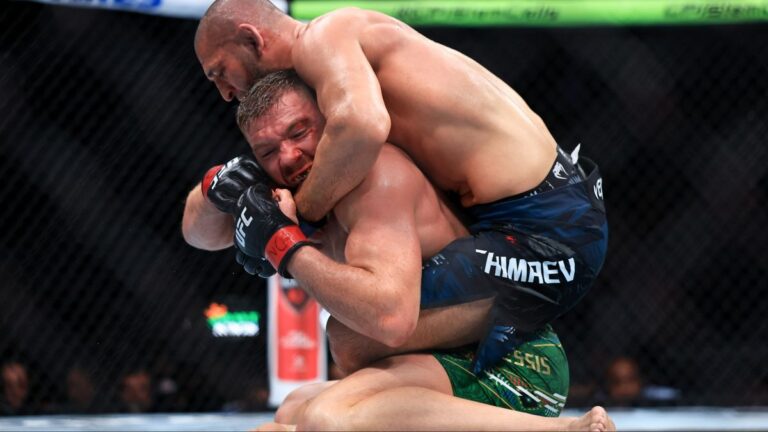
A fighter can lose top position, get swept, or have their opponent stand up, and still keep the kimura grip locked the entire time, because the grip itself doesn’t depend on who’s on top. This is the technical reason coaches call it a “connector” submission — it’s rarely the first thing a fighter goes for, but once the grip is secured it survives almost anything that happens next. Islam Makhachev’s finish of Dan Hooker at UFC 267 is a clean example: Makhachev landed the grip during a scramble on the mat, Hooker tried to roll and relieve the pressure, and the rotation only tightened the hold further until the tap came.

The Kimura Trap: Attacking From the Bottom
The move isn’t just a top-position weapon. One of the most important developments in modern grappling is the “kimura trap” system, built around using the kimura grip from the bottom or during a scramble as a control position rather than a finishing hold — locking the grip, using it to off-balance the opponent, and riding it into back takes, sweeps, or a straight finish if the opponent overcommits. Fighters who grapple from guard or half guard use the kimura grip this way constantly, not because they expect the tap immediately, but because the grip itself solves so many positional problems at once. It freezes one of the opponent’s arms, limits their posture, and gives the bottom fighter a built-in reversal option the moment their opponent tries to pass.
Luke Rockhold’s finish of Tim Boetsch at UFC 172 shows the hybrid version of this idea — Rockhold spun to an inverted triangle, couldn’t quite finish that hold cleanly, and switched his free arm to a kimura on the same side instead. The setup changed mid-fight, but the kimura grip was the constant that let him finish regardless of which exact position he ended up in.
Standing, Mounted, or From Side Control — It Works Everywhere
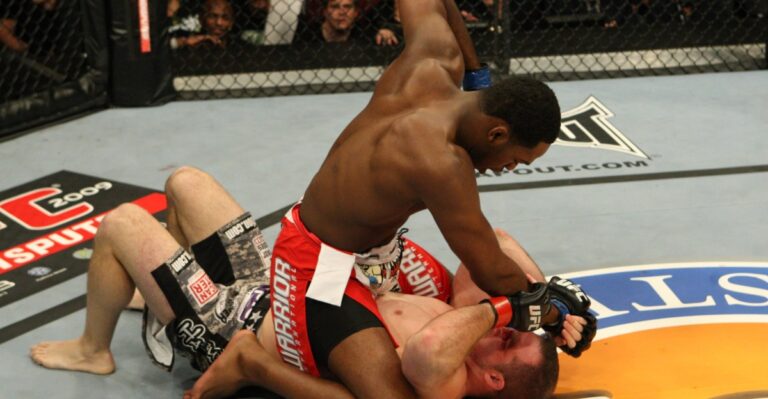
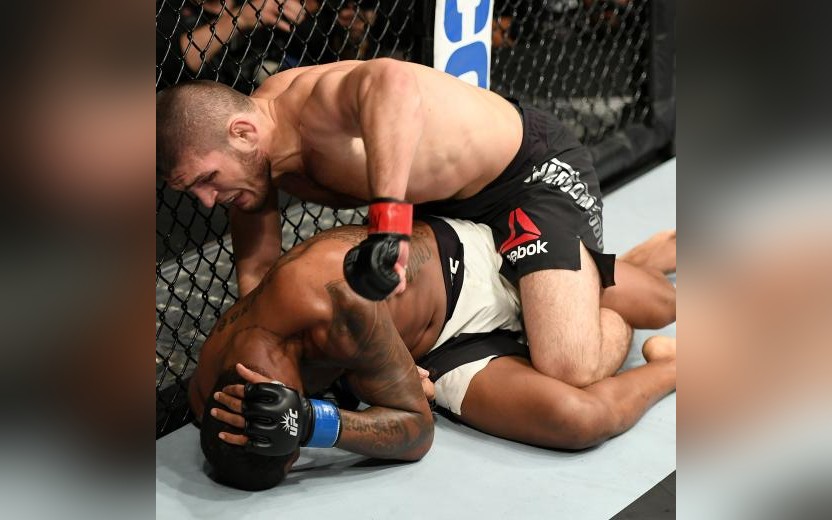
Few submissions translate across as many positions as the kimura. Brock Lesnar used it from full mount against Frank Mir at UFC 100, raining down strikes while cranking the shoulder until the doctor stopped the fight over visible damage to Mir’s arm before a tap was even necessary. Khabib Nurmagomedov finished Michael Johnson with it from a dominant top position at UFC 205, after Johnson’s scrambling attempts only gave Khabib a cleaner angle to isolate the arm. Jimmy Crute used it from side control against Michał Oleksiejczuk at UFC Fight Night 168, taking his opponent down seven times before the grip finally came together.
Wrestlers in particular gravitate toward the kimura because it pairs naturally with their top control. A fighter who can get a takedown and establish side control or mount doesn’t need a highlight-reel submission chain to find a kimura — the grip is often sitting right there once an opponent starts framing or pushing to create space, which is exactly the moment a trained grappler reaches for the wrist.
The Kimura as a Setup, Not Just a Finish
Elite grapplers rarely treat the kimura as a one-dimensional move. Because the grip controls an opponent’s entire upper body, it functions as a launching point for almost every other major submission on the ground. An opponent who successfully defends the shoulder rotation by turning into the attacker often hands over their back in the process — which is how a kimura attempt turns into a rear-naked choke a few seconds later. An opponent who tries to post their free hand to stop the roll can get that arm scooped up into a triangle or an armbar instead. Coaches drill this chain specifically because a fighter who only knows the kimura as a finish will lose the grip the moment an opponent defends it correctly; a fighter who knows it as a connector keeps the offense running no matter which direction the defense goes.
That chaining ability is also what makes the kimura such a useful read for fans watching a fight develop. The moment a grappler locks the figure-four grip, the fight has effectively entered a decision tree — tap, get finished, or get swept into a worse position trying to escape. None of the outcomes favor the fighter on defense, which is exactly why elite grapplers hunt for the grip even when they know the finish itself isn’t guaranteed.
How Fighters Survive It
Defense starts well before the grip is finished. The single biggest defensive principle is keeping the elbow tucked tight to the body — a kimura needs space to rotate the shoulder, and a trapped elbow against the ribs removes most of that space before the attacker ever gets the figure-four locked. Once the grip is on, defenders look to roll in the direction of the lock rather than away from it, which can relieve pressure and occasionally let a fighter spin out entirely, the same scramble-based escape that makes the kimura a double-edged tool for both sides of the position.
The fighters who survive deep kimura attempts tend to be the ones with enough mat awareness to feel the grip forming early, before the attacker has fully isolated the arm. Once the rotation starts and the shoulder is near its limit, tapping late is how fighters end up with the kind of injury Nogueira walked away with at UFC 140 — a fight his opponent won without ever finishing the choke or landing a knockout blow, just leverage applied correctly.

Why It’s Still a Weapon in 2026
With leg locks and back takes dominating a lot of modern grappling instruction, the kimura can look like an old-school technique next to something like a heel hook. But it’s lasted this long in MMA for a reason no rule change or meta shift has touched: it works from almost any position, it doesn’t require explosive strength, and it keeps functioning through exactly the kind of chaotic scrambles that define live MMA grappling far more than clean, static positions ever do. Any fighter with a wrestling or jiu-jitsu base who gets top control is one bad frame away from eating a kimura grip, and once that grip locks, the fight is on the attacker’s terms whether the finish comes in five seconds or five minutes.
It’s also exactly the kind of submission that rewards the grappling attributes TKO Tycoon tracks under its ground game stats — a fighter with high top control and submission grip ratings is far more likely to land a kimura than one who’s purely a striker forced into a scramble. If you’re building a wrestler or BJJ-heavy roster in the game, prioritizing those attributes is what turns ordinary top position into finishes, the same way it does for the real fighters above.

The next fighter to make a highlight reel with this hold probably isn’t a submission specialist — it’s more likely a wrestler who ends up in top position almost by accident, feels an arm creep too far from the body, and remembers that the kimura has never needed a perfect setup to work. It just needs one mistake.