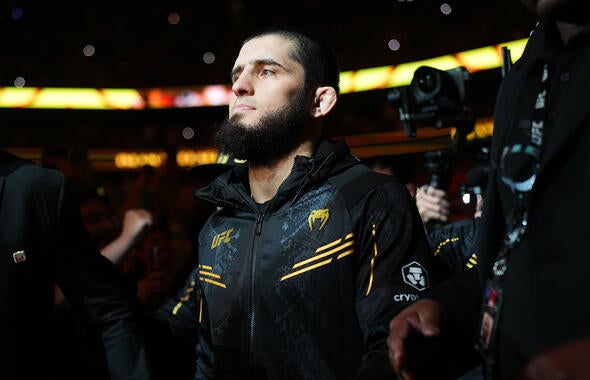
UFC Bantamweight Rankings: Who’s Closest to Petr Yan’s Title
Six months ago, the bantamweight division had a clean story: Merab Dvalishvili was running through former champions on a cardio engine nobody could match, and the only question was who was left to beat him. That story is gone. Petr Yan finally solved the wrestling, Song Yadong turned a five-to-one underdog line into the biggest upset of the year, and the names circling the belt now look nothing like they did at the start of summer. Bantamweight is the most unsettled it’s been in years, and that makes it the division worth paying attention to.
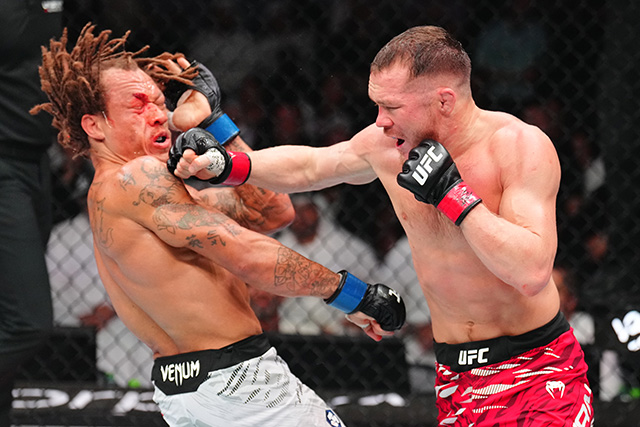
Petr Yan: The Champion Who Finally Beat the Machine
Dvalishvili’s title reign was built on a formula nobody could crack — fourteen straight wins and four former champions beaten by simply wrestling opponents into exhaustion. Yan is the only man who’s figured out how to answer it. Where previous challengers tried to out-wrestle the wrestler or survive on the fence, Yan mixed level changes with his own takedowns into the exchanges, refusing to let Dvalishvili dictate the pace of the cage the way he had against everyone else. He didn’t just win rounds; he took away the one tool that had made Merab untouchable for six years.
That’s what makes Yan dangerous now as a champion rather than just as a spoiler. He’s a converted sambo wrestler with real top-level boxing, which means he isn’t a one-trick counter to Dvalishvili specifically — he’s a complete bantamweight who can fight wherever the opponent wants to fight. His jab-to-leg-kick combination has always been the foundation, but what separates Yan from the rest of the division’s strikers is his willingness to change levels mid-combination, forcing opponents to respect the takedown even when he’s standing and trading. That versatility is precisely why a wrestling-heavy gameplan — the one thing that was supposed to be the kryptonite for every striker at 135 — didn’t work against him.
The hardest part of his job now isn’t staying champion against any one style. It’s that the division behind him just produced its most chaotic three months in years, and the next challenger isn’t obvious. Normally a new champion gets a defined contender waiting in line. Yan doesn’t have that luxury — he has three separate credible cases stacked on top of each other, and whichever one the UFC picks will shape how the rest of 2026 plays out at bantamweight.
Song Yadong: The Opponent Nobody Wanted to Fight Next
Umar Nurmagomedov was 20-1, a six-time rear-naked choke finisher, and being talked about as the clearest heir to the bantamweight throne. Then Song Yadong knocked him out at UFC Shanghai as a five-to-one underdog, and the entire division’s pecking order flipped in under fifteen minutes. This wasn’t a slow decision or a split call that needed context — it was a finish, on Nurmagomedov’s home turf of hype, against a fighter nobody had him losing to.
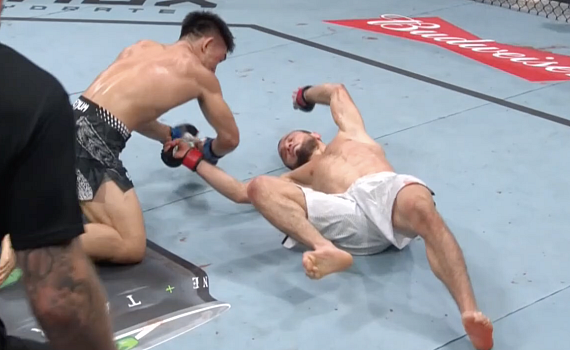
Yadong’s game is built on Sanda, the Chinese kickboxing discipline that rewards sudden angle changes and power shots thrown from awkward ranges — exactly the kind of striking that’s hard to load tape on, because so few UFC opponents share his background. Beating Nurmagomedov in Shanghai, in front of a home crowd, on a card the UFC built specifically to grow the sport in China, gives Yadong a resume line that’s both a title case and a business case. The UFC doesn’t need much convincing to put a red-hot Chinese knockout artist in a bigger fight next.
The question with Yadong has never been power — it’s volume against elite wrestlers who can turn a firefight into a grind. Nurmagomedov is a grappler who got caught standing. A step up to Yan or Dvalishvili changes that equation considerably, and Yadong hasn’t answered it yet.
There’s also a timing argument working in Yadong’s favor that has nothing to do with style matchups. The UFC has been building its presence in China for years, and a finish this clean, on a card built around growing the sport there, is the kind of moment promotions don’t let cool off. Business and matchmaking rarely line up this neatly — a red-hot finisher who also happens to be the biggest needle-mover for an entire market the UFC wants to grow. That alone makes it hard to imagine Yadong sitting out more than one more fight before a title opportunity.
Merab Dvalishvili: Still the Measuring Stick, Even Without the Belt
Losing the title to Yan doesn’t erase what Dvalishvili built. Fourteen straight wins, four former champions beaten, and a north-south choke finish over Sean O’Malley that’s still one of the rarest submissions landed in a UFC title fight. “The Machine” earned that nickname by refusing to let fights slow down, stacking a pace most bantamweights can’t survive for fifteen minutes, let alone twenty-five.
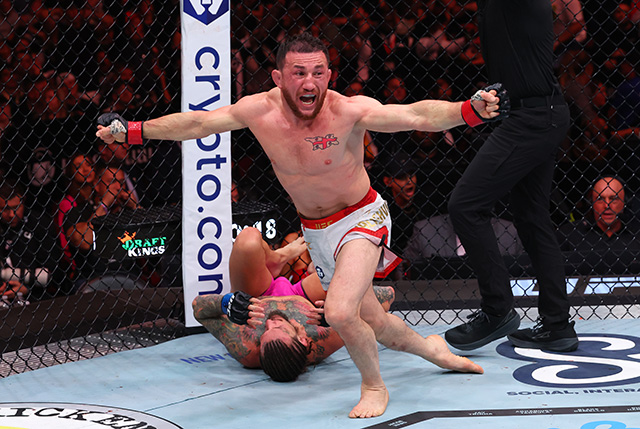
What the loss to Yan actually revealed is useful, not damning: Dvalishvili’s cardio-pressure game depends on constantly initiating exchanges on his terms, and Yan is one of the few bantamweights with the wrestling credentials to contest that exchange instead of just defending it. That’s a specific, closeable gap — not a sign the system is broken. An immediate rematch makes sense on paper, but with Yadong’s statement win sitting right behind him in the rankings, the UFC has a genuine choice to make about who gets the next crack at Yan, and Dvalishvili no longer has it locked up by default.
Mario Bautista: The Quiet Threat Nobody Wants to Fight
Bautista doesn’t get talked about with the same urgency as Yadong’s knockout or Dvalishvili’s run, and that’s exactly the problem for whoever has to face him next. His win over Cory Sandhagen at UFC 329 wasn’t close — he out-wrestled a fighter known for elite takedown defense and ground control, avenging an old loss in the process and cracking the top five without a highlight-reel finish to sell it.
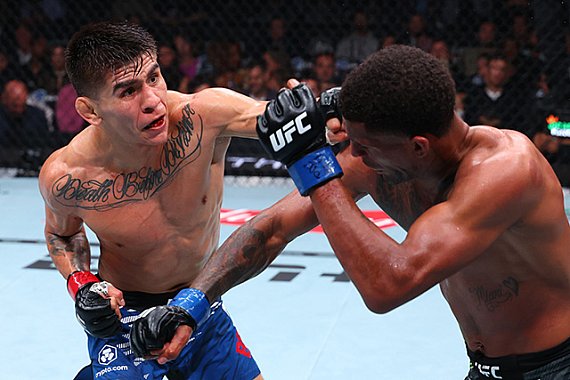
That’s the Bautista pattern: a wrestling-first style that grinds out decisions instead of producing finishes, which means he’s chronically underrated relative to what he’s actually accomplishing. He’s beaten the kind of durable, technical opposition that exposes flashier fighters, and he’s done it without a signature loss anywhere on his UFC résumé. Bautista isn’t the live underdog story or the dethroned champion — he’s the fighter whose game simply doesn’t have an obvious hole in it yet, which in a division this unsettled might matter more than a highlight reel.
What makes Bautista especially dangerous for matchmaking purposes is that he’s a bad stylistic matchup for almost everyone else in the current title conversation. His takedown entries are set up off real feints rather than telegraphed shots, which is exactly the kind of pressure that gave Sandhagen — a fighter with genuinely good takedown defense — trouble for three full rounds. Against a division full of strikers trying to rebuild their standing after a rough stretch, a grinder who can turn any fight into a wrestling match on his terms is the last stylistic puzzle anyone wants next.
Sean O’Malley: Rebuilding From the Only Finish Loss of His Career
O’Malley’s north-south choke loss to Dvalishvili wasn’t just his first finish loss in the UFC — it ended a run built almost entirely on volume striking, unusual reach, and footwork that made him one of the hardest bantamweights to time. Getting caught on the mat exposed the one dimension of his game that had never really been tested against someone willing to grind instead of trade.
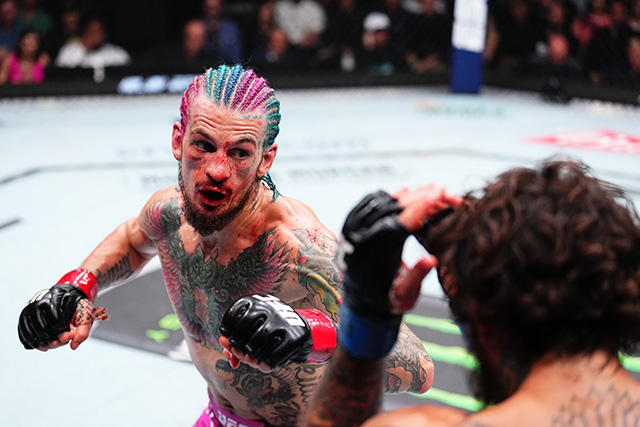
What hasn’t changed is the striking itself. Nobody in the division closes distance quite like O’Malley, and his power from unconventional angles is still the kind of threat that forces opponents to fight more cautiously than they want to. The path back isn’t about reinventing his style — it’s about proving the takedown defense that failed once against the most relentless wrestler in the division can hold up against anyone outside a Dvalishvili rematch. A win over a grappler-leaning name in the top ten does more for O’Malley right now than another highlight-reel knockout would.
The timeline matters here too. O’Malley has already held the belt and lost it in a finish that was genuinely difficult to defend — there’s no shame in getting caught by the same submission that ended Umar Nurmagomedov’s momentum earlier in the year. But the division has moved fast since that loss, and the gap between “former champion working his way back” and “forgotten name in a stacked top five” closes quickly in a weight class producing this many new storylines. O’Malley doesn’t need a title shot next. He needs a win that erases the question marks the Dvalishvili fight raised.
Who’s Actually Closest to the Belt?
Strip away the hype and Song Yadong has the strongest case on paper: a finish, over the division’s presumptive next champion, on the kind of stage the UFC wants to build around. But paper cases and title shots aren’t the same thing, and Dvalishvili’s resume — four former champions, fourteen straight wins, one closeable loss — still reads like a fighter who’s earned an immediate rematch more than he’s earned a step back in line.
My read: the UFC books Dvalishvili–Yan 2 first, because an immediate rematch after a competitive five-round loss is the safer business decision, and it keeps Yadong building his profile with one more fight before a title shot that the UFC can market even harder. If Yadong gets past a ranked name next and Dvalishvili comes up short a second time, the belt conversation flips entirely toward Shanghai’s newest star — and bantamweight stays exactly as unpredictable as it’s been all year.