Knee Bar in MMA: The Leg Lock Fighters Still Underestimate
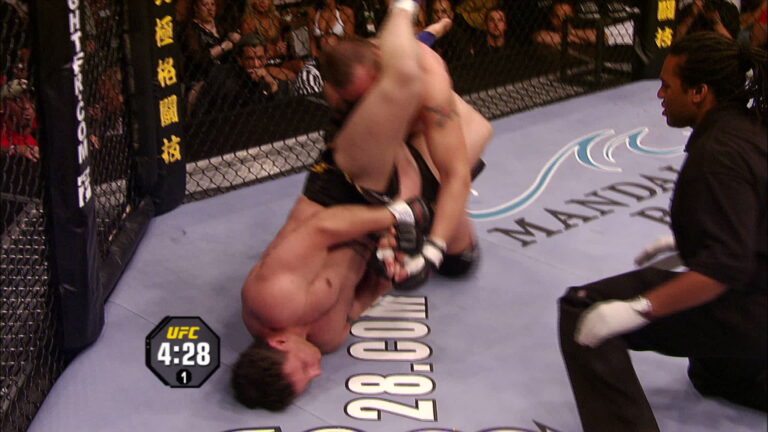
At UFC 228, Zabit Magomedsharipov spent the better part of two rounds throwing spinning kicks and awkward feints at Brandon Davis before the fight hit the mat and ended in a way almost nobody in the building saw coming. Magomedsharipov twisted into a scramble, hooked Davis’s leg across his hip, and bent the knee backward until Davis had no choice but to tap. It wasn’t a heel hook. It wasn’t a triangle. It was a knee bar — the submission MMA fans forget exists until someone lands one, at which point it looks like the most obviously devastating hold in the sport. That contradiction is the whole story of the knee bar: mechanically simple, historically rare, and still catching elite grapplers by surprise two decades into the sport’s evolution.
What Is a Knee Bar?
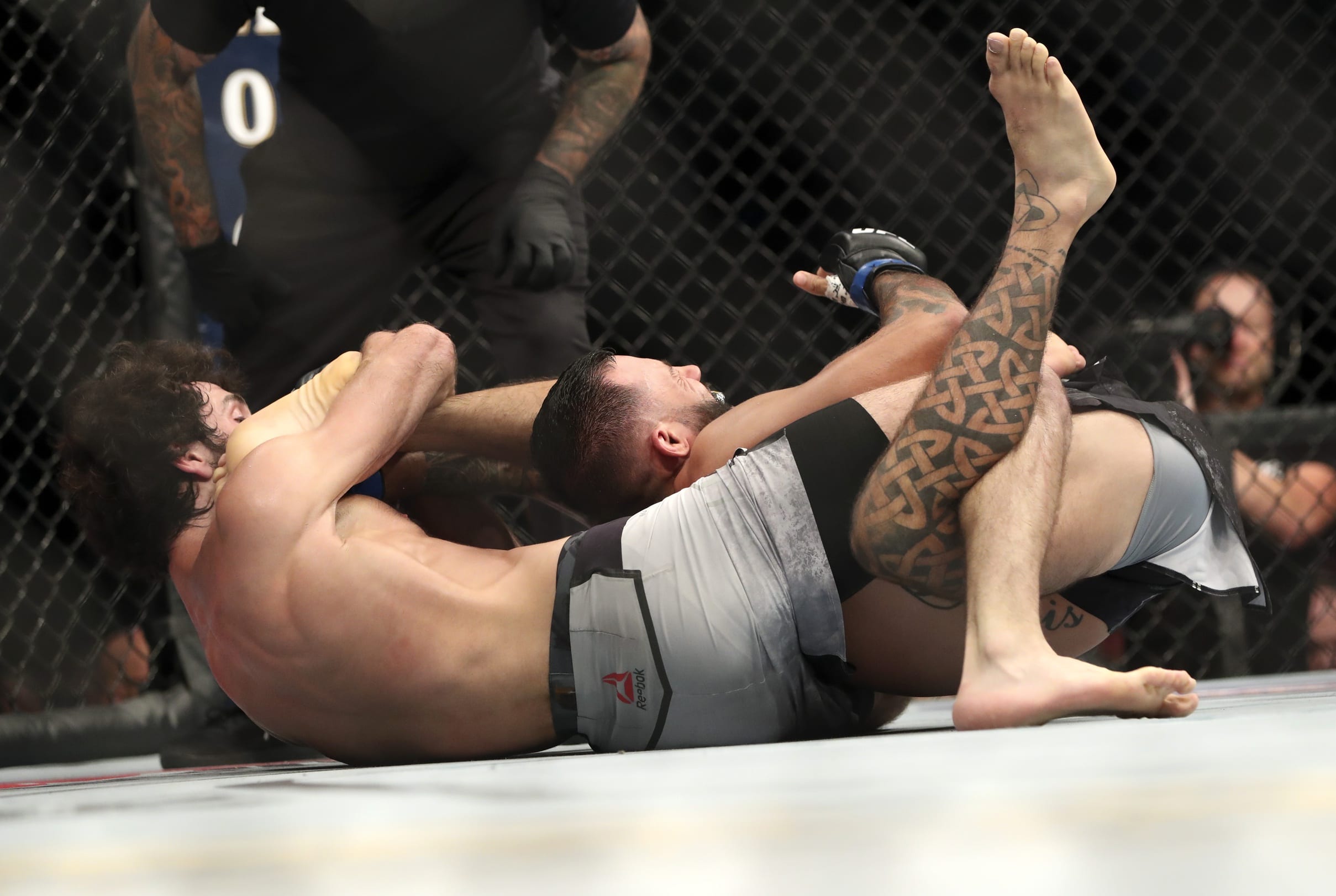
A knee bar is mechanically identical to an armbar, except the joint under attack is the knee instead of the elbow. The attacker isolates an opponent’s leg, traps the foot and ankle against their own chest or shoulder, pins the hip with their own body, and arches backward to hyperextend the knee joint. Just like an armbar, the fulcrum is the attacker’s hip, the lever is the opponent’s leg, and the finish comes from full-body leverage rather than grip strength. That’s what makes it so dangerous — a smaller fighter can snap a much larger opponent’s knee with correct mechanics, the same way a 135-pound grappler can hyperextend a heavyweight’s elbow with a tight armbar.
Where it differs from its more famous cousin, the heel hook, is the direction of the attack. A heel hook rotates the knee, twisting the ligaments and meniscus with torque. A knee bar hyperextends the knee in a straight line, the same way the joint would bend the wrong way in a bad fall. Both are leg locks, both can end a fighter’s night in seconds, and both are frequently confused by commentators calling a finish before replay confirms which one actually landed.
Why It’s MMA’s Rarest Leg Lock
Heel hooks and triangle chokes show up almost every UFC event. Knee bars don’t. Part of that is pure setup difficulty — a fighter has to isolate a single leg, control the hip to stop rotation, and secure the foot before an opponent can bend the knee away or stack out of the position, all while avoiding the far more common heel hook entry that presents itself from the same scrambles. Coaches teach leg-lock systems built around the saddle, outside ashi, and 50/50 specifically because those positions funnel toward heel hooks. A knee bar usually has to be taken, not set up — it shows up when an opponent overcommits to a scramble, leaves a leg straight and exposed, or stands up out of guard without clearing the hip first.
That rarity is exactly why knee bars tend to look shocking when they land. Fighters drill defense against the chokes and locks they expect to see. Few fighters drill specific knee bar escapes, because few opponents are live threats for the position. The result is a submission that finishes fast and clean precisely because the fighter on the receiving end usually hasn’t rehearsed getting out of it.
The Fights That Prove It Works
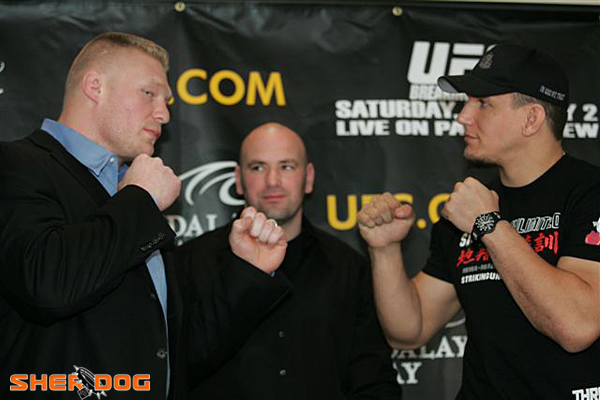
Frank Mir ended Brock Lesnar’s UFC debut in 90 seconds with one. At UFC 81 in February 2008, Lesnar — a former NCAA champion wrestler making the jump from WWE — battered Mir early, landing enough ground strikes that the referee came close to stopping the fight in Lesnar’s favor. Lesnar then postured up to improve his position and left a leg exposed. Mir, a BJJ black belt, grabbed it, dropped for the knee bar, and forced the tap before most of the crowd had registered the position change. It remains one of the most replayed finishes in UFC history, not because it was flashy, but because it ended a fight that looked completely lost 30 seconds earlier.
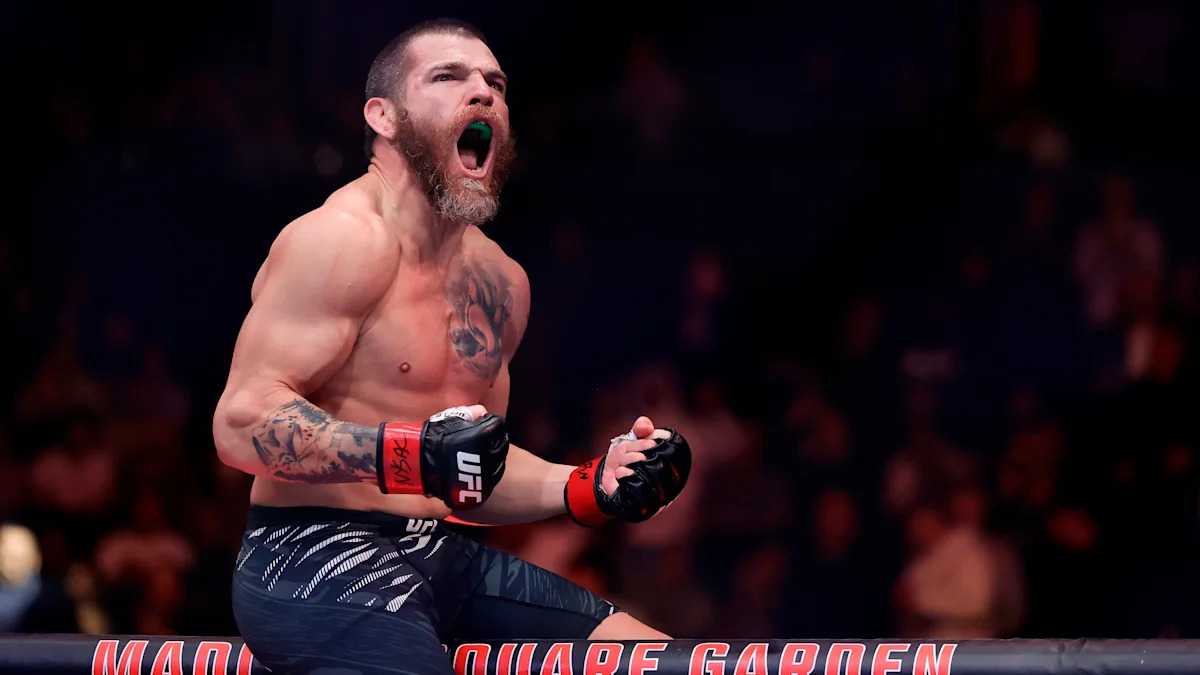
Jim Miller has one of the deepest submission résumés in UFC history, and a knee bar is on the list. At UFC 124 in December 2010, Miller caught Charles Oliveira — a dangerous submission grappler in his own right — in a knee bar at 1:59 of the first round, tapping a future lightweight champion before Oliveira had fully established himself in the division. It’s one of several different submission types Miller has used to finish UFC opponents across his record-setting number of UFC bouts, and the Oliveira knee bar is still cited as one of the cleanest examples of the position in the promotion’s history.
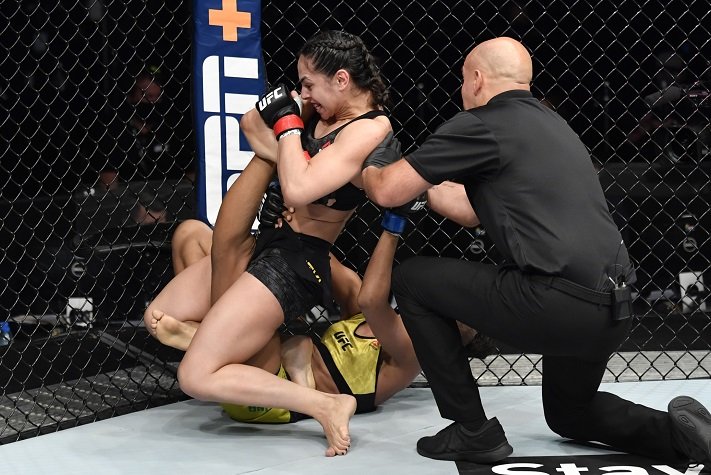
Ariane Lipski produced the most violent version of the submission the sport has seen. At UFC Fight Island 2 in July 2020, Lipski caught fellow Brazilian Luana Carolina in a knee bar just 88 seconds into their flyweight bout. Carolina reported hearing “three pops” in her leg as the hold tightened, and her screams were audible over the broadcast before the referee stepped in. The finish earned Lipski a Performance of the Night bonus and remains one of the most-replayed — and hardest to watch — leg lock finishes in UFC history.
Outside the UFC, Garry Tonon — one of the most accomplished leg-lock specialists ever to cross over from pure grappling — delivered a knee bar finish that doubled as a statement. At ONE Fight Night 12 in Bangkok, Tonon caught previously unbeaten Shamil Gasanov in a leg entanglement, and in the scramble to escape, Gasanov told the referee he was fine moments before Tonon rolled through and tightened the hold anyway, forcing the tap and ending Gasanov’s undefeated record. Tonon later said he applied maximum breaking pressure rather than easing off, treating the knee bar the same way a boxer treats a finishing combination — as a hold you commit to fully once it’s locked in, not one you feel out.

Knee Bar vs. Heel Hook vs. Toe Hold
All three are leg locks, and all three show up from the same family of positions — the saddle, 50/50, outside ashi, and scrambles off a failed takedown. But they attack different joints in different directions, and mixing them up is one of the most common mistakes casual fans make watching a fight live.
A heel hook rotates the foot, which torques the entire knee and can tear the ACL, MCL, and meniscus simultaneously with very little actual bend in the joint — which is part of why it’s considered the most dangerous of the three and why so many gyms restrict it in sparring. A toe hold twists the foot at the ankle, which transfers rotational pressure up into the knee in a similar way to a heel hook but with less overall leverage, making it a genuine threat but a less reliable fight-ender. A knee bar, by contrast, doesn’t rotate anything — it’s pure hyperextension, bending the knee backward the way it was never built to bend. That makes it, mechanically, the “cleanest” of the three leg locks and the one most directly comparable to an armbar. It also means a fighter can sometimes feel a knee bar coming and straighten the leg defensively before real damage occurs, something that’s far harder to do against a heel hook once the rotation starts.
How Fighters Defend It
The first and most important defense is positional: keeping the hips free. A knee bar can’t generate real leverage if the defending fighter can still rotate their hip away from the attacker, so wrestlers and scramblers are taught to fight hip control before worrying about the leg itself. Once the hip is pinned, the next defense is grabbing the attacker’s pants, belt, or far leg to stack them and kill the extension before it fully locks. Fighters with strong wrestling bases — the same skill set that makes takedown defense possible — tend to defend knee bars better than pure strikers, because the scramble awareness required to avoid the position in the first place is identical to the scramble awareness required to stop a takedown.
The counterintuitive defense, and the one most fighters get wrong under pressure, is tapping early. Because a knee bar is pure hyperextension rather than rotation, a fighter can sometimes feel the position is secure and decide to fight through it, assuming they have more range than a heel hook would allow. That assumption is exactly what got Luana Carolina hurt. The margin between “uncomfortable” and “ligament damage” on a fully locked knee bar is smaller than it looks, and fighters who treat it like a heel hook — where there’s sometimes a moment to posture out — are the ones who end up on the wrong side of a highlight reel.
The Takeaway
The knee bar will never be a volume submission the way the rear-naked choke or guillotine are. It requires a specific mistake from the opponent — a straight leg, an abandoned hip, a scramble gone one beat too far — and elite fighters make that mistake less often than they used to. But that scarcity is exactly what keeps it dangerous. Fighters stop fearing what they rarely see, which is precisely the gap a knee bar exploits. The next finish probably won’t come from a dedicated leg-lock specialist hunting for it from the opening bell — it’ll come the same way Mir, Miller, Lipski, and Tonon all found theirs: in the middle of a scramble nobody was watching for a leg lock in the first place, against a fighter who stood up, postured, or scrambled one half-second too late.