Ground and Pound: The Technique That Changed MMA Forever
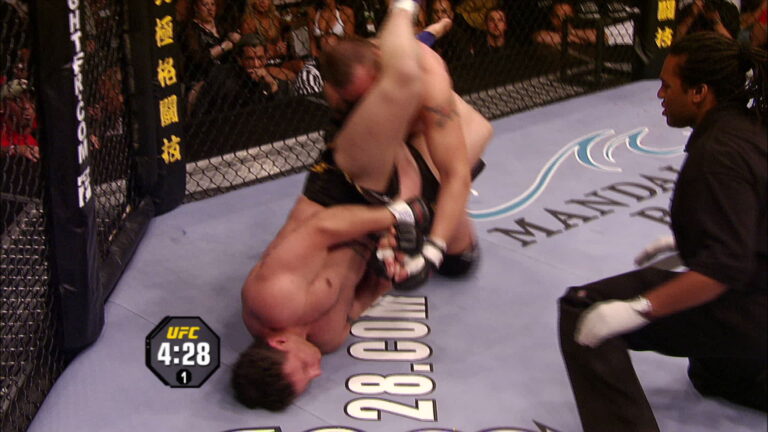
On July 12, 1996, Mark Coleman dragged Don Frye to the canvas in the UFC 10 tournament final and did something almost nobody had done on purpose before: he stayed on top and hit him until the fight ended. Coleman out-landed Frye 34 significant strikes to 1 that night, 28 of them thrown from top position. Grappling wasn’t just a way to avoid getting hit anymore — it was now the best way to land the finishing blow. Ground and pound was born, and it rewired what every fighter on earth had to train for.
What Ground and Pound Actually Is
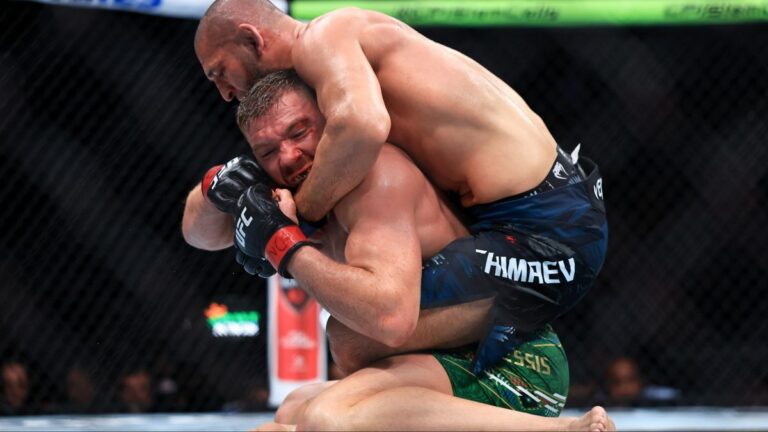
Ground and pound (G&P) is the combination of controlling an opponent on the mat — through mount, side control, half guard, or against the fence — and striking them with punches, elbows, and hammerfists while they’re pinned there. It sounds simple. What makes it devastating is that it strips an opponent of the two things that normally protect them standing: their footwork and their ability to create distance. On the ground, they can’t retreat. They can only defend, escape, or get hit.
The Godfather: Mark Coleman and the Birth of a System
Before Coleman, wrestlers who took a fight to the mat often didn’t know what to do once they got there — they’d control position and stall, or look for a pin like it was still folkstyle wrestling. Coleman, an NCAA heavyweight champion at Ohio State and a 1992 Olympian, was the first to treat top position as a launching pad for strikes instead of a stalling tactic. He won UFC 10 and, two months later, UFC 11 the same way — takedown, top position, punish until it’s over. He’s remembered today as the “Godfather of Ground and Pound” for exactly that reason, and five months after UFC 11 he became the promotion’s first heavyweight champion.
Why It Broke Traditional Martial Arts Thinking
Ground and pound forced two separate revolutions. Wrestlers realized a takedown wasn’t a safe place to coast — it was an opportunity to end the fight, which meant wrestling suddenly became a genuine finishing skill instead of just a control tool. And Brazilian Jiu-Jitsu players, who had spent years training guard as a submission-hunting position, had to relearn it as a defensive position against strikes first. Being on your back stopped being a place you could patiently work from — it became a place you had to survive.
The Rule That Had to Catch Up: Jon Jones vs. Matt Hamill (2009)
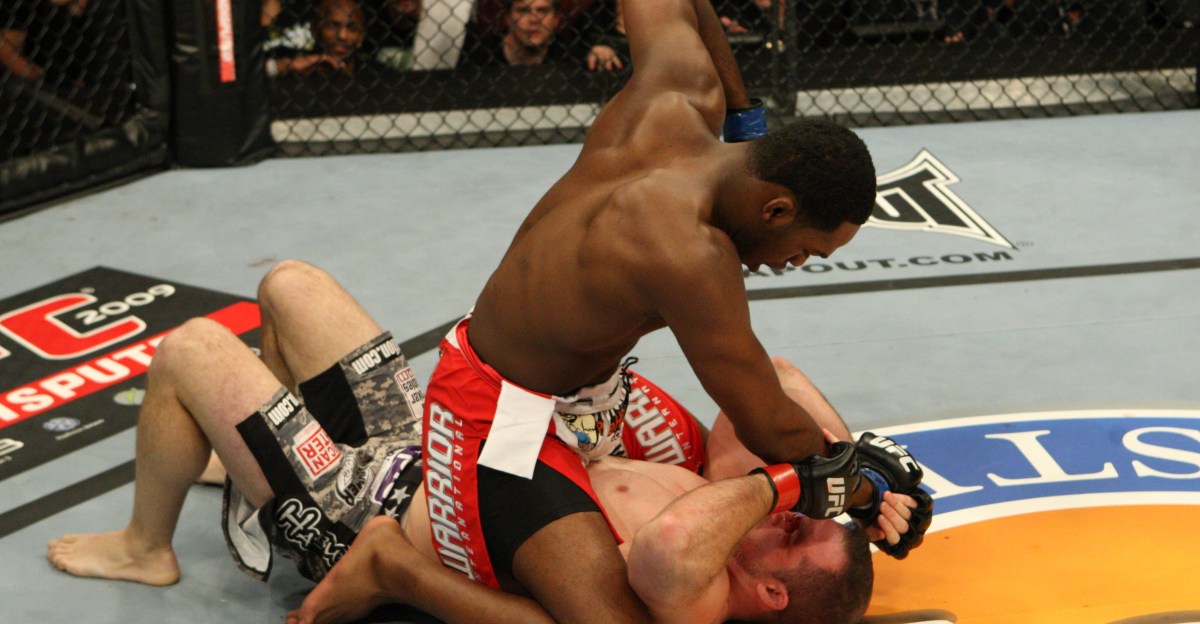
Ground and pound evolved faster than the rulebook, and nothing proves that better than the only loss of Jon Jones’s career. At The Ultimate Fighter 10 Finale on December 5, 2009, Jones completely dominated Matt Hamill on the ground — until he threw a series of “12-to-6” elbows, strikes that travel straight down like the hand of a clock moving from 12 to 6. That strike was illegal under the rules at the time, and referee Steve Mazzagatti disqualified Jones at 4:14 of round one, even though Jones was clearly winning the fight. The rule has since been stripped from the unified rules of MMA — the elbow is now legal — but the DQ loss still sits on Jones’s record. It’s a reminder that ground and pound’s toolbox (elbows, hammerfists, forearms) was still being sorted out as recently as the 2010s, not the stone age of the sport.
Modern Mastery: Khabib Nurmagomedov’s Suffocating Top Game
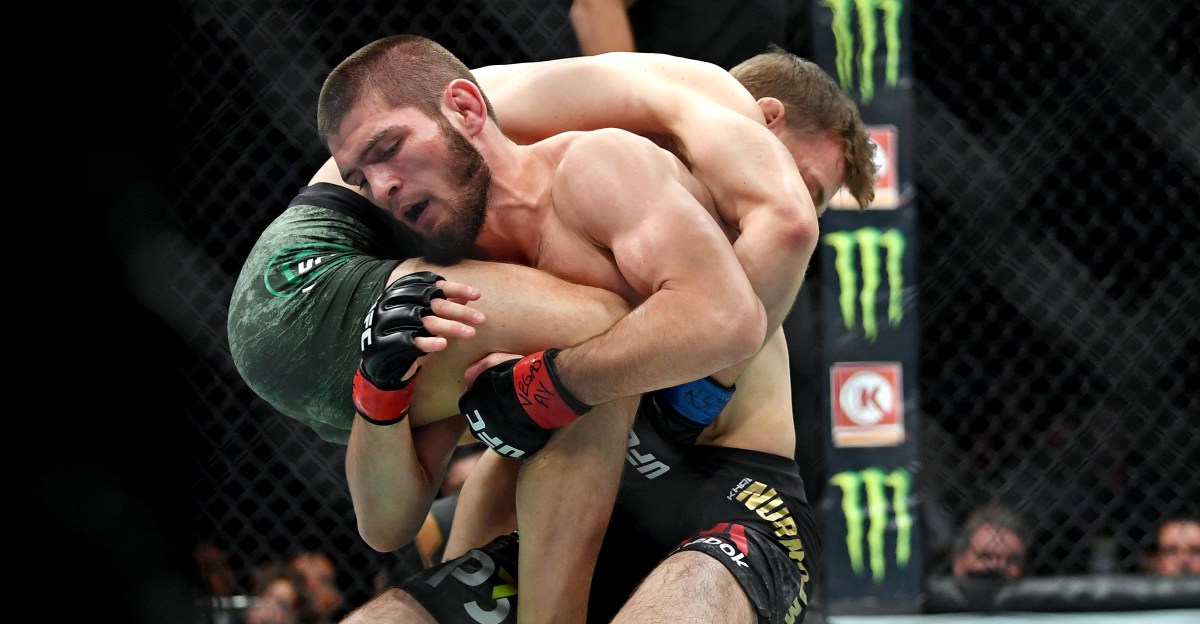
If Coleman invented ground and pound, Khabib Nurmagomedov perfected the version of it built on suffocation rather than pure violence. At UFC 229 in October 2018, Khabib spent the better part of four rounds controlling Conor McGregor against the fence and on the mat, mixing short ground strikes with constant positional pressure, before locking in a neck crank for the submission at 3:04 of round four. The strikes themselves weren’t always the most spectacular part — the suffocating control that set them up was. Fighters who faced Khabib routinely described the experience as being trapped under something heavier than a person, worn down round after round until an opening for a finish appeared.
Before Khabib: Fedor’s Pride-Era Ground and Pound
Ground and pound wasn’t only an American wrestling story. In Japan’s Pride Fighting Championships, Fedor Emelianenko built his GOAT case largely on top position — he dominated Antonio Rodrigo “Big Nog” Nogueira with punches and ground and pound to win the Pride heavyweight title in March 2003, and his performance against Ricardo Arona two years later earned him a reputation as the most dangerous ground-and-pound heavyweight the sport had produced. Fedor went 15 fights unbeaten in Pride across five years — a run built on top control as much as knockout power.
How the Rules Have Shaped Ground and Pound
Ground and pound doesn’t look the same everywhere, because the rulebook draws the line differently depending on the promotion. In North American unified-rules MMA, a fighter is considered “grounded” the moment anything other than the soles of their feet touches the mat — even a single fingertip down — and once that happens, knees and kicks to the head are illegal. Stomps with the heel or bottom of the foot are banned outright.
Pride, by contrast, allowed soccer kicks and stomps to a downed opponent’s head, and organizations like ONE Championship still permit knees to the head of a grounded fighter today — which is a big part of why vintage Fedor and Cro Cop fights from Japan look noticeably more violent than a modern UFC ground battle. Same technique, same top position, very different rulebook. The 12-6 elbow saga above is really just the American version of the same ongoing argument: how much damage should be allowed once a fight hits the mat.
Defending Ground and Pound
- Framing: Using forearms and elbows to create space between yourself and your opponent’s hips, preventing them from stacking weight on top of you.
- Hip escapes (shrimping): Using hip movement to recreate space and rebuild guard when position starts to deteriorate.
- Underhooks and wall-walking: Against the fence, fighting for an underhook and using the cage to climb back to your feet before damage accumulates.
- Active guard: Threatening sweeps and submissions from the bottom so the top fighter can’t simply sit and strike without consequence.
The fighters who survive elite ground and pound aren’t the ones who turtle up and wait — they’re the ones who keep working position every second they’re down there.
Ground and Pound in TKO Tycoon
In TKO Tycoon, fighters with high wrestling and power ratings will frequently finish opponents via TKO from ground and pound once they get a fight to the mat. The formula mirrors the real sport: takedown success gets a fighter into top position, but it’s the follow-up damage — not just the takedown itself — that ends fights. Pair a strong wrestling attribute with solid ground striking on a prospect early, and you’ll turn regional-level fights into quick highlight finishes instead of grinding decision wins.
Thirty years after Coleman first proved you could hit someone on the ground on purpose, ground and pound is still the most efficient way to end a fight that hits the mat. The technique hasn’t changed much — what’s changed is how good fighters have gotten at surviving it, which is exactly why the wrestlers who can still finish from top position remain some of the scariest match-ups in the sport.
Into BJJ? TaipeiBJJ.com covers training resources and BJJ content.
Play TKO Tycoon — the MMA management game for fight fans.
Shop on Amazon
MMA & Boxing Gear on Amazon →
As an Amazon Associate we earn from qualifying purchases.
Shop on eBay
MMA & Boxing Gear on eBay →
We may earn a commission when you shop through our eBay links.