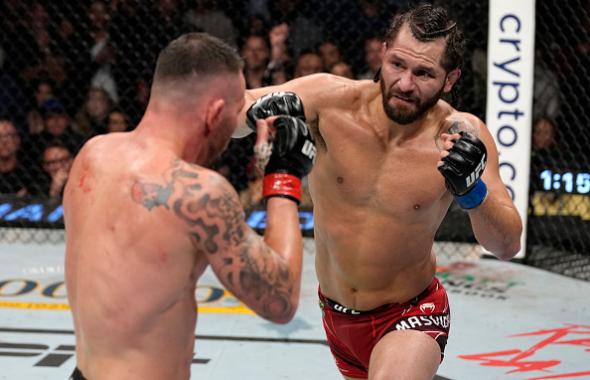
MMA Judging Explained: How Fights Are Scored When Nobody Gets Finished
On November 16, 2013, three judges sitting cageside watched the same 25 minutes of a welterweight title fight and produced three different scorecards. Two gave the nod to Georges St-Pierre, one gave it to Johny Hendricks — and almost every reporter, fighter, and fan watching at home had Hendricks winning comfortably. GSP walked away champion anyway, and days later he stepped away from the sport entirely, visibly shaken by how badly the room disagreed with the men holding the scorecards. That’s MMA judging in one night: a system that looks simple on paper and turns into a fistfight of its own the moment a fight goes the distance.
The 10-Point Must System, Explained
Every unified-rules MMA fight is scored the same way boxing has been scored for decades: the 10-Point Must System. At the end of each round, the winner “must” receive 10 points and the loser receives 9 or fewer. There’s no separate points for takedowns or knockdowns tallied up across the fight — each round is scored as its own self-contained contest, then the round totals are added up at the final bell. Whoever has the higher total on at least two of the three scorecards wins by decision.
That structure is exactly why a fighter can get dropped twice, get outlanded early, or lose two of five rounds clearly and still win the fight — the rounds don’t average out, they get won or lost individually, and a late surge in the championship rounds can outweigh a slow start.
The Priority Order Most Fans Don’t Know About
Here’s the part casual fans almost never hear explained: judges aren’t supposed to weigh every category equally. The Association of Boxing Commissions’ official MMA judging criteria lays out a strict hierarchy, and each level only kicks in if the fighters are truly even at the level above it.
- Effective striking and grappling (Plan A): This is the primary — and usually only — criterion that matters. Clean, damaging strikes and meaningful grappling exchanges (takedowns, sweeps, submission attempts, dominant control) decide almost every round.
- Effective aggression (Plan B): Only comes into play if a judge sees no advantage at all in striking or grappling. Simply walking forward without landing anything meaningful doesn’t count.
- Octagon/ring control (Plan C): The last resort, used only when the first two categories are dead even — dictating where the fight happens when nothing else separates the two fighters.
In practice, a lot of scoring controversy comes from judges skipping straight to “who was busier” instead of applying that hierarchy — which is exactly the kind of gap that turns a close round into a public argument.
10-9, 10-8, 10-7: Reading the Margin
- 10-10: A truly even round. Extremely rare — before 2016 it barely existed on scorecards at all, and it’s still uncommon today.
- 10-9: The standard score for a round with a clear but not dominant winner.
- 10-8: A round where one fighter was thoroughly dominant — repeated knockdowns, near-finishes, one-sided ground control with damage — but the round wasn’t stopped.
- 10-7: Reserved for a near-total wipeout, where a fighter was overwhelmed everywhere and the round arguably should have been stopped.
Why “Activity” Beats “Damage” — and Why That Makes Fans Furious
The single biggest complaint about MMA judging is that rounds get scored for volume instead of impact. A fighter who throws 60 punches that get blocked or glance off can still out-“look” a fighter who landed 12 punches that visibly hurt their opponent — if the judge is counting activity rather than actually watching what connected and what it did.
The clearest illustration of this problem is a fight where a fighter got knocked down — twice — and still lost the decision.
Three Real Decisions That Exposed the Cracks
Georges St-Pierre vs. Johny Hendricks — UFC 167 (2013)
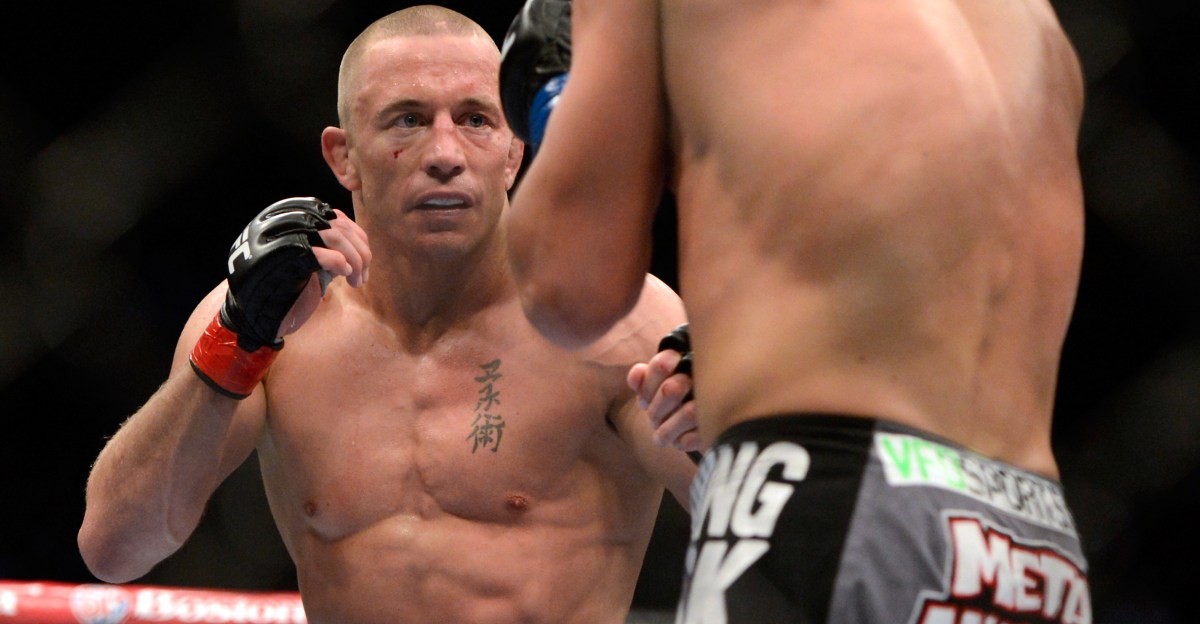
St-Pierre retained his welterweight title by split decision, 48-47, 47-48, 48-47. Judges Sal D’Amato and Tony Weeks gave GSP rounds 1, 3, and 5; judge Glenn Trowbridge scored 1, 2, and 4 for Hendricks. The problem: nearly every media scorecard, and a large share of fighters watching, had Hendricks winning clearly — he’d hurt GSP standing and controlled several exchanges the champion is generally credited for winning. UFC president Dana White was furious enough afterward to publicly call for a state athletic commission investigation. St-Pierre announced he was stepping away from the sport shortly after.
Jon Jones vs. Alexander Gustafsson — UFC 165 (2013)
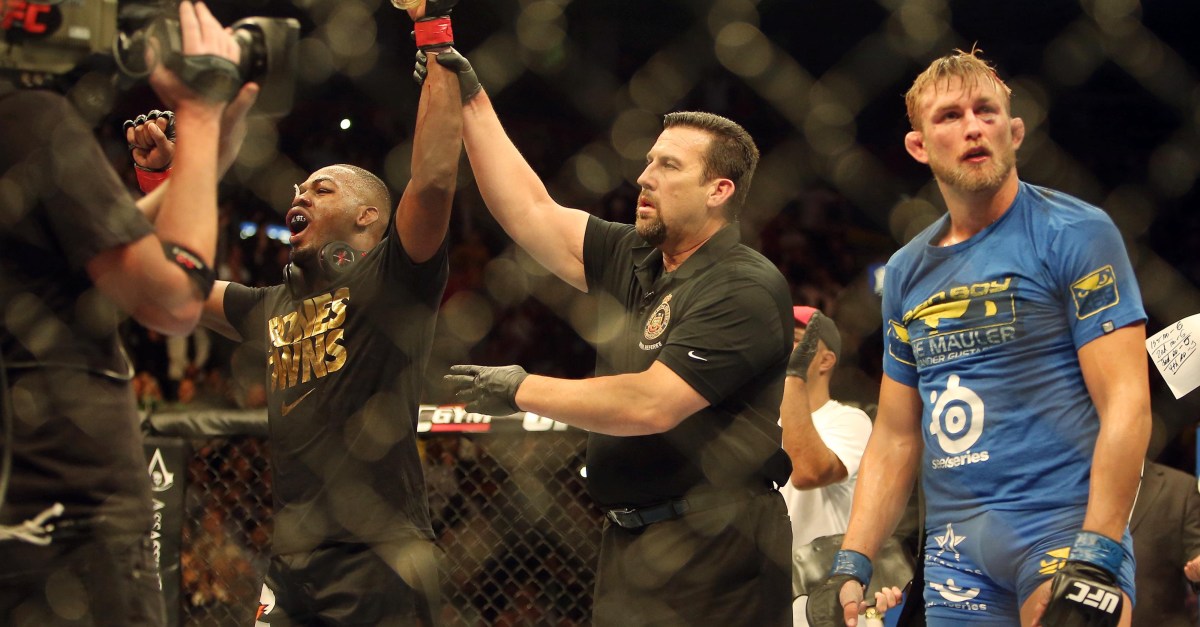
Jones retained his light heavyweight title by unanimous decision — but the margins tell the real story. Two of the three judges had it 48-47, meaning one round flipping the other way would have made Gustafsson the new champion. The third judge scored it 49-46. It remains one of the closest unanimous decisions in UFC title-fight history and was later inducted into the UFC Hall of Fame — not because the scoring was clean, but because the fight itself was that good.
Robert Whittaker vs. Yoel Romero — UFC 225 (2018)
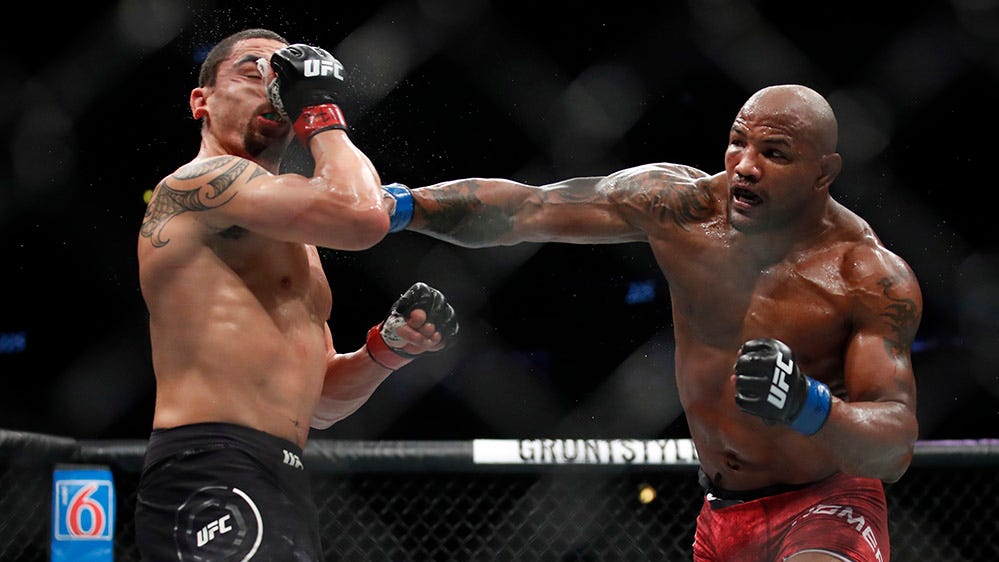
This is the fight that best captures the activity-versus-damage debate. Romero dropped Whittaker with a right hand in round 3 and dropped him again with a left hand in round 5 — real knockdowns, the kind of moment that usually swings a scorecard. Whittaker still won by split decision, 48-47 twice for him and 48-47 for Romero, on the strength of his volume and output across the rounds Romero didn’t land in. Romero said afterward, “It is my humble opinion I did not lose tonight” — and plenty of fans agreed with him.
Split, Unanimous, and Majority — What the Verdict Type Actually Tells You
- Unanimous decision: All three judges agree on the winner (though their round-by-round totals can still differ, as with Jones-Gustafsson above). Generally the clearest signal.
- Split decision: Two judges score it for one fighter, one scores it for the other — a direct sign the fight was genuinely close or that the judges applied the criteria differently. Both St-Pierre-Hendricks and Whittaker-Romero were split decisions.
- Majority decision: Two judges score it for one fighter, the third scores it a draw. Rare, and usually means one judge saw a truly even fight while the other two leaned one way.
- Split draw / majority draw: No winner declared — happens when scorecards genuinely cancel each other out. Extremely rare at the highest level.
A split decision isn’t proof the judges made a mistake — sometimes it’s proof the fight really was that close, and three trained officials genuinely saw it differently round by round. The controversy starts when a split decision goes against what nearly every neutral observer and media scorecard saw, which is exactly what happened with GSP-Hendricks.
How to Score a Fight Like a Judge (Not Like a Fan)
- Score each round in isolation. Don’t let a great round 1 carry a fighter through a round they lost.
- Ask what actually landed clean and hurt someone — not who threw more. Volume without damage is a weak tie-breaker, not a round-winner.
- Give real weight to control time and grappling dominance, not just time spent on top — a fighter stalling in guard without advancing position or landing shots isn’t “controlling” the round.
- Only fall back on octagon control or “aggression” as a tie-breaker if everything else is genuinely even.
Judging Decisions in TKO Tycoon
In TKO Tycoon, fights that go the scheduled distance are scored round-by-round by the simulation engine using the same effective-striking-first logic real judges are supposed to apply. The fight feed shows you each round’s score, so you can see exactly how close a decision was instead of just a final “W” or “L.” If you’re building a fighter who wins on the cards rather than finishing people, train for volume and accuracy — a gas-tank fighter who just swings and misses will lose split decisions in-game the same way real fighters do.
The 10-point must system isn’t going anywhere soon, and neither is the arguing. Every close decision will keep splitting fans exactly the way St-Pierre-Hendricks and Whittaker-Romero did — because judging three human beings’ read on 15-25 minutes of chaos was never going to produce a clean answer. The best fighters know this, which is why the truly elite ones stop chasing decisions altogether and just take the scorecards out of the equation.
Into BJJ? TaipeiBJJ.com covers training resources and BJJ content.
Play TKO Tycoon — the MMA management game for fight fans.
Shop on Amazon
MMA & Boxing Gear on Amazon →
As an Amazon Associate we earn from qualifying purchases.