Natalia Silva Fighting Style: The Matador Blueprint That Won Her the Flyweight Belt
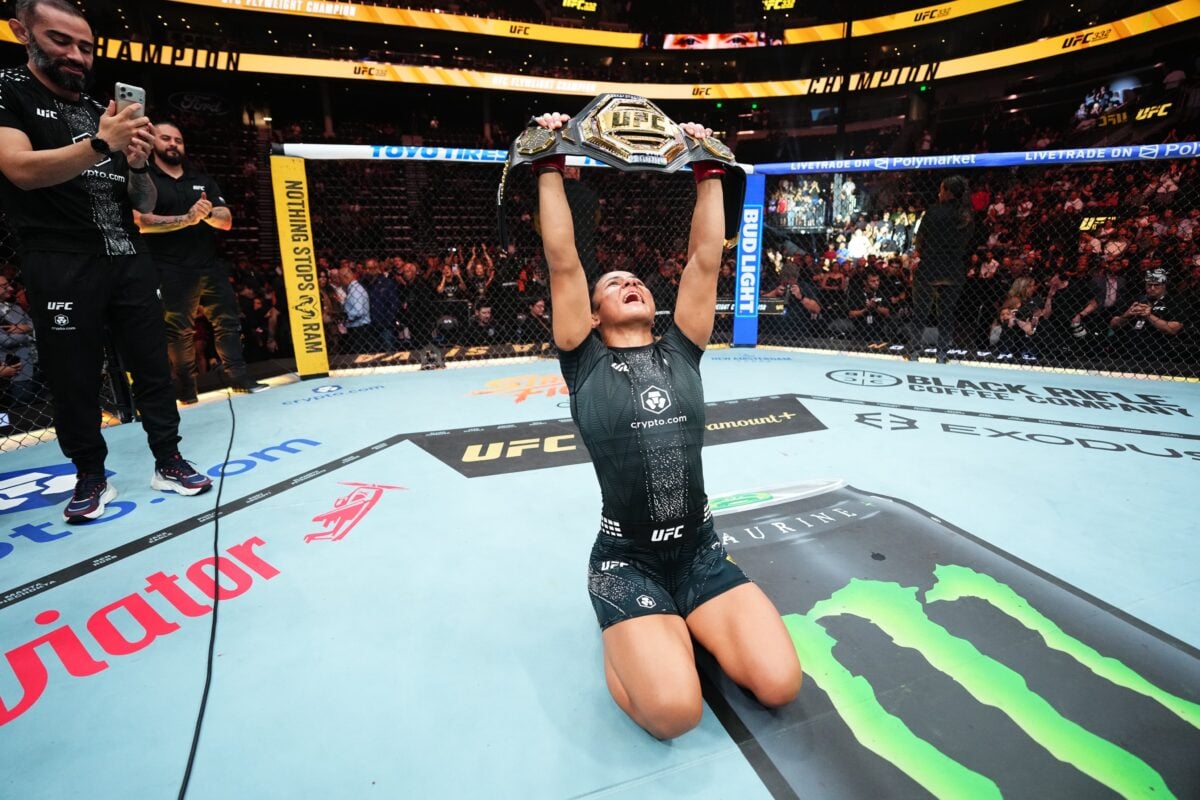
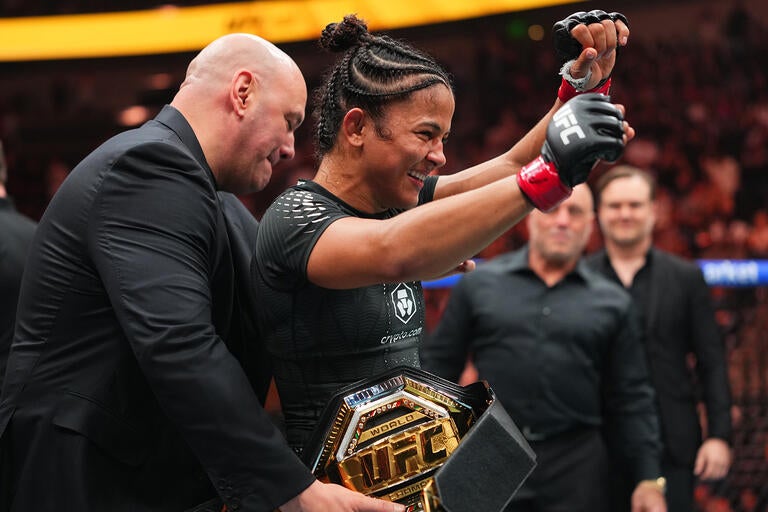
Natalia Silva spent the final seconds of UFC 332 on her knees in the center of the Delta Center cage, both arms locked straight up holding a belt that didn’t exist for her division three months earlier. Valentina Shevchenko had vacated the flyweight title in September with an injury, and Silva — on a 15-fight win streak, eight of them in the UFC — was handed Wang Cong, a late replacement elevated from the No. 8 ranking, instead of a proven champion. She won it anyway, 48-47 on all three cards, without landing a single highlight-reel finish. That’s the quiet part of Natalia Silva’s fighting style that gets lost next to the taekwondo kicks: she doesn’t need one finish to win a fight. She needs twenty-five minutes of her opponent missing.
From a Community Taekwondo Program to the UFC Title
Silva’s base is the detail that separates her from almost every other Brazilian woman on the UFC roster. Born in Pingo-d’Água, Minas Gerais, she didn’t grow up in a jiu-jitsu academy — she started taekwondo at 16 through a community social program, the kind of access-driven entry point that produces a very different skeleton of habits than the BJJ-first pipeline that built Jessica Andrade, Amanda Nunes, and most of the rest of Brazil’s UFC roster. She holds a purple belt in taekwondo and only picked up a BJJ blue belt later, once she was already fighting professionally. That ordering matters. Fighters who learn grappling second tend to grapple like strikers who got taken down, not like grapplers who happen to strike. Watch Silva’s scrambles and you see a taekwondo athlete’s instinct for angles and space, applied to getting back to her feet rather than hunting a submission.
She trains now at Team Borracha in Contagem, Minas Gerais, under Carlos Borracha, and arrived at UFC 332 with a resume that already included wins over three former or current UFC champions: Jessica Andrade, Alexa Grasso, and Rose Namajunas. That’s not a padded record. That’s a fighter who has already beaten the kind of names most title challengers spend a whole camp studying.
The Matador Blueprint: Range Before Anything Else
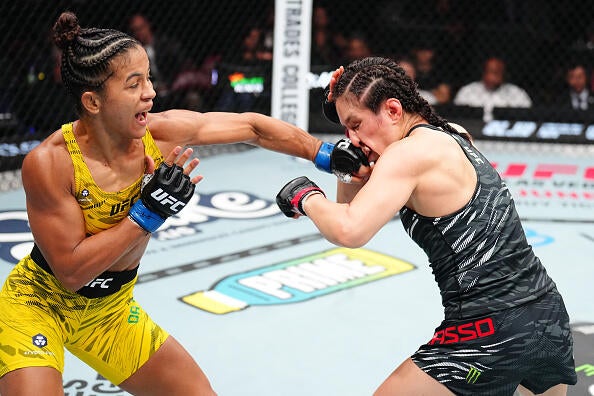
Every analyst who broke down Natalia Silva’s fighting style ahead of UFC 332 landed on the same word: matador. She doesn’t plant and trade. She stays on the outside, draws a committed strike, and is gone by the time it lands — the same principle a bullfighter uses with a cape, minus the cape. Eddie Barraco, the Xtreme Couture coach who analyzed her for UFC.com’s pre-fight breakdown, put a number on it: Silva absorbs just 2.36 significant strikes per minute and carries a 66% significant-strike defense rate, both elite marks for a division that usually rewards whoever is willing to stand in the pocket longest. Barraco’s specific praise was “layering her offense — mixing kicks, stance changes, mixing the grappling in,” which is a coach’s way of saying she almost never lets an opponent see the same picture twice in a row.
That range game is also her clock-management tool. Silva doesn’t threaten in short, violent bursts the way a knockout artist does. She wins rounds by accumulation — a leg kick here, a step-back counter there, a takedown stuffed in the final ten seconds — and lets the scorecards do the finishing. It’s a frustrating style to fight and a genuinely frustrating style to watch if you’re hoping for a finish, but it’s also nearly impossible to solve in a single camp, because there’s no one bad habit to exploit. She doesn’t have a signature mistake. She has a system.
That system is also why her finish rate looks modest compared to her win total. A 21-5-1 record with only seven submission finishes and no highlight-reel knockouts might read as unremarkable next to a division full of fighters chasing viral finishes, but it’s actually the opposite problem for opponents: there’s no fixed moment in the fight where Silva goes for broke and exposes herself. She’s just as comfortable winning a decision 48-47 as she is finishing someone in the first round, which removes the one lever most game plans are built around — forcing a desperate fighter to take a risk she doesn’t need to take.
Kicks, Angles, and the Problem of Hitting a Moving Target
The taekwondo base shows up most clearly in her kicking game — spinning back kicks, head-height round kicks thrown off awkward angles, and a willingness to kick off either leg without telegraphing the switch. Against Alexa Grasso, a former UFC strawweight champion with excellent footwork of her own, Silva still found angles to land clean head kicks and tight punching combinations in exchanges, which tells you her range control isn’t just about running away — she closes distance on her own terms when the opening is actually there. That’s a different skill than being hard to hit. Plenty of flyweights are hard to hit and have nothing behind it. Silva is hard to hit and still out-lands people.
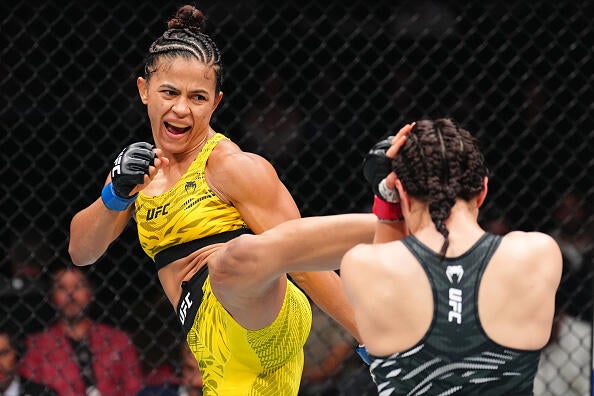
The footwork is built around constant lateral resets rather than a straight-line retreat, which is the real technical difference between Silva and a fighter who’s simply backing up. Backing up in a straight line gets you caught against the fence. Resetting on an angle keeps the center of the cage available as an escape route the entire fight, and it’s why Silva rarely gets trapped against the fence for long stretches even against opponents actively hunting for it.
The Hole in the Game: What Happens When She’s Taken Down
Grappling is the honest weak point, and it’s worth naming directly instead of glossing over it because she’s champion now. Silva has seven career submission wins, which sounds like a well-rounded resume until you look at who those finishes came against — mostly fighters without a serious wrestling or BJJ pedigree of their own. Her early-career losses skew toward more experienced grapplers who could get the fight to the mat and keep it there, and while her ground game has visibly improved under Team Borracha, it remains the side of her game least tested against a true elite-level wrestler at 125 pounds. That’s not a hypothetical problem. It’s the blueprint every future challenger is going to run first: stop trying to out-strike the matador, and just take her down instead.
The flip side is that nobody has executed that blueprint consistently across a full five-round title fight yet. Wang Cong didn’t have the wrestling pedigree to test it. The next serious flyweight contender might — and the division has more than one fighter capable of trying. Manon Fiorot built most of her own run on suffocating control once she got a bout to the ground, and Erin Blanchfield is a credentialed BJJ black belt who has repeatedly shown she can chain takedowns against opponents who’d rather keep the fight standing. Either name shows up across the table from Silva in a title fight, and the blueprint becomes less theoretical.
How She Solved Wang Cong at UFC 332
UFC 332 was, on paper, a strange main event — a vacant title fight between a dominant former title challenger and a late-notice replacement elevated from No. 8 after Shevchenko’s injury pulled her out. Silva treated it like exactly what it was: a fight she was supposed to win on points, not knock out. She kept Wang Cong at kicking range for the better part of five rounds, mixed in enough grappling exchanges to keep her guessing, and closed the show the way she usually does — alone in the center of the cage, uncontested on the scorecards, 48-47 across the board. It wasn’t the most explosive title-fight performance of the year. It was one of the most controlled.
Who’s Next: The Flyweight Contenders Circling the Champion
Silva’s first defense doesn’t have an official opponent yet, but the shortlist is already obvious. A rematch with Alexa Grasso is the consensus pick — the former champion has strung together wins over Maycee Barber and Manon Fiorot since their first meeting, and a rematch with built-in history is the kind of fight the UFC rarely passes up. Erin Blanchfield, Manon Fiorot herself, and a flyweight-bound Zhang Weili are all sitting in the mix behind her, and Rose Namajunas — already on Silva’s résumé at 115 pounds — hasn’t ruled out chasing her a second time at a second weight class. Whoever gets the call is walking into the same problem Wang Cong couldn’t solve: how do you beat a fighter whose entire style is built around not giving you anything to beat?
In TKO Tycoon, Silva’s profile is the clearest real-world case for building a range-control striker instead of chasing a highlight-reel finisher. A fighter who rarely gets hit and wins rounds on volume is a safer long-term title-picture investment than a one-dimensional knockout artist who loses the fights he doesn’t end early — something worth remembering the next time you’re deciding which style to build around in your own roster.
Natalia Silva didn’t win the flyweight title by being the most dangerous striker in the division or the most dangerous grappler. She won it by being the hardest fighter in the division to actually fight. That’s a harder style to market than a knockout artist’s, but it might be a harder style to beat — and until someone proves they can wrestle her for twenty-five minutes, the matador keeps the belt.
Sources
- Natalia Silva — Official UFC Athlete Profile — career record, background, and fight history
- UFC.com — Coach Conversation: UFC 332 Natalia Silva vs. Wang Cong — Eddie Barraco’s technical breakdown and defensive statistics
- ESPN MMA — UFC 332 results — official scorecards and fight statistics
- Wikipedia — Natalia Silva — biographical background and taekwondo origins