Paddy Pimblett Fighting Style: The Method Behind the Madness
Paddy Pimblett walked into the Octagon at UFC 329 against Benoit Saint-Denis — a dangerous French striker with elite cardio — and finished him in the third round with a rear naked choke. For his critics, it is still not enough. For his fans, it confirms everything they already believed. That split defines his career.
The truth about Paddy Pimblett fighting style is more complicated than the loudest voices on either side admit. He absorbs punishment he should not. He also wins fights he should not. Understanding why both are true is what makes his style worth studying.
The BJJ Foundation That Makes Paddy Pimblett Dangerous
Paddy Pimblett earned his BJJ black belt training at Team Kaobon in Liverpool under Colin Heron. His submission game is the core of his fighting identity, and it is legitimately elite at the UFC level.
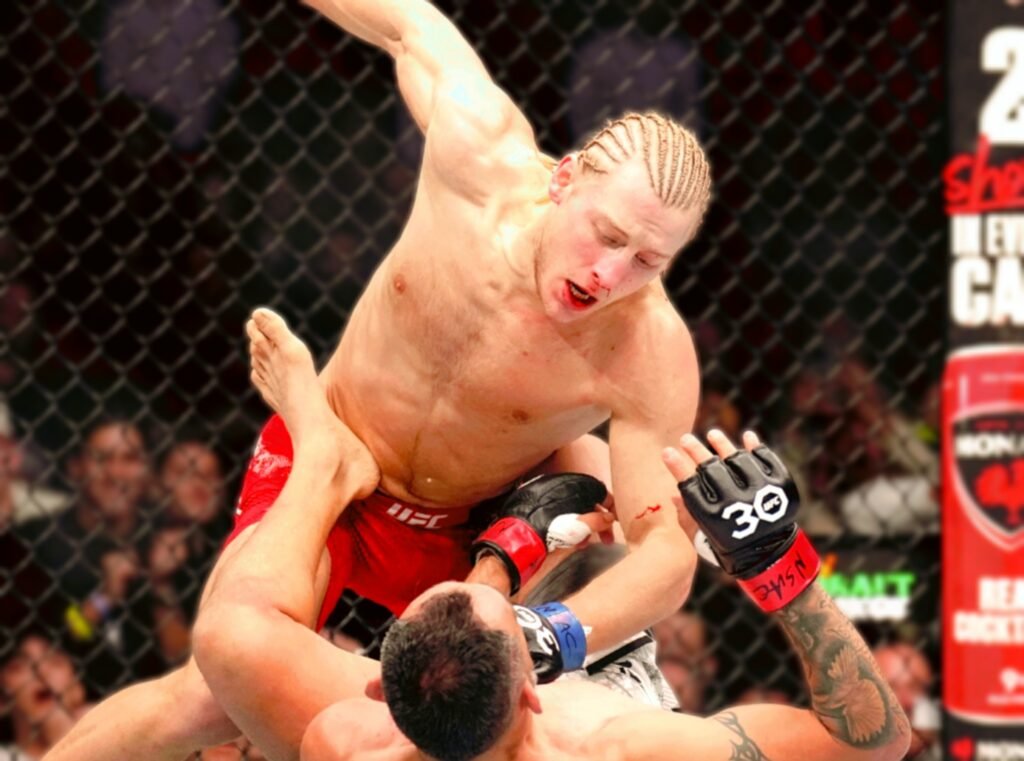
He does not just win by submission — he wins by forcing opponents into positions where they have to either accept the choke or escape and start the whole sequence over. His favorite finish is the rear naked choke, but he has finished fights with arm triangles, body triangles, and creative positional control that forces referees to consider stoppage by strikes. His ground-and-pound from dominant position is underrated. Most people focus on the choke, but the strikes that set it up are precise.
What separates him from other submission-first fighters is his comfort working from the bottom. He does not panic in bad positions — he frames, hip escapes, and hunts. Against Tony Ferguson, he did exactly that when Ferguson tried to use dirty boxing to keep the fight scrambled. Paddy survived the chaos and found the finish.
How Paddy Pimblett Gets to the Ground: Clinch Control and Trips
Paddy Pimblett path to the ground runs through the clinch. He is not a traditional single-leg or double-leg shooter — he prefers body locks, arm drags, and trips. This Greco-Roman influenced clinch game is what most casual fans miss when they analyze him.
The sequence typically looks like this: Paddy eats a punch or two while moving forward, closes the distance, and clamps on a body lock or underhook. From there, he trips or throws his opponent to the mat, immediately establishing chest-to-chest control or mount. It is not flashy wrestling — it is efficient positional grappling designed to reach the ground without a long wrestling scramble.
His clinch work connects directly to his striking — which is not world-class on its own but is designed to close distance rather than win exchanges. The breakdown of clinch work in MMA covers how body locks and trips function as the bridge between striking and grappling at the elite level.
Against Jordan Leavitt, this blueprint played out in textbook form. Paddy backed Leavitt into the fence, worked an underhook, tripped him to the mat, and submitted him with a rear naked choke. The whole sequence took less than two minutes and made it look effortless. It was not. It was a well-rehearsed system executed under pressure.
The Chin Problem: Why Paddy Pimblett Critics Are Partially Right
Here is where the honest conversation gets uncomfortable. Paddy Pimblett has a chin problem, and it is real.
He has been hurt in multiple UFC fights by shots that would not drop elite lightweights. Against Jared Gordon, he was visibly rocked multiple times and won a controversial split decision. Against Saint-Denis at UFC 329, he absorbed serious damage in rounds one and two before finding the finish. He does not have the jaw of a Khabib or a Max Holloway. He fights like he thinks he does, which is both his greatest strength and his most significant liability.
The counter-argument — which his fans make loudly — is that he keeps winning. Being hurt is not the same as being stopped. Fighters with good chins sometimes get stopped anyway. Paddy ability to survive damage and keep fighting with composure is itself a skill. He does not freeze when hurt. He covers, resets, and finds his path to the ground.
The question is not whether the chin concern is valid. It is. The question is whether it matters at the level he is competing at. Against the top two or three guys at 155 — Islam Makhachev, Justin Gaethje, Charles Oliveira — it probably matters a lot. Below that tier, Paddy BJJ and clinch game carry him past the damage he absorbs.
Paddy Pimblett Striking Game: Volume Over Power
His striking gets dismissed more than it deserves, and it also gets praised more than it deserves depending on which camp you are in. The accurate read: it is a competent volume striking game built around setting up grappling, not a standalone weapon.
He throws punches in combinations — typically a 1-2 or jab-body-head sequence — with enough speed to keep opponents honest. He does not have one-punch KO power, but he also is not a slow, plodding grappler who cannot operate standing. He is comfortable in boxing exchanges at close range, which is unusual for a pure submission specialist.
His left hook is his most dangerous strike — he has landed it cleanly on several opponents and used it to set up takedowns. His kicks are limited and usually reserved for leg kicks that open up the clinch entry. Opponents who gameplan for a pure grappler and forget about the striking pay for it. Opponents who try to keep it purely a boxing match are exactly where he wants them — close, trading, getting body locked.
What Paddy Pimblett Needs to Reach Title Level in UFC
Against Islam Makhachev, Paddy current toolkit does not win. Against Charles Oliveira, it might go either way. That gap is what defines where he is in the lightweight division right now.
The biggest thing he needs is takedown defense at the elite level. Fighters who can take him down and hold him there neutralize his submission game entirely and expose the chin on the feet. He has been developing his wrestling, but against the top wrestlers in the division, it still has holes.
His striking power ceiling also needs work. He can win on the feet at his current level, but against fighters who can hurt him badly with one shot — Gaethje being the obvious example — he needs either better head movement or the ability to get to the clinch before taking damage. His interim title shot against Gaethje at UFC 324 exposed this: he absorbed too much early trying to get inside.
None of this means he will not improve. He is in his late twenties, still developing, and his coaching team has shown they can make targeted improvements between camps. His finish rate is excellent. His submission game is genuine. The ceiling is there — it is just a question of whether he can shore up the defensive gaps before the top guys exploit them.
How to Build a Paddy Pimblett-Style Fighter in TKO Tycoon
In TKO Tycoon, the Paddy archetype is a high-grappling, moderate-striking build where the win condition is always the submission. Prioritize grappling and submission stats above everything else. Paddy-style fighters do not need elite striking — they need enough to close distance and survive exchanges.
A striking stat in the 65-75 range with grappling at 85+ replicates his actual skill ratio reasonably well. Stack cardio high — his third-round finishes in long fights are his calling card, and you need the gas tank to be alive in the championship rounds.
The chin tradeoff is the key decision. You can build a high-grappling fighter with better defensive attributes than Paddy has in reality. But if you want the true Paddy experience, keep the chin attribute modest and compensate with heart — that will not quit durability that lets your fighter eat shots and keep going. Some of the best storylines in TKO Tycoon come from underdogs who absorb punishment, find the finish, and leave the crowd split on whether they got lucky or proved something. The match to avoid for Paddy-types: elite wrestlers with great takedown defense. They neutralize everything. Target strikers who cannot stop the takedown.
FAQ: Paddy Pimblett Fighting Style
What martial arts does Paddy Pimblett use?
Paddy Pimblett is primarily a BJJ black belt with a submission grappling base. He uses a Greco-Roman influenced clinch game to get opponents to the mat, then finishes with rear naked chokes or ground-and-pound. His striking is a volume-based boxing game designed to close distance rather than end fights standing.
Does Paddy Pimblett have a good chin?
Paddy Pimblett has a questionable chin by elite lightweight standards. He has been hurt in multiple UFC fights by shots that would not stop top-five contenders. However, his durability and composure when hurt are genuine strengths — he has not been stopped, and he keeps finding finishes after absorbing damage.
What is Paddy Pimblett finishing rate?
Paddy Pimblett finishes the vast majority of his UFC wins by submission or TKO. His rear naked choke is his most common finish, but he has also won by arm triangles and ground-and-pound stoppages. He rarely goes to the judges when he has the opportunity to finish.
Can Paddy Pimblett win the UFC lightweight title?
Paddy Pimblett has the tools to compete at the top of the lightweight division, but reaching title level requires improvements in takedown defense and head movement under fire. His submission game and finishing instinct are legitimate championship-level attributes. Whether his chin holds up against the very best strikers at 155 lbs remains the open question.
References
- MMA Fighting — Paddy Pimblett Fighter Profile – career stats and fight history
- ESPN MMA — Paddy Pimblett – fight record and rankings data
- UFC.com — Paddy Pimblett Official Profile – official stats and fight history
- Sherdog — Paddy Pimblett – complete amateur and professional record
Image credit: sidekickboxing.co.uk