Clinch Work in MMA: Why the Range Nobody Watches Decides Every Fight
In the 2014 UFC title fight between Robbie Lawler and Johny Hendricks, the margin was razor-thin — and both men knew it came down to who controlled the clinch. Not the flashy combinations or the takedown attempts. The clinch. Those ten seconds against the fence where someone gets a knee to the body, an elbow to the cheek, or a trip that ends the round in a scramble. Fans called it boring. Coaches called it chess at a thousand miles per hour.
The clinch is the most misunderstood range in all of MMA. It looks like stalling. It isn’t. It’s where elite fighters impose will, drain stamina, create damage, and set up finishes. If you can’t read the clinch, you’re watching maybe 30% of what’s actually happening in every fight.
What the Clinch Actually Is in MMA (Not Boxing)
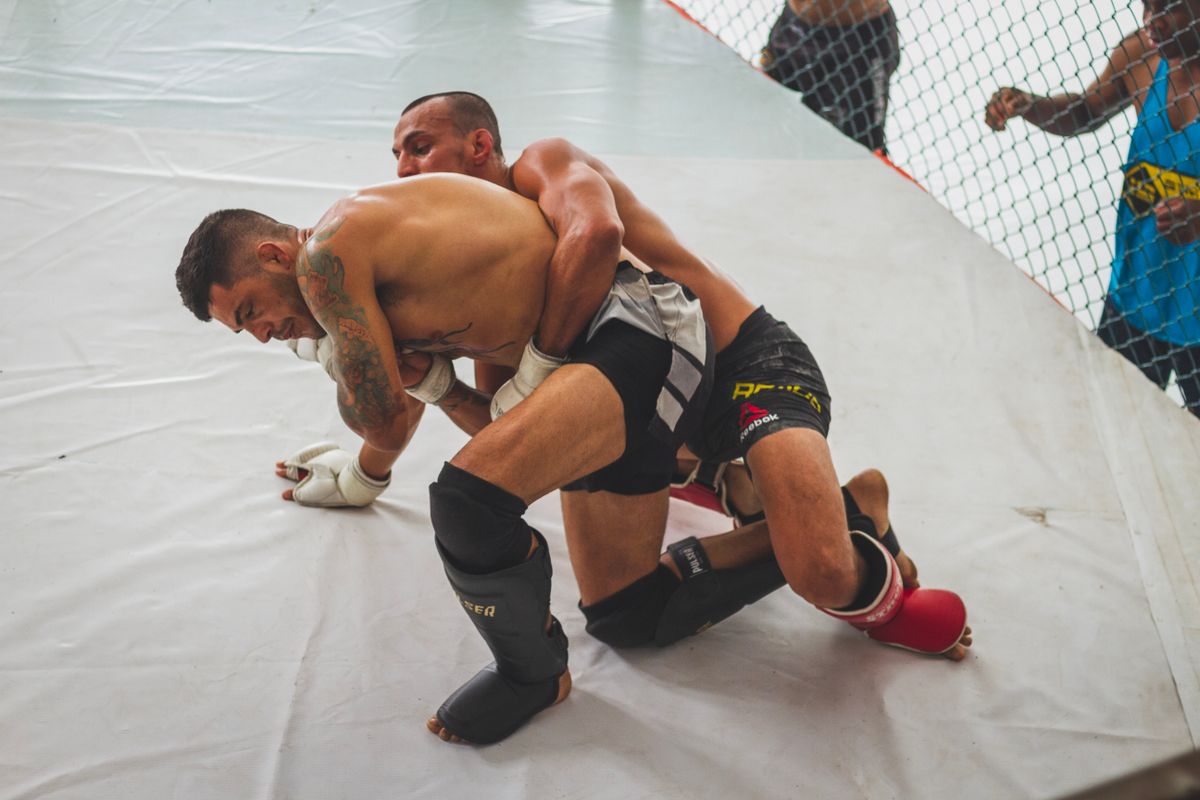
In MMA, the clinch covers any standing grappling exchange where both fighters are in contact at the torso or head. Unlike boxing, where referees break clinches immediately, MMA lets them breathe — sometimes for 20 seconds, sometimes for a full minute. That changes everything. The clinch becomes a fight within the fight, with its own hierarchy of positions, escapes, and attacks.
The four positions you’ll see most often are the body lock (both arms wrapped around the opponent’s waist), the collar tie (one or two hands on the back of the neck — the Muay Thai clinch), double underhooks (both arms threaded under the opponent’s armpits), and the over-under (one arm over, one arm under — the most common scramble position). Each creates different attack options and different risks. Getting trapped in the wrong one with the wrong opponent is how fights end.

Why Elite Wrestlers Dominate the MMA Clinch Range
College wrestlers and Greco-Roman specialists come into MMA with a clinch vocabulary that pure strikers simply don’t have. They’ve trained underhook battles for years. They know how to chain a chest-to-chest position into a body lock into a trip in under two seconds. Strikers learn this eventually — but it takes time, and the gap is enormous at the elite level.
Khabib Nurmagomedov was the most obvious example of this in modern MMA. His double underhook was essentially unbreakable for his UFC career. Once he got that position, he didn’t just hold it — he walked opponents into the cage, drained their energy fighting the grip, and then executed a throw when they finally committed weight in the wrong direction. Kamaru Usman did the same thing at welterweight. His over-under against Colby Covington in their first fight was a 25-minute clinic on using superior underhook position to control pace, land knees to the body, and set up shots.
The body lock is particularly brutal in MMA because of the fence. In open mat wrestling, there’s no cage wall to use as a tool. In MMA, a fighter with a good body lock can simply walk their opponent backwards until the fence stops them — and then the options multiply. Trips. Knee lifts. Hip throws. Suplexes. The fence doesn’t just stop movement; it becomes a weapon for the fighter with the superior clinch position.
Dirty Boxing and Knee Strikes: The Striking Arsenal Inside the Clinch
Randy Couture built his late-career dominance almost entirely on dirty boxing — short punches, hammer fists, and elbows thrown from collar tie and over-under positions. He pioneered it in MMA before most coaches had a name for it, and his fights against Chuck Liddell showed exactly why it works: you remove power punching, you neutralize the knockout artist, and you control the pace with your body position rather than your legs.
Muay Thai fighters bring a different weapon to the clinch: the knee strike. Thrown from a collar tie with both hands gripping the back of the head, a clean knee to the midsection is one of the hardest shots to land in MMA and one of the most damaging. Fighters with strong Muay Thai backgrounds — Buakaw, Saenchai, and their MMA equivalents like Anderson Silva in his prime — understand that the collar tie isn’t just a holding position. It’s a targeting system. Pull the head down, drive the knee up. The geometry is simple. Getting there against a trained opponent is not.
Elbows are the third clinch weapon casual fans miss most often. Thrown at close range from a collar tie or in a scramble against the cage, a short elbow doesn’t look dramatic on replay — but it opens cuts, disrupts rhythm, and adds up over rounds. It’s not a finish shot. It’s a tax. Pay it five times a round for three rounds and your opponent is fighting half-blind with swollen brows in round four.

Clinch Against the Cage: The Third Dimension Most Fans Miss
Open-mat clinch work and cage clinch work are different sports. The fence changes biomechanics completely. When you’re pushed against the cage, your base shifts backward, your hips move away from the opponent, and your ability to generate power — for strikes or takedown defense — drops significantly. The fighter with the cage behind them is in a structurally disadvantaged position every time, regardless of skill level.
Elite cage grapplers — fighters like chain wrestlers who link takedown attempts — use the fence as a forcing function. If you can push an opponent into the cage and keep them there, you’ve limited their movement to one dimension. They can slide left or right, but they can’t step back. Every attack has to come forward into you. That asymmetry is enormous. The fighter off the cage is reactive by default; the one pressing is always in attack mode.
The counter to cage pressure is the “hip out” — a movement where the defender rotates their hips offline, creates an angle, and pushes away from the cage rather than into it. It requires timing, body awareness, and a lot of repetitions to execute under pressure. Most fighters drill the technique in training. Fewer execute it cleanly when a 185-pound specialist is grinding them into the fence for the third round.
Reading Clinch Work in TKO Tycoon: What the Numbers Are Actually Modeling
When you’re managing fighters in TKO Tycoon, clinch work shows up as a skill category that affects multiple fight outcomes simultaneously. A high clinch stat doesn’t just mean your fighter holds opponents — it means they can land knees, set up takedowns, control cage position, and deny the opponent’s striking rhythm. Fighters with strong clinch ratings should be built around physical pressure and endurance, because clinch-heavy strategies drain your fighter’s stamina just as fast as they drain the opponent’s.
The strategic angle in the game mirrors real MMA coaching: you don’t want your striker in a long clinch against a wrestler. You want to use clinch work to transition — get inside, land a knee, create a scramble, exit with a takedown attempt or reset distance on your terms. Passive clinching is a losing strategy at every level, in real fights and in the game. Build your approach around what the clinch opens up, not the clinch itself.

Why Clinch Defense Is the Skill Most Fighters Neglect
There’s a structural reason clinch defense is underdeveloped in most gyms: it’s hard to train enjoyably. Nobody wants to spend an hour getting kneed in the thigh and having their posture broken. The result is that fighters who are excellent at entering the clinch face opposition that’s average at best at getting out of it. The gap compounds over a career. Some of the best clinch specialists in MMA history — Randy Couture, Khabib, Ben Askren — were almost impossible to separate once they established position, not because they were impossibly strong, but because their opponents lacked the reps to execute clean separations under pressure.
Effective clinch defense is a combination of posture recovery (getting your head up and your hips under you), hand fighting (constantly working to establish your own underhook or create a two-on-one position), and movement (never staying flat against the cage). The best defenders treat every clinch like a puzzle with a time limit. The worst ones muscle through it and wonder why they’re tired after two rounds.
Clinch Work FAQ
What is dirty boxing in MMA?
Dirty boxing refers to short strikes — punches, hammer fists, and elbows — thrown from a clinch or collar tie position. It’s called “dirty” because it doesn’t follow the clean punching mechanics of boxing; it uses body control and proximity to land shots that wouldn’t work at range. Randy Couture popularized the style in MMA, using collar ties to control opponents’ heads while landing short right hands to the jaw.
Why is clinch work important in MMA?
The clinch is a transition zone between striking and grappling, and controlling it determines how a fight plays out at range. A fighter who dominates the clinch can drain an opponent’s energy, land consistent damage through knees and elbows, execute takedowns, and control cage position. Most elite fights are decided in the clinch more than in open exchanges — it’s just less obvious to fans who aren’t trained to watch it.
What’s the difference between the Muay Thai clinch and a wrestling clinch?
The Muay Thai clinch (plum position) grips the back of the opponent’s head with both hands, pulling it down to land knee strikes to the face and body. The goal is damage, not takedowns. A wrestling clinch — body lock or double underhooks — aims to control the opponent’s torso and hips to set up throws, trips, and takedowns. Elite MMA fighters need both because each creates different threats that force different defensive responses.
When do referees break the clinch in MMA?
MMA referees are instructed to break clinch exchanges when there is no “active work” — meaning neither fighter is attempting strikes, takedowns, or positional advancement. In practice, this judgment varies significantly by referee and promotion. The UFC tends to give fighters more time in the clinch than regional promotions. A clinch with visible knee strikes or takedown attempts will rarely be broken; a static hold against the cage with no activity usually prompts a referee restart.
References
- Evolve University — An Introduction to Clinching in MMA – clinch position fundamentals and knee strike mechanics
- MMA Fighting – Couture/Hendricks/Khabib clinch analysis and fight data
- TrainAlta — Clinching in MMA – cage clinch mechanics and defensive techniques