Charles Oliveira Fighting Style: How Do Bronx Became MMA’s Greatest Submission Artist
Sixteen. That’s how many submission victories Charles Oliveira has recorded inside the UFC octagon — more than any fighter in the promotion’s history. Not just more than most. More than everyone. And he’s done it against elite competition, at the highest weight class with a deep pool of experienced grapplers. By any honest measure, “Do Bronx” is the most prolific submission finisher MMA has ever produced.
He won the BMF title in March 2026 by doing what he does best: taking Max Holloway — one of the best offensive boxers in the game — down in all five rounds and controlling 21 of 25 minutes on the mat. Holloway had no answer. Nobody does once Oliveira’s front headlock snaps shut.
His full MMA record stands at 37-11-0, with 22 submissions overall. He’s been finished himself, gone through rough patches, got cut from the UFC, came back, won the lightweight title, lost it on the scale before a title defense, reclaimed it, and kept adding to that submission ledger the whole time. That arc matters when you’re trying to understand what makes his fighting style work — it’s not raw athleticism. It’s obsessive technical refinement over two decades.
Here’s how it all fits together.
The Raw Numbers Behind Oliveira’s UFC Submission Record
Charles Oliveira holds the UFC all-time record with 16 submission victories. He’s also the promotion’s all-time finish leader with 20 finishes total. His submission variety is equally remarkable: rear naked chokes, guillotines, anacondas, darce chokes, triangles, armbars, calf slicers — he’s used all of them in UFC competition.
At 37-11 overall (22 submission wins across his career), the first thing those numbers hide is the diversity of victims. He’s submitted ranked contenders, top-10 veterans, and former champions. This isn’t a record built on cans. Michael Chandler, Tony Ferguson, Beneil Dariush, Mateusz Gamrot — all finished by submission. When the best wrestlers and grapplers in the division are tapping to this guy, it tells you something about the ceiling of his technique.
His reach also plays a role: 74 inches at lightweight, where the divisional average sits closer to 70. That extra arm length lets him complete choke entries from angles that should be defensive dead ends for most people. He routinely gets his arm all the way under an opponent’s chin to their far armpit — a position that gives him near-instant pressure even before the full lock is established.
How Oliveira’s Striking Creates His Grappling Opportunities
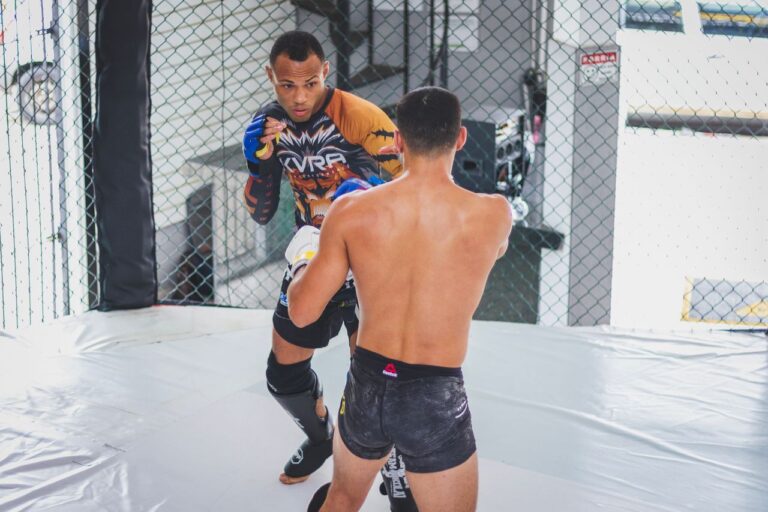
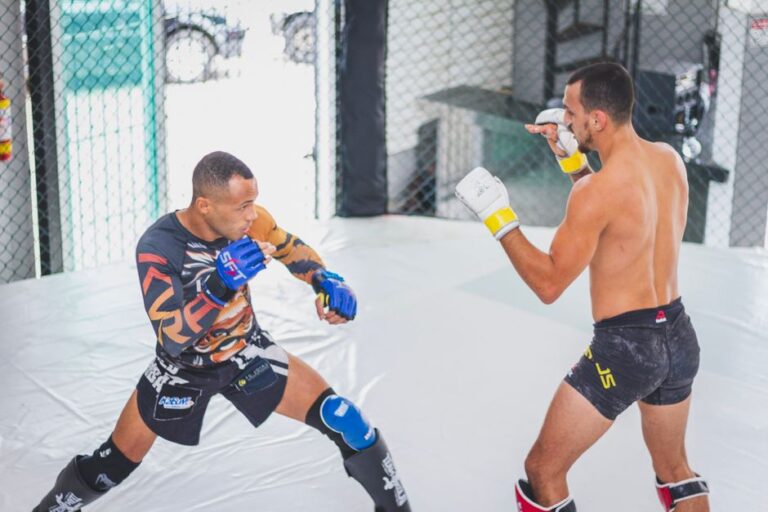
Charles Oliveira’s striking isn’t elite, but it’s functional enough to be the on-ramp for his submission game. He uses long rear-hand straights, probing teeps, and stabbing knee strikes to control distance, crowd opponents against the fence, and force panicked level changes that he converts to front headlocks or body locks.
This is the key insight that casual fans miss: Oliveira doesn’t need to knock people out on the feet. He needs them to react. A flinch off a straight right, a desperate shot attempt after eating a knee — those are the openings he’s built a career exploiting. His striking is designed to create chaos, not solve it. The chaos belongs to him.
He’s also dangerous off the back foot. If an opponent throws a clean combination, Oliveira’s instinct is to close distance rather than retreat, often ending with a head outside his opponent’s arm — the perfect setup position for an anaconda or darce. He converts what should be defensive scrambles into offensive submission attempts. It’s genuinely disorienting to watch in real time.
The Front Choke Chain: Guillotine to Anaconda to Back Take
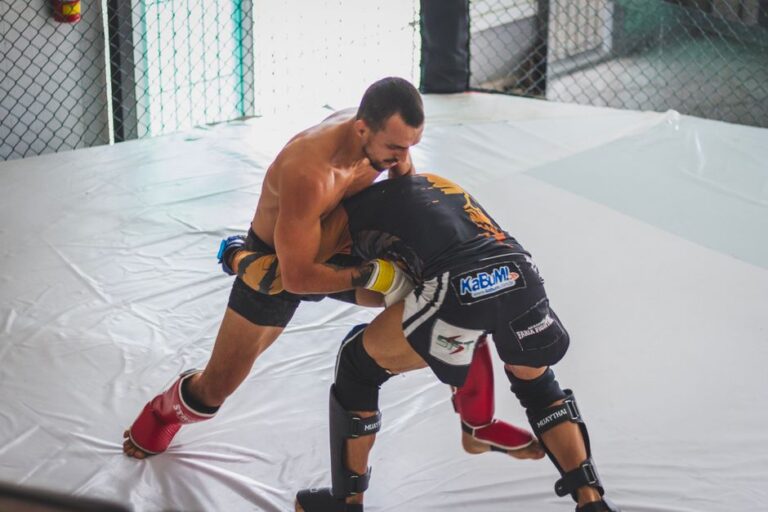
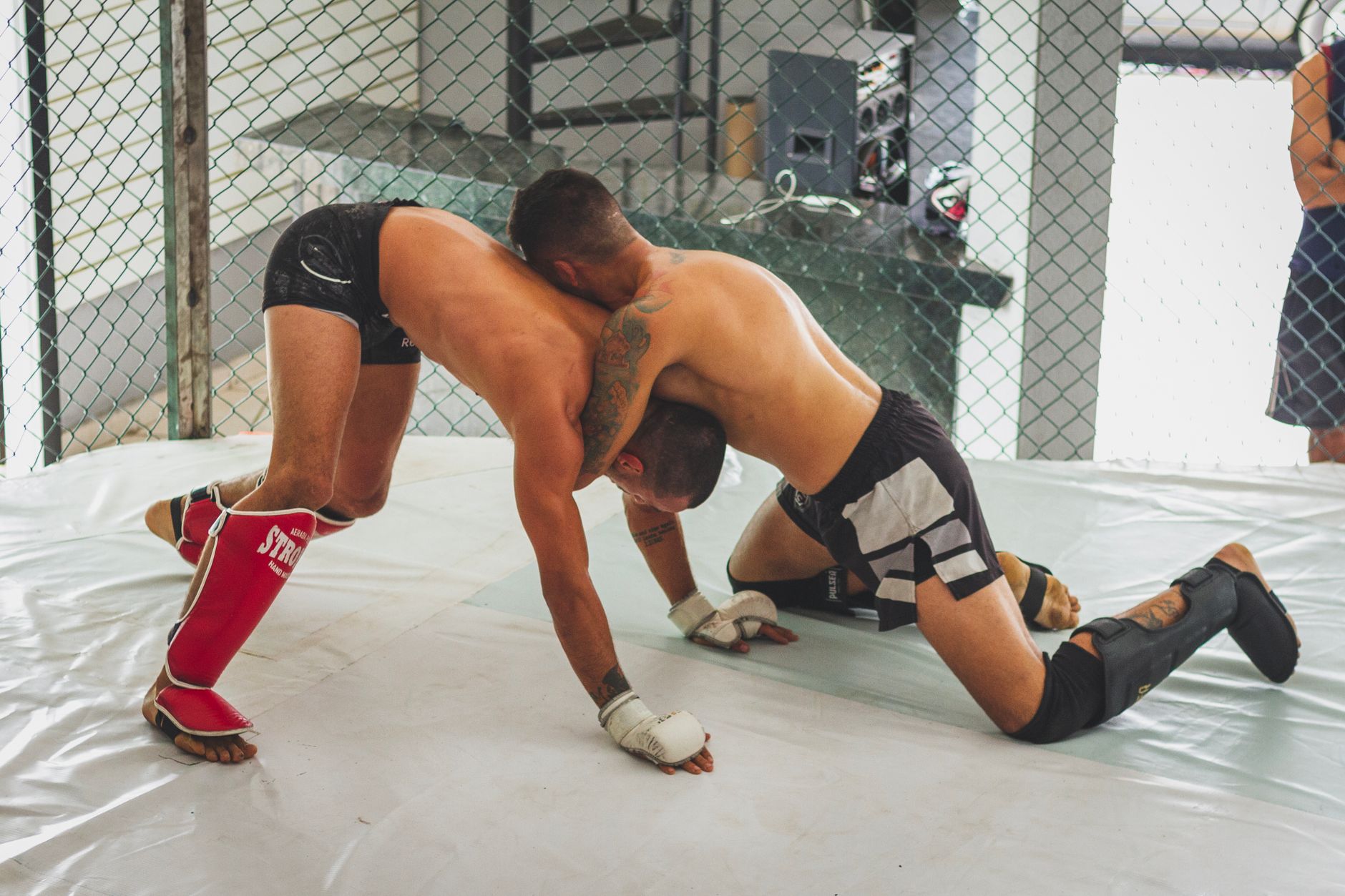
Oliveira’s signature sequence starts with the front headlock. Once he snares a neck on a level change or failed shot, he flows between guillotine, anaconda, and back take depending on how the opponent defends. The chain is the point — each escape attempt by the opponent feeds the next attack.
The guillotine attempt forces the opponent to posture. If they pop their head out, the anaconda is right there. If they try to roll or turtle to escape the anaconda, Oliveira rides the hips and lands on their back, already setting his hooks. He’s extraordinarily patient within this chain — he doesn’t rush the finish, he lets the opponent’s defensive panic do the work.
His flexibility enables all of it. Unlike most fighters who need perfect arm placement to secure a front choke, Oliveira can wrap his arm all the way to the far armpit from positions that look like misses. Combined with his 74-inch reach, he’s applying choke pressure before opponents even register they’re in danger. By the time they feel it, they’re already fading.
Understanding submission chains is directly applicable to how you build fighters in the TKO Tycoon game. Investing in a single submission type is far less valuable than developing a grappler who can flow between attacks — just like Oliveira does in real MMA.
Rear Naked Choke Mastery: How Oliveira Gets to the Back
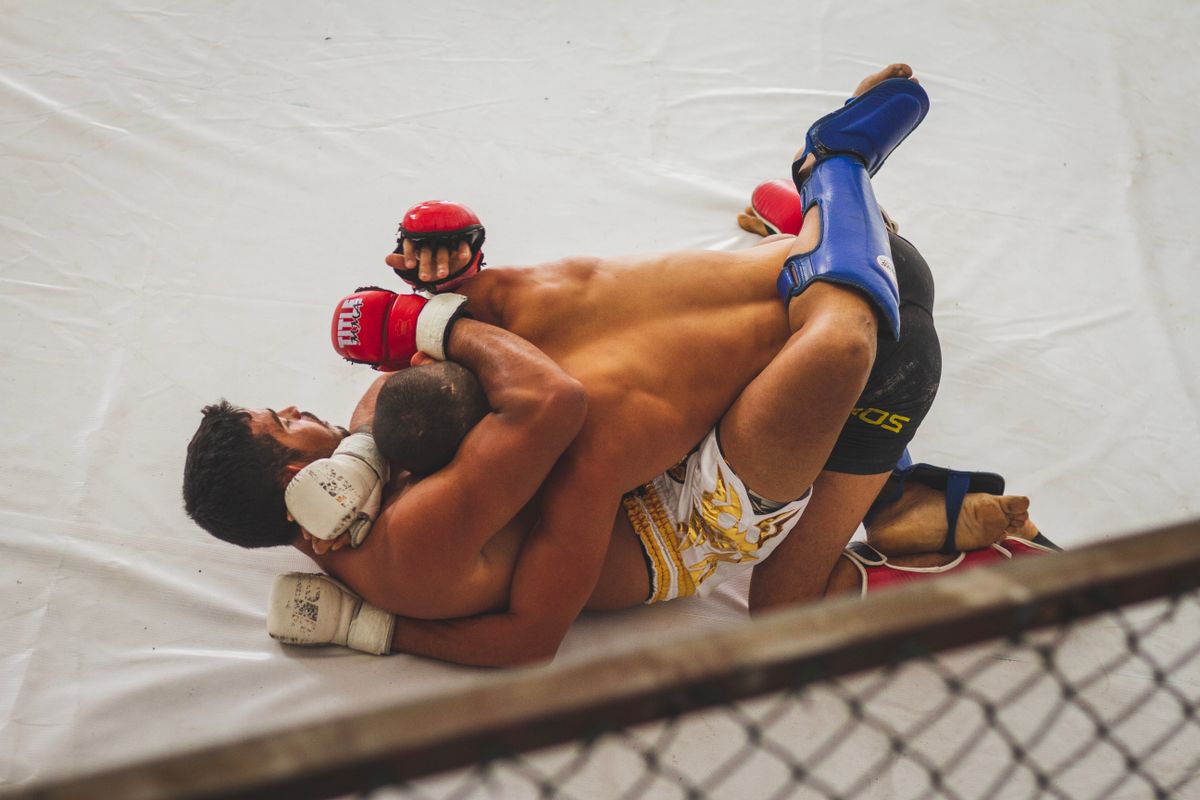
Since moving to lightweight, Oliveira has finished five opponents with the rear naked choke. He gets to the back through three main routes: the front choke chain, scrambles off takedown defense, and transitions from top-half guard when opponents give up their turtle. Once he’s there, his back control is exceptionally tight.
What makes his rear naked choke particularly difficult to defend is the combination of his long arms and his leg control. He wraps a full rear naked choke with the arm buried deep — again, that reach advantage letting him apply pressure faster than expected — while his legs stay active, adjusting hooks constantly to prevent the roll-out defense. Opponents who try to spin into him often find themselves walking into a triangle arm lock instead.
His guard work from bottom deserves mention here too. Oliveira is one of the few elite MMA fighters who actively hunts submissions from his back. Overhook triangles, arm bars from failed passes, and hip-angle attacks all come from his guard game. Anyone who thinks putting Oliveira on his back is a win is in for a rude awakening — he’s been known to outwork dominant wrestlers from the bottom.
Why Elite Fighters Still Can’t Solve the Oliveira Puzzle
The frustrating answer for anyone Oliveira faces is that there’s no clean solution. Every defensive choice creates a new problem. Stay on the feet and trade? He’s patient enough to walk through your best shots to clinch. Shoot for takedowns? You’re handing him the front headlock. Try to out-grapple him from top? He’s attacking from bottom. Try to hold position and not engage? He’ll grind 25 minutes of takedowns like he did against Holloway.
Defensively, the only fighters who’ve given him serious problems are elite wrestlers who can hold him down without engaging in scrambles — but even those encounters usually go to decision rather than finish, and Oliveira’s cardio across five rounds is elite. He’s finished opponents in Round 1 and Round 5 with equal efficiency.
His loss column (11 losses) is a real data point that people should engage with rather than dismiss. Early in his career, Oliveira was catchable — he over-committed on submission attempts and had durability questions. That version of him is gone. The current Oliveira is patient, technically precise, and has been tested enough to know exactly when to force the finish versus when to accumulate damage and wait.
Charles Oliveira’s Style and the TKO Tycoon Grappling Meta
Oliveira’s career is a masterclass in why submission chains beat single submissions in any grappling system. In TKO Tycoon, building fighters with complementary submission skills — not just one finisher — mirrors the real-world advantage Do Bronx exploits every single fight.
If you’re managing a grappler in the game, think about what Oliveira teaches: the first submission attempt is almost never the one that finishes. It’s the one that opens the door. Developing back take ability alongside front choke skills creates the same layered threat that makes Oliveira so hard to game-plan against. Real MMA strategy and virtual MMA strategy converge here more than people realize.
His BMF title win also illustrates something important about fighter development: you don’t need to be the most exciting fighter in every moment if your overall game plan is airtight. Five takedowns across five rounds isn’t highlight reel material, but it’s championship-level execution. Building fighters who execute a plan over 25 minutes beats building glass cannons who need a first-round finish to win.
Frequently Asked Questions About Charles Oliveira’s Fighting Style
- How many submissions does Charles Oliveira have in the UFC?
-
Charles Oliveira holds the UFC record with 16 submission victories, the most in UFC history. Across his entire MMA career, he has 22 submissions total. His submission arsenal includes rear naked chokes, guillotines, anacondas, armbars, triangles, and calf slicers.
- What is Charles Oliveira’s BJJ rank and background?
-
Oliveira is a black belt in Brazilian jiu-jitsu. He grew up training BJJ in Guarujá, São Paulo, Brazil, and began competing in MMA as a teenager. His grappling is deeply rooted in traditional BJJ but refined extensively through years of MMA-specific training.
- Why is Charles Oliveira called “Do Bronx”?
-
“Do Bronx” references the rough neighborhood in Guarujá where Oliveira grew up — a waterfront area locally called “The Bronx” due to its reputation. The nickname reflects his background and the chip-on-the-shoulder mentality that defines his career comeback narrative.
- Did Charles Oliveira win the BMF title?
-
Yes. Oliveira defeated Max Holloway at UFC 326 on March 7, 2026, by unanimous decision (50-45, 50-45, 50-45) to capture the BMF title. He scored a takedown in every round and controlled over 21 minutes of ground time across the 25-minute fight.
References
- ESPN MMA — UFC 326 results, Charles Oliveira vs. Max Holloway 2 BMF title fight
- CBS Sports MMA — UFC 326 live updates, Oliveira dominant grappling performance
- Dan Jonaher / The Fight Site — Technical breakdown of Charles Oliveira’s submission game and scramble patterns