Gogoplata: 6 MMA Fights That Landed It
Two decades, tens of thousands of professional fights, and the UFC’s own highlight reel still has a hole in it: nobody has ever tapped out an opponent with a gogoplata inside the eight-sided cage. The move exists. It has worked in Pride, in DREAM, in regional cages across the United States. It has just never worked under the Zuffa banner, despite close calls and a champion-caliber roster that includes some of the most flexible guard players the sport has produced.
That gap is the real story here, more than the technique itself. The gogoplata rewards a body type and a risk tolerance that almost nobody in a weight-cutting, wrestling-saturated sport wants to carry into a five-round fight.
What a Gogoplata Actually Is
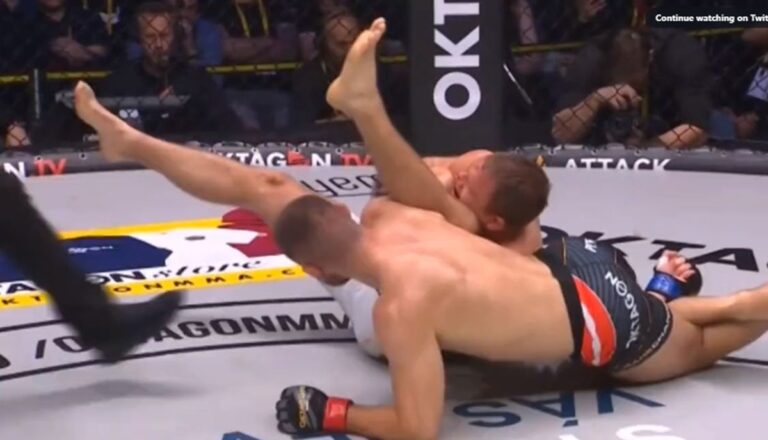
Strip away the name and the mechanics are simple to describe, if not to perform. The fighter on bottom traps one of the opponent’s legs between their own shins, usually from closed guard or a rubber-guard variation, then threads a foot under the opponent’s chin. One hand reaches behind the opponent’s head to lock it down while the shin presses across the windpipe. Done correctly, it closes off the airway the same way a strike to the throat would, just applied slowly and held until the opponent taps or goes out.
BJJ coaches sometimes call it the Dragon Claw, since the setup looks like a kimura from guard, except the practitioner slides an elbow under the opponent’s chin instead of around an arm. The gogoplata’s origins trace back to Brazilian jiu-jitsu competition, where it occasionally appeared as a guard-based finish before Eddie Bravo’s 10th Planet system built an entire rubber-guard curriculum around setting it up.
Why Almost Nobody Can Finish One
Here is the mild but defensible take: the gogoplata is not actually MMA’s hardest submission to execute. It is MMA’s hardest submission to survive long enough to attempt. Getting a foot under an opponent’s chin while they are free to posture up, throw downward elbows, or simply stand up and walk away requires a level of hip and hamstring flexibility that most wrestlers and strikers never train for, paired with guard retention most fighters abandon the moment striking becomes live.
Three things have to line up at once. The bottom fighter needs the flexibility to get a shin that high without surrendering position. The top fighter needs to stay in range long enough for the setup to complete, which rarely happens against anyone coached to posture out immediately. And the whole sequence has to survive several seconds of exposure to strikes, since a gogoplata in progress leaves the finishing fighter’s ribs and head open. Most fighters who get a flash of the position bail out before completing it, which is exactly why the submission shows up more in highlight reels than fight-ending statistics.
The cage itself works against it too. A fighter stuck against the fence in a bad scramble can post a hand or a foot on the links and climb back to their feet in a way a ringed Pride or DREAM canvas never allowed. Every finish below happened either in a ring or against an opponent who got stuck in open space without a fence to escape toward, which is not a coincidence a lot of fans notice until it is pointed out directly.
Shinya Aoki Landed the First One, Then Did It Again From Mount
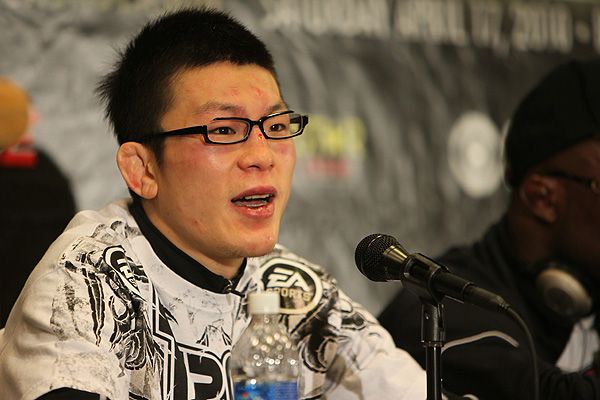
Shinya Aoki finished Joachim Hansen with a gogoplata at Pride Shockwave 2006 on December 31, 2006, tripping Hansen to the mat, moving to top position, and locking the shin-choke in at 2:24 of the first round. Most record-keepers credit it as the first successful gogoplata in MMA competition. Hansen, a former King of Pancrase and genuinely dangerous grappler in his own right, had no answer for it once Aoki’s hips got where they needed to be.
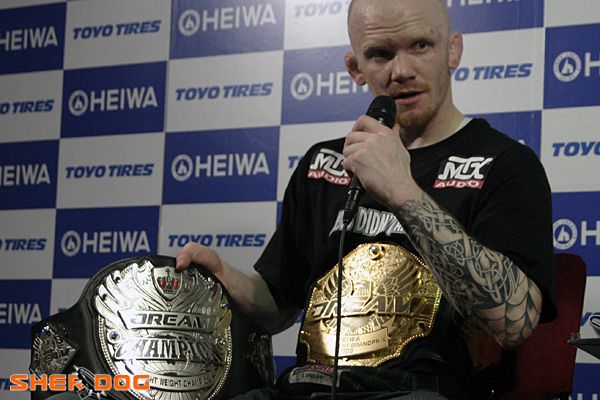
Aoki then did something nobody has repeated since. At DREAM 4 on June 15, 2008, he submitted Katsuhiko Nagata with a gogoplata applied from full mount rather than guard, finishing the fight at 5:12 of round one. A mounted gogoplata removes the opponent’s easiest defense, posturing up and standing, since the fighter underneath is already on top. It also demands even more flexibility, because the leg has to travel from a mounted hip position all the way to the opponent’s chin. No other fighter at any major organization has landed one from that position since.

Nick Diaz’s Gogoplata on Takanori Gomi Is Still the Most Famous One

Two months after Aoki’s first finish, Nick Diaz submitted Takanori Gomi, then the reigning Pride lightweight king and a ten-fight win streak carrier, with a gogoplata at Pride 33 on February 24, 2007. Gomi took Diaz down late in the fight, which should have been the safer position. Instead Diaz used the scramble to lock his shin across Gomi’s throat and forced the tap. It remains the gogoplata finish most casual fans can actually picture, mostly because Gomi was the far bigger name at the time.
One footnote belongs in any honest retelling: the Nevada State Athletic Commission overturned the result to a no contest after Diaz failed a post-fight marijuana test. The technique still worked exactly as advertised. The official record just does not call it a win.
The Heavyweight Who Had No Business Being This Flexible
Brad Imes should not be part of this conversation, and that is exactly why he belongs in it. Imes competed as a heavyweight, a division built on size and power rather than hip mobility, yet he finished two straight opponents with a gogoplata in 2007: Zak Jensen that September, then Bo Cantrell the following month. Nobody else in MMA history, at any weight, has more than one gogoplata win on their official record. A 250-pound fighter generating that much shin flexibility is the clearest proof that the submission is about a specific physical gift, not a specific weight class or style.
Joe Soto Has Landed One, and Nearly Broke the UFC’s Drought
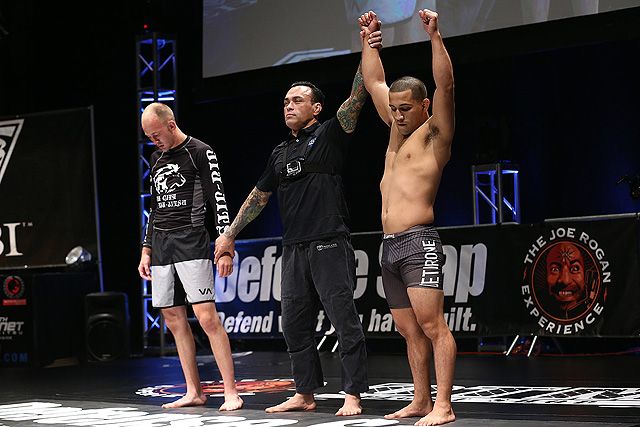
Joe Soto’s gogoplata win over Mike Christensen at Tachi Palace Fights 1 in October 2009 happened almost by accident. Soto mounted Christensen and landed enough punches that Christensen gave up his back, then scrambled his way into Soto’s closed guard trying to escape. Soto grabbed his own leg, worked it over Christensen’s shoulder and under his chin with no real setup, and finished the choke as Christensen tried to spin out. It is proof the position can appear in the middle of a scramble as easily as it can from a planned attack.

Eight years later, Soto got a shot at doing it under the UFC banner. Fighting Rani Yahya, himself a dangerous submission grappler, at UFC Fight Night 106 in Fortaleza, Brazil, Soto found himself in position for what would have been the first gogoplata finish in UFC history. He has since said publicly that a tactical misjudgment cost him the finish, and the fight went the distance instead, with Soto winning a unanimous decision. The drought held.

Every Confirmed Gogoplata Finish, In Order
- December 31, 2006 — Shinya Aoki submits Joachim Hansen, Pride Shockwave 2006 (first MMA finish)
- February 24, 2007 — Nick Diaz submits Takanori Gomi, Pride 33 (later overturned to a no contest)
- September 15, 2007 — Brad Imes submits Zak Jensen, regional heavyweight card
- October 27, 2007 — Brad Imes submits Bo Cantrell, his second straight gogoplata win
- June 15, 2008 — Shinya Aoki submits Katsuhiko Nagata from full mount, DREAM 4
- October 8, 2009 — Joe Soto submits Mike Christensen, Tachi Palace Fights 1
Six finishes in roughly three years, then nothing since 2009 at any organization fans would recognize. That drought is its own kind of evidence for how narrow the window really is.
Why the UFC Is Still Waiting
The honest answer is that the UFC’s talent pool selects against the exact profile that lands gogoplatas. Wrestling-heavy camps train fighters to posture out of bottom position immediately, not to let a scramble breathe long enough for a shin to find a throat. The fighters flexible enough to threaten one, submission specialists like Charles Oliveira, tend to hunt faster, lower-risk options like triangles and armbars instead, since those finish just as often with less exposure to strikes. A gogoplata attempt that fails can leave a fighter in a worse spot than before they tried it, and that math keeps most elite grapplers away from it even when they physically could pull it off.
It is not a coincidence that every real gogoplata finish on this list came from a guard-first era of MMA, before modern ground-and-pound defense got as refined as it is now. The triangle choke solved the same problem with less flexibility and less exposure, which is a big part of why it became a staple instead of a rarity.
Could Today’s UFC Finally See One?
If it happens, it will come from someone with a dedicated jiu-jitsu background rather than a converted wrestler, and it will almost certainly come off a scramble rather than a planned setup, the same way Soto’s real finish did back in 2009. Guard specialists built in the Gracie tradition are the most likely candidates, simply because they spend more time on their backs by choice than anyone else on the roster.
For anyone building a guard-heavy submission fighter in TKO Tycoon, the lesson from two decades of real gogoplata attempts is the same one that applies in the cage: flexibility and guard retention matter more than raw grappling rating once a fight hits the mat, and a fighter built around scrambles will create finishing windows a straight wrestler never sees.
Twenty years is a long time for a legal, repeatedly demonstrated submission to stay unfinished at the sport’s highest level. Somebody will eventually close that gap. Betting on when is the harder question than betting on whether.
Sources
- Gogoplata — Wikipedia — technique overview and competition history
- Shinya Aoki fighter profile — Sherdog — fight record and finish details
- Joe Soto Regrets “Screwing Up” the UFC’s First Ever Gogoplata Finish — MMA News
- Joe Soto athlete profile — UFC.com
- Brad Imes — Wikipedia — record of consecutive gogoplata finishes