UFC Middleweight Rankings: Who’s Closest to Strickland’s Title
A year ago, middleweight had a simple story: Khamzat Chimaev was going to run through the division the way he’d run through welterweight, and everyone else was just there to find out how fast they’d lose. That story is dead. Strickland beat him. Du Plessis beat a former two-division champion in Usman to force his way back into the conversation. And a Brazilian southpaw named Caio Borralho has won enough fights that the UFC can’t keep pretending he’s not a problem. Middleweight in 2026 isn’t a coronation anymore — it’s the most contested title picture in the sport, and the fighter at the top of it got there by refusing to lose the fight everyone assumed was already decided.

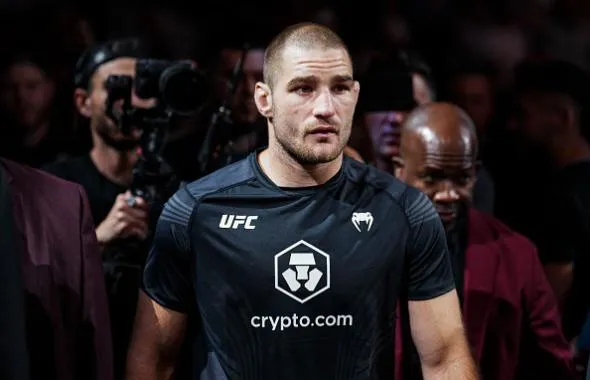
Sean Strickland: The Champion Who Wins the Fight Nobody Wants to Have
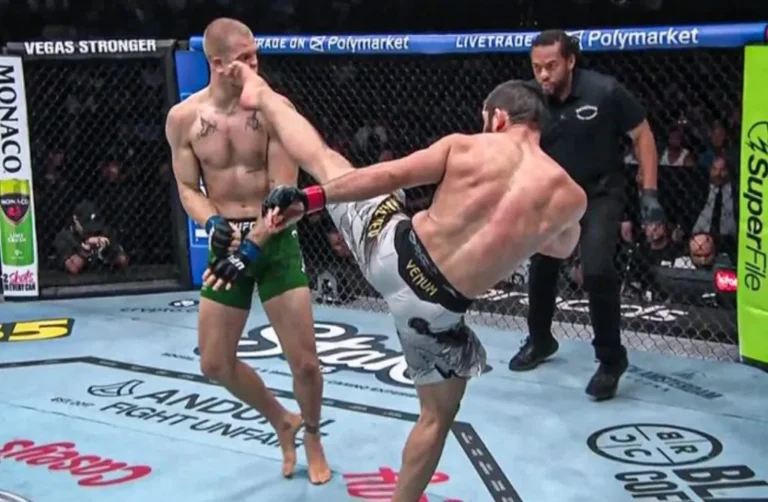
Strickland’s whole career is an argument against the idea that MMA rewards the most talented athlete in the cage. He’s not the fastest at 185, he’s not the hardest puncher, and he doesn’t finish fights at a rate that gets him onto highlight reels. What he does is volume — a constant stream of jabs, step-back counters, and output that never slows down, round after round, fight after fight. Opponents who look sharp against him in round one are getting picked apart by round three because Strickland simply never stops working.
That approach was supposed to break against Chimaev, a wrestler who’d never lost a professional round and who was expected to drag Strickland to the fence and grind him out. Instead Strickland did the opposite of what a striker usually does against a feared wrestler — he pressed forward, denied Chimaev the space to set up entries, and kept the fight standing long enough to win it on volume. He did all of it with a shoulder injury that would have shut most fighters down. That’s the version of Strickland the rest of the division now has to solve, and — as we broke down in his full fighting style profile — nobody has shown they have an answer yet.
Khamzat Chimaev: Still the Scariest Name in the Division, Still Chasing the Rematch

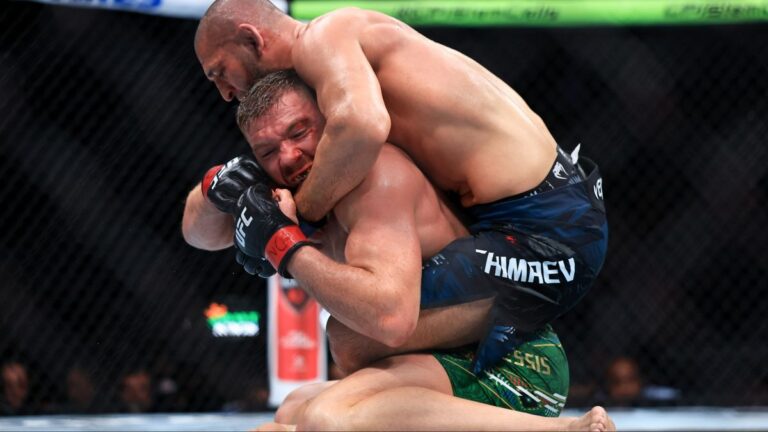
Chimaev’s loss to Strickland is the first blemish on a record that used to be the sport’s walking threat — 15-1, with the one loss coming by split decision against a champion fighting hurt. That’s a thin margin, and it’s why Chimaev remains the UFC’s clearest #1 contender rather than someone who needs to rebuild. The question dogging him since UFC 328 is simple: why did a fighter built on wrestling spend large stretches of that fight standing and trading instead of forcing the clinch and the mat, where he’s beaten literally everyone else he’s faced at 185 and 170?
If Chimaev gets the rematch — and the UFC has every incentive to book it, since it’s the one fight in the division with built-in stakes — the version of him that shows up matters more than any gameplan on paper. Abandon the wrestling again and he’s gambling on out-boxing arguably the best volume striker in the weight class. Go back to the wrestling-first identity that made him a problem at two divisions and force Strickland into exchanges he’s never had to survive, and Chimaev is still the most likely man to end this title reign.
Dricus du Plessis: Back in the Conversation After Beating a Legend

Du Plessis lost the belt to Chimaev and could have slid down the rankings the way former champions often do after a title loss. Instead he went out and beat Kamaru Usman — a two-division UFC legend — by unanimous decision in a fight both corners walked away from calling Fight of the Night. That’s not a gatekeeper win. That’s a statement that the former champion’s chaotic, awkward, hard-to-prepare-for style still works against elite competition, title or no title.
What makes du Plessis dangerous is that he doesn’t fight like anyone else at 185. He throws from angles that look wrong until they land clean, he pressures in scrambles most fighters try to avoid, and he’s comfortable being uncomfortable — which is exactly the kind of chaos that can disrupt a high-volume, rhythm-based fighter like Strickland. A rematch with Chimaev would settle an old score. A first fight with Strickland would be the stylistic puzzle the champion hasn’t had to solve yet.
Caio Borralho: The Win Streak the Division Can’t Ignore Anymore

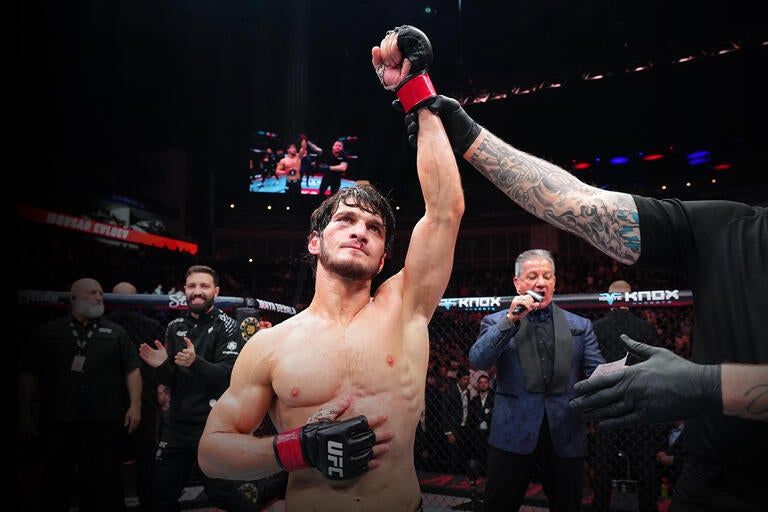
Borralho doesn’t have the name recognition of Chimaev or du Plessis, and that’s exactly the problem for everyone ranked above him. He took a five-round decision over Reinier de Ridder — a fighter who’d beaten a former champion in Robert Whittaker just fights earlier — and did it by out-striking a bigger, longer opponent for twenty-five straight minutes. That’s not a fluke result against a gatekeeper. That’s a win over a ranked contender, achieved on the feet, against a fighter whose whole game plan is supposed to make striking exchanges miserable.
The southpaw counter-striking that’s carried Borralho through the division doesn’t rely on one highlight-reel tool the way some rankings climbers do. He’s patient, he picks shots off a stationary jab, and he doesn’t panic when a fight goes long — which matters against a champion whose entire identity is making fights go long. He’s not next in line for the title shot. He’s the fighter everyone currently ahead of him should be watching the tape on.
The Rest of the Picture: Imavov and Allen Keep the Pressure On


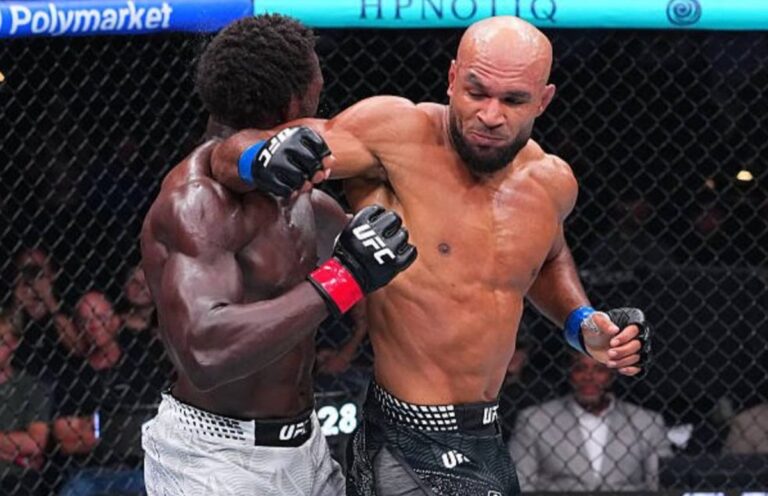
Nassourdine Imavov’s case for a title shot is built on the one thing the fighters above him can’t claim: he’s never lost to anyone currently ranked ahead of him at 185. The French contender fights behind a long, technical jab and uses range better than almost anyone in the division, which is a real problem for a volume striker like Strickland who wants to work at close distance. He’s not getting talked about as the next challenger, but a clean run through one more ranked name changes that fast.
Brendan Allen’s path has been quieter and more methodical — grinding through the rankings on the strength of a BJJ black belt that’s finished more opponents on the ground than anyone else currently in the top ten. He’s not a stylistic nightmare for Strickland the way Chimaev or du Plessis might be, but he’s the kind of durable, well-rounded threat who makes a title reign earn every single round. Neither Imavov nor Allen is one win from a title shot. Both are one statement win from forcing their way into that sentence.
Building This Logjam in TKO Tycoon
If you’re managing a 185lb roster in TKO Tycoon, this real-world logjam is basically a free scouting report. A Strickland-style build — high output, low power, stamina-heavy — only wins titles if your fighter’s cardio attribute is maxed before you touch footwork or power; drop the ball on conditioning and a volume gameplan collapses in round three exactly the way it almost did against Chimaev. A Chimaev-style build lives or dies on your wrestling-to-clinch pipeline staying active; the moment that archetype starts trading standing exchanges instead of chaining takedowns, you’ve built an expensive boxer instead of the division-wrecker you paid for.
Du Plessis and Borralho point to a different lesson entirely: awkward, unorthodox skill trees beat clean, textbook ones more often than the game’s base stats suggest. A fighter with mismatched attributes — heavy hands but sloppy footwork, or elite counter-striking but unremarkable athleticism — can out-perform a min-maxed build if the opponent hasn’t scouted that specific weirdness. Stack a roster with two or three “normal” stylistic builds and one genuine outlier, and the outlier is usually the one winning title eliminators nobody saw coming.
Who’s Actually Closest to the Belt
Strip away the name value and the matchmaking politics, and Chimaev is still the correct #1 contender — a split-decision loss to a champion fighting through a shoulder injury doesn’t erase fifteen wins, and the UFC has no reason to deny a rematch with that much built-in interest. But du Plessis made the stronger case with his last performance. Beating a legend in Usman, in a Fight of the Night, as a former champion looking to reclaim the one thing Chimaev took from him, is the kind of résumé line that writes its own next fight. If the UFC books on recent form instead of name value, du Plessis gets the next crack at Strickland before Chimaev does.
Either way, Strickland doesn’t get an easy option. The two most obvious challengers both have a real argument for why their specific style is the one that finally slows him down, and Borralho is building a case that neither of them should get comfortable. For a champion who built his whole reputation on simply refusing to stop working, that’s the kind of division that keeps the job exactly as hard as it should be.
Sources
- UFC Men’s Middleweight Rankings — CBS Sports — current official UFC media panel rankings for the division.
- Sean Strickland Athlete Profile — UFC.com — official record and fight history.
- Khamzat Chimaev Athlete Profile — UFC.com — official record and fight history.