Sean Strickland Fighting Style: The Two-Time Champ Who Wins by Outworking Everyone
At UFC 328, Sean Strickland walked into Prudential Center nursing a Grade 1 AC joint separation from a sparring session four days earlier. He fought anyway. Across five rounds he out-jabbed Khamzat Chimaev, absorbed almost nothing clean, and left Newark the two-time UFC middleweight champion on a split decision that surprised nearly everyone outside his camp.
That fight was the most Sean Strickland fight imaginable.
No finishes. No single defining moment. Just relentless output, tight defensive work, and the mechanical grind that makes Strickland simultaneously the most boring and most effective fighter at 185 pounds. If you’ve watched him compete and wondered what exactly is happening between the ropes — here’s the actual breakdown.
The Upright Stance That Breaks Every Rule MMA Ever Established
Strickland stands nearly vertical with his lead hand dangling around waist level and his rear hand hovering loosely near his chin. The stance looks wrong at first glance. Every MMA coach teaching entry-level fundamentals would flag it on day one. It works anyway, and the reasons are specific.
The upright posture gives Strickland three simultaneous advantages: he can check leg kicks without transferring his weight, snap a sprawl without resetting from an awkward base, and track his opponent’s hands, hips, and footwork all at once without his own guard blocking sightlines. Those three things together represent a significant tactical payoff for what appears to be bad form on the outside.
There’s a deception component too. The stance makes Strickland look closer than he is. Opponents throw punches that land three inches short because they’ve miscalculated where his head sits relative to where his body appears. He doesn’t just defend those shots — he was never in danger from them. That’s not a bug. That’s the architecture of the style working exactly as designed.
Why Sean Strickland’s Jab Volume Decides Fights Before Round Three
The jab is Strickland’s primary control mechanism, not his power weapon. He uses it to measure distance, interrupt offensive timing, disrupt rhythm, and establish the psychological frame for the entire fight. Every jab that lands without a counter sends a signal to his opponent: punching back carries risk. That signal compounds over 25 minutes in ways that don’t show up clearly in any single round but become impossible to manage by round four.
His jab rate is unusual for MMA. Most fighters use the jab sparingly to set up rear-hand power shots. Strickland fires them in clusters — single jabs, double jabs, jab-to-body, jab-to-head-with-a-check-left — in sequences that make the next combination harder to read than the last. The volume creates a cumulative problem that looks like nothing on screen but feels catastrophic from inside the pocket.
Casual viewers consistently misread his fights because of this. A round where Strickland throws sixty jabs and lands forty looks uneventful. His opponent tends to think so too, until watching tape and realizing they were being controlled the entire time without registering it.
The jab is also his primary range tool. He jabs when moving forward to interrupt counters. He jabs when stepping back to maintain connection. He jabs when an opponent tries to reset the distance. The punch is nearly constant, which means his presence in a fight is nearly constant, which means his opponents never fully reset mentally between exchanges.
How Strickland’s Defensive System Neutralizes Power Hitters
Strickland’s defense runs on a tight rear guard and a lead shoulder roll that redirects straight shots by turning his head slightly offline at impact. He rolls into punches rather than away from them, absorbing force through the shoulder muscle rather than exposing his jaw. The timing has to be exact — roll too early and the opponent adjusts, roll too late and the shot lands flush — and Strickland executes it consistently against fighters who have finished better-defended opponents clean.
Alex Pereira stopped him in round one at UFC 276 with a head kick. That’s the outlier. Against every other top middleweight, Strickland absorbs far less than opponents expect given the volume they’re throwing. His opponents land punches but rarely damage him because the defensive system is built around damage mitigation rather than punch avoidance.
There’s a psychological element here that rarely gets examined. Fighters who expect to hurt Strickland with their best shot — and don’t — tend to press harder looking for the finish. That urgency opens them up to counter volume. His defensive durability actively changes how opponents make decisions in a fight, and almost always in directions that benefit Strickland’s output game.
Controlled Forward Pressure Without the Risks That Come With It
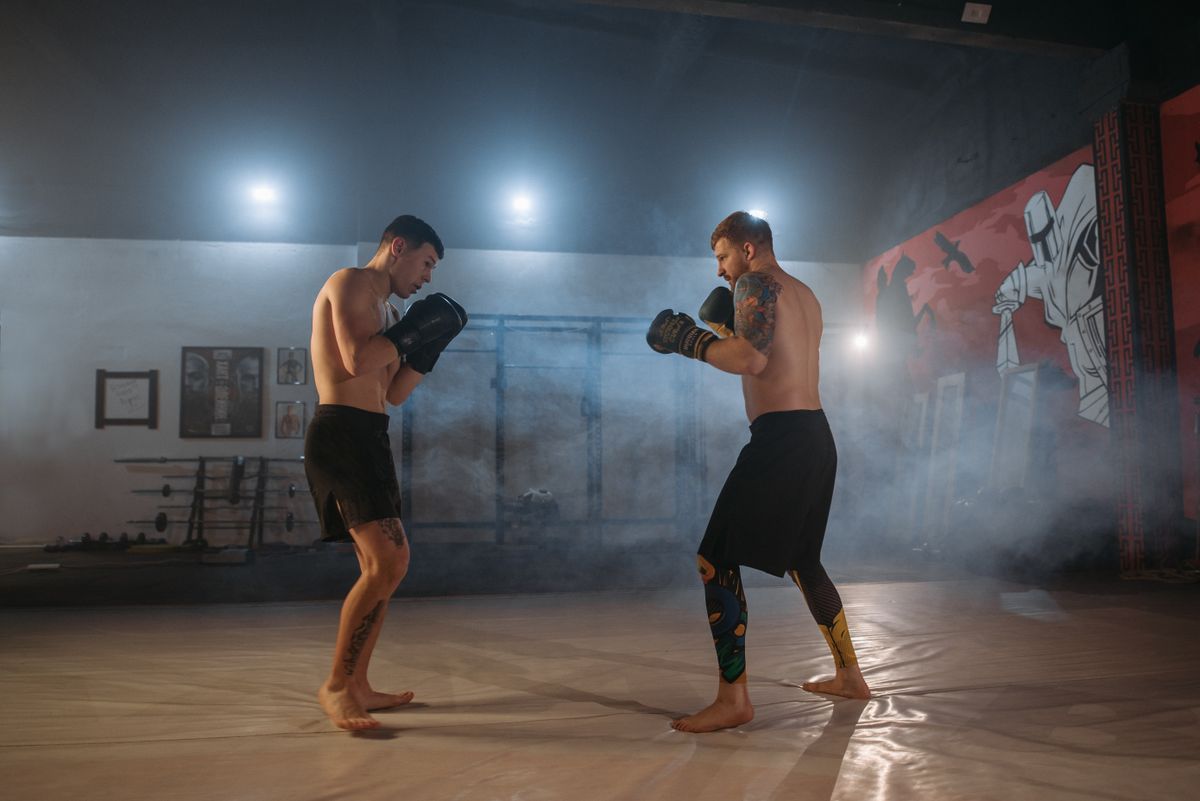
Most fighters who pressure opponents forward do it with a lunge or a committed step that briefly compromises their base. Strickland doesn’t. He advances with short shuffle steps that keep his weight balanced at all times, which means he can sprawl, pivot, or step off-angle without resetting from an exposed position first.
This matters in MMA because moving forward is inherently dangerous. You’re walking into punches, into takedown range, into knee counters in the clinch. Strickland’s footwork manages each of those risks simultaneously. He moves forward methodically, rarely in a straight line, head slightly displaced from center, and presents an opponent with the uncomfortable reality that pressing back doesn’t work and backing up doesn’t help.
The result: opponents feel crowded and reactive, but they can’t identify exactly what’s crowding them. The disorientation accumulates across rounds. By round three in a Strickland fight, the man across from him is usually spending more energy managing incoming pressure than generating offense of his own. That’s when the scorecards start going one direction.
How Strickland Beat Two of the Best UFC Middleweights in History
Both title wins — against Israel Adesanya at UFC 293 and Khamzat Chimaev at UFC 328 — followed the same blueprint with minor adjustments for each opponent. Disrupt early, break rhythm before range gets established, and grind the middle rounds until the volume differential makes the cards unambiguous.
Against Adesanya, who entered as a heavy favorite expected to control distance and timing, Strickland swarmed him in the opening seconds of round one and never allowed him to settle. Adesanya’s entire game depends on space and timing. Strickland refused to give him either. For five rounds, the fight was conducted in Adesanya’s discomfort zone, which turned out to be enough for a decision that shocked the sport.
The Chimaev win carries more weight in context. Chimaev entered unbeaten, physically dominant, and considered one of the most complete fighters in the division. His wrestling had controlled or finished almost every middleweight he’d faced. Strickland checked it efficiently, kept the fight standing, and turned UFC 328 into a long boxing match where his jab output and pace made five rounds feel longer for Chimaev than for him.
For context on exactly what Strickland neutralized that night, the breakdown of Khamzat Chimaev’s fighting style explains the wrestling system and grappling pressure that most people assumed was unbeatable at 185 pounds — which makes the win considerably more impressive on closer inspection.
What Sean Strickland’s Style Teaches TKO Tycoon Managers
Strickland represents a specific and consistently underrated archetype in TKO Tycoon: the volume boxer. Not the knockout artist hunting one clean shot. Not the wrestling specialist grinding for positional control. The fighter who wins on output rate, defensive efficiency, and the ability to make every round feel longer for the opponent than for himself.
Building a Strickland-type in TKO Tycoon means investing in jab frequency and defensive ratings over raw power. A fighter who throws 20% more punches per round than an opponent wins by making the scorecards impossible to read any other way. In close fights — the ones decided by two of three judges, not three of three — volume creates a competitive edge that power alone doesn’t reliably replicate.
The deeper lesson from Strickland’s career: durability and output are undervalued in a sport that rewards spectacular finishes. Two title reigns in the most competitive division in the UFC came from a man who rarely makes highlight reels. The system fighter with the better mechanics wins more often than casual fans expect, and more consistently than any single power puncher with a knockout problem.
Frequently Asked Questions About Sean Strickland’s Fighting Style
What fighting style does Sean Strickland use?
Strickland uses a high-volume boxing system built around an upright modified Philly shell stance. His game relies on relentless jab pressure, tight lead-shoulder defensive rolls, and controlled forward movement that forces opponents backward without overcommitting to any single exchange.
How did Sean Strickland become a two-time UFC middleweight champion?
Strickland won the title at UFC 293 with a decision upset over Israel Adesanya in Sydney. He reclaimed the belt at UFC 328 in May 2026, out-jabbing Khamzat Chimaev across five rounds despite entering the fight with a Grade 1 AC joint injury sustained four days before the bout.
Is Sean Strickland a good wrestler?
His wrestling is functional but not his primary weapon. Strickland is effective enough at defending takedowns to keep fights standing, where his boxing system dominates. His takedown defense was critical against Chimaev, whose elite grappling had controlled or finished nearly every previous opponent in the weight class.
Why does Sean Strickland hold his hands so low?
The low lead hand is part of his modified Philly shell. It frees his lead shoulder for defensive rolls, creates range confusion for opponents reading his guard, and enables faster lead-hand counters than a conventional high guard allows. The tradeoff is vulnerability to left hooks and head kicks — which is how Pereira finished him at UFC 276.
References
- UFC.com — UFC 328 official results, highlights, and post-fight interviews
- ESPN MMA — Chimaev pushes for immediate rematch after UFC 328 split decision loss
- Sherdog — Scouting report on Sean Strickland’s fighting style and tendencies
- Yahoo Sports — Strickland next fight plans, AC joint injury detail post-UFC 328