Jon Jones Fighting Style: The Most Complete MMA Fighter Ever Produced
When Vitor Belfort threw one of the fastest right hands in MMA history at Jon Jones at UFC 152, Jones slipped inside the rotation, clinched up, and dumped him with a takedown before finishing with an arm bar. The sequence wasn’t improvised. It was the output of a fighter so systemically prepared that even reactive moments look like calculated chess moves. That’s what you find when you break down Jon Jones’s fighting style: not a bundle of raw gifts, but a layered, interconnected system that most analysts still haven’t fully mapped.
The record speaks first. Twenty-eight wins, one DQ loss — a 12-6 elbow against Matt Hamill that was accidental enough for the referee to warn him three times before stopping it. No one has beaten Jones clean. Not in nearly two decades of fighting at the highest level. When a fighter at that level has one loss and it’s a technical foul, you’re dealing with something categorically different from his peers.
The Oblique Kick: Jon Jones’s Most Underrated Weapon in MMA History
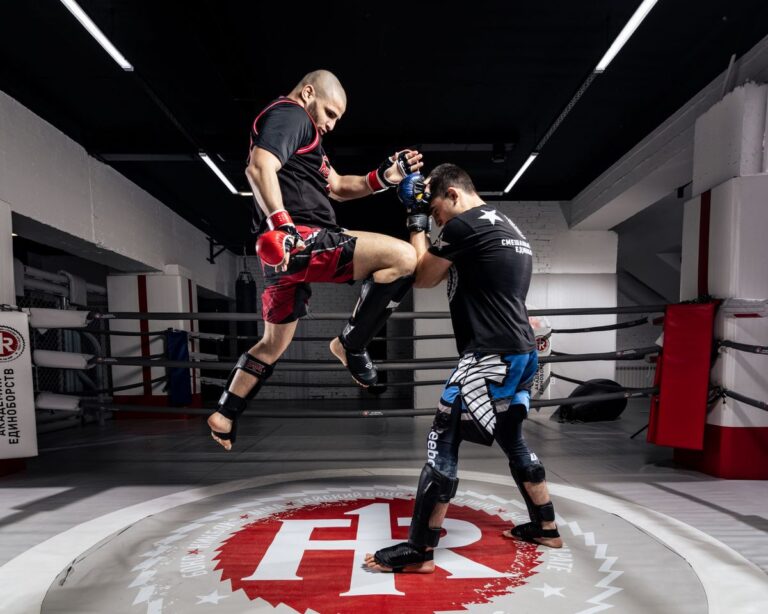
The oblique kick — a front kick driven diagonally into the opponent’s lead knee or thigh — is Jones’s most technically disruptive weapon, and most casual fans have never thought about why it’s so effective. It doesn’t look like a knockout strike. It rarely makes the highlight reel.
What it does is remove an opponent’s ability to close distance safely. A conventional lead leg kick goes to the thigh. Jones’s oblique kick targets the knee joint from an angle that hyperextends it if the opponent steps in at the wrong moment. It’s a threat that forces fighters to lift their lead leg defensively, which completely disrupts their offensive timing. Vitor, Rashad Evans, Alexander Gustafsson — all of them spent entire rounds unable to commit forward because that kick was waiting at the end of Jones’s long jab.
The real reason it works is reach. Jones has a 84.5-inch wingspan on a 6-foot-4 frame. He can land that kick while the opponent is still trying to figure out if they’re in range to throw their own offense. It’s a distance management tool disguised as a strike, and it’s the foundational layer every other piece of Jones’s system sits on top of.
Dirty Boxing, Elbows, and the Clinch — Jones’s Forgotten Department
Strip away the oblique kicks and the spinning elbows and what you find is one of the best dirty boxing practitioners in UFC history. Jones in the clinch is methodically destructive in ways that are easy to miss when you’re watching live.
His clinch entry starts with the jab — long, extended, almost Philly shell-adjacent in how he uses the lead arm as a probe. Once he’s got contact, he collapses the distance fast, wrapping inside control or taking a collar tie. From there he works elbows. Short, chopping shots from tight range that open cuts and drain energy without being the dramatic hail-mary swings that get slow-motion replays.
The spinning back elbow is the flashier version of this department. Jones has finished fights with it and used it to create separation when opponents think they’ve neutralized him against the cage. It’s a weapon you don’t drill for because almost nobody throws it well enough to make you drill for it. Jones is one of three or four fighters in MMA history who can land it reliably.
The 12-6 elbow that got him DQ’d against Hamill? That tells you something too. Jones was already using elbows from every angle and direction at 23 years old, before he’d refined them into the tactical tool they became. The instinct was there from day one.
Jon Jones Grappling Style: Elite Wrestling With a Submission Ceiling
Jones was an all-state wrestler in high school, but he’s not a pure wrestling specialist in the way that Khabib or Usman were. He uses wrestling as one layer of a system rather than the main event. That distinction matters.
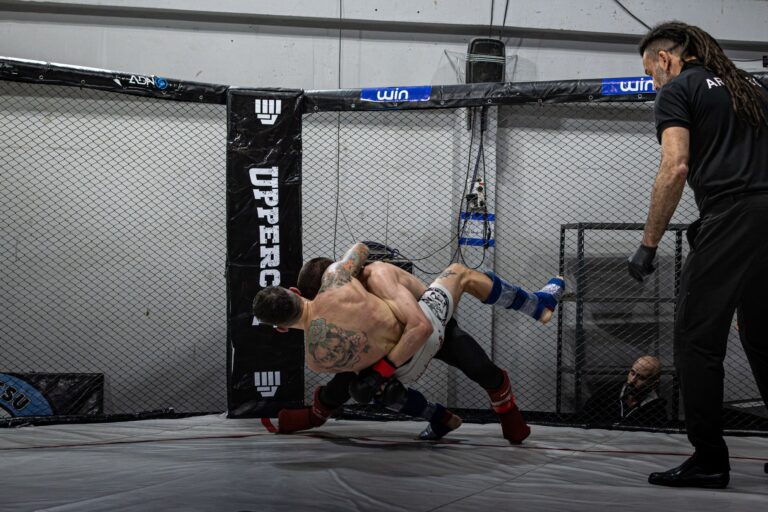
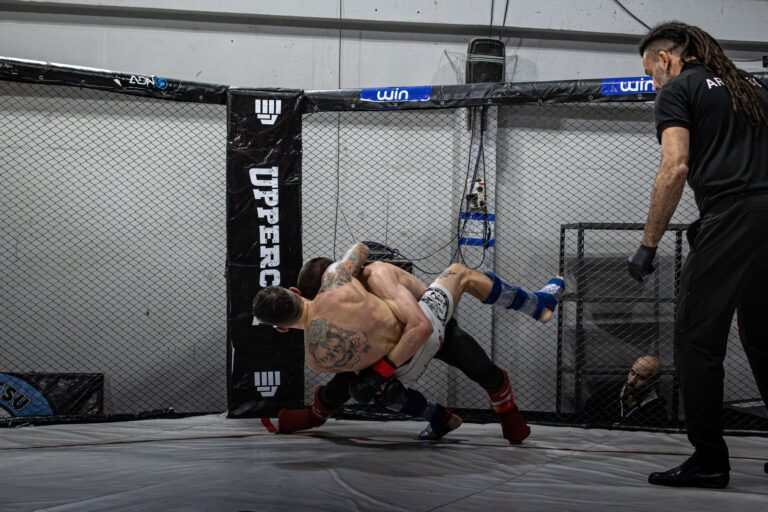
His takedown success rate over his career hovers around 40%, which looks underwhelming until you realize most opponents actively don’t want to engage with him on the feet either. He creates takedown threats not to necessarily get the fight to the ground, but to open up his striking by making opponents think about sprawling. Rashad Evans spent much of their fight worried about getting taken down and got picked apart on the feet. Jones never had to commit to a single shot.
When he does get fights to the ground, his guard passing is brutal — long strides, technical pressure, and the ever-present elbow threat from half guard. He’s submitted opponents with arm bars, guillotines, and the spinning rear-naked choke. His submissions aren’t flashy scramble catches; they’re methodical hunts that follow a chain of positional control. Charles Oliveira is the better submission artist, but Jones’s grappling is more versatile because he’s not dependent on it. He can win at every range and chooses when to use each weapon.
The Heavyweight Transition — How Jones Adapted Without Losing the System
Jones spent most of his career at 205 pounds, a light heavyweight who was already one of the biggest and longest fighters in the division. Moving to heavyweight wasn’t just a weight class jump — it required adjusting to opponents with different weight distributions, different clinch dynamics, and genuinely different knockout power.
The adaptation was quieter than most people expected. Jones didn’t reinvent himself. He kept the oblique kick, the clinch work, and the positional grappling. What changed was the timing. At 205, he could be somewhat loose with his defense because he was physically superior to most opponents. At heavyweight, a clean shot from Ciryl Gane or Stipe Miocic means something different.
His heavyweight debut and subsequent title run showed both the ceiling of the transition and its success. He still controls distance better than anyone in the division. The oblique kick is still there. The elbows still land. But you can see him fight with slightly more caution — a measured Jones rather than the improvising Jones of the early LHW run. He won the unified heavyweight title and defended it. The system survived the jump.
Building a Jon Jones-Style Fighter in TKO Tycoon
If you play TKO Tycoon and want to build a Jones archetype, the principle is distribution over specialization. Jones didn’t win because he had the best wrestling or the best boxing or the best BJJ. He won because he had no clear holes. In the game, that means resisting the temptation to dump all your points into one combat stat and instead spreading development across striking, clinch, and grappling at roughly similar levels.
The secondary priority is reach-based striking. If your fighter has a physical reach advantage, you want to maximize the use of long kicks and jab-heavy striking patterns before closing to clinch range. This mirrors how Jones fights — he uses his dimensions as a tool, not just a passive characteristic. A Jones build in TKO Tycoon should feel uncomfortable to fight in every range, which means your training camp decisions need to reflect that.
Don’t skip dirty boxing. In most MMA management games, clinch work is underrated by players who over-index on KO power and submission percentages. Jones proves that mid-range elbow work and clinch control can win rounds, grind opponents down across five-round fights, and create the openings that finish bouts.
Frequently Asked Questions About Jon Jones’s Fighting Style
What makes Jon Jones’s oblique kick so effective?
The oblique kick works because Jones’s exceptional reach lets him land it at a distance where opponents believe they’re safe. It targets the lead knee from an angle that threatens hyperextension, forcing fighters to constantly raise their lead leg defensively — disrupting their offensive timing and preventing them from closing distance safely.
Is Jon Jones the greatest MMA fighter of all time?
The case for Jones as GOAT rests on sustained dominance across two weight classes, 13 light heavyweight title defenses, and a record with one technical DQ loss over nearly two decades. The counterargument centers on personal conduct off the card. Technically, no other fighter has been as comprehensively effective across every range and weight class simultaneously.
How does Jon Jones use wrestling without being a pure wrestler?
Jones uses wrestling primarily as a threat multiplier rather than his primary finish tool. By making opponents worried about takedowns, he opens up his striking and clinch work. When he does commit to grappling, he combines wrestling with elbow pressure and positional control to either finish or take rounds rather than chasing pure submission percentages.
Who has come closest to beating Jon Jones?
Alexander Gustafsson came closest in their first fight at UFC 165, landing enough counter shots and controlling enough of the fight to make it genuinely competitive through five rounds. Jones won a split decision, but Gustafsson exposed that elite counter-striking combined with physical toughness could at minimum make Jones uncomfortable — something most opponents failed to do.
If you want to see how a Jones-style all-around fighter performs under real pressure, TKO Tycoon lets you build one — and find out what gap your opponents will try to exploit.
References
- ESPN MMA — Jon Jones Fighter Profile — Career record and fight history
- MMA Mania — Jon Jones Coverage — Fight analysis and technique coverage
- UFC.com — Jon Jones Official Profile — Official stats and fight footage
Image credit: sportskeeda.com