Chain Wrestling in MMA: How Fighters Link Takedowns Until One Lands
Watch a great wrestler in the UFC and the takedown that actually finishes the sequence is almost never the one they started. Khabib Nurmagomedov didn’t drag people to the mat on his first shot. He shot, got stuffed, reshot, switched sides, and dumped them on the fourth try while they were still congratulating themselves on the sprawl. That’s chain wrestling, and it’s the single most misunderstood skill in the sport.
Casual fans see a stuffed double leg and think the wrestler failed. Trained eyes see the trap being set.
What Chain Wrestling Actually Means in MMA
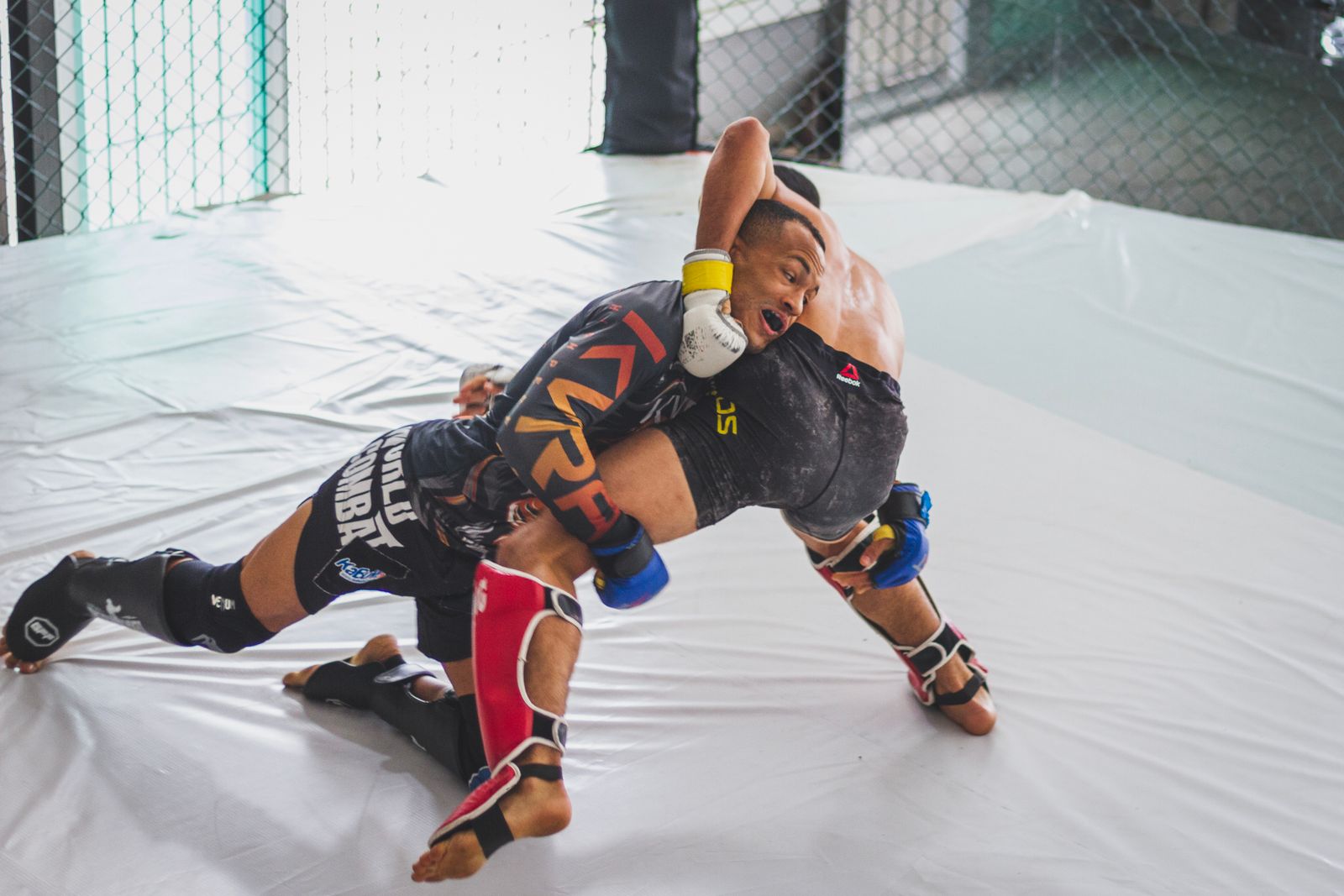
Chain wrestling is linking two or more takedown attempts in one continuous sequence, so the opponent can only defend one entry at a time. A stuffed double leg becomes a single leg becomes a body lock. Each defensive reaction opens the next attack. The takedown lands not because it’s unstoppable, but because it’s the third thing you tried in two seconds.
The mistake beginners make is treating a takedown as one move with a yes-or-no outcome. It isn’t. A double leg is an opening bid. When your opponent sprawls their hips back and frames on your head, they’ve committed their weight backward — which is exactly the moment a single leg or a duck-under works. Wrestlers call this “wrestling in bunches.” You never fire one shot.
Why a Single Double Leg Takedown Almost Never Works
Against a trained fighter, the first double leg takedown gets stopped roughly nine times out of ten. Sprawls, underhooks, cage framing, and simple circling all beat a telegraphed shot. The double leg only scores when it’s the finish of a chain — after the defender has already burned their reaction on something else.
Here’s the math nobody likes. UFC takedown accuracy across the roster hovers around 35 to 40 percent. The guys well above that number — the Khabibs, the Kamaru Usmans, the Islam Makhachevs — aren’t landing better single attempts. They’re taking more attempts per sequence and stacking them. A 40 percent shot fired three times in a row lands about 78 percent of the time. That’s the whole trick, expressed as arithmetic.

The Core Chain: Double Leg to Single Leg to Body Lock
The classic MMA chain runs double leg, single leg, body lock. You shoot the double, they sprawl, you slide to a single on the leg that’s still forward, they hop and defend, you stand into a rear body lock and trip them. Three entries, one continuous motion, no pause to reset. The opponent defends the first, reacts to the second, and gets caught by the third.
Georges St-Pierre built the most dominant welterweight run in history on exactly this pattern, except he glued jabs to the front of it. The chains matter more than any single technique because they remove the defender’s biggest advantage: time. A great sprawl needs a fraction of a second to load. Chain wrestling never gives it back. Every stuffed shot is just a question you ask before the real one.
Contrast that with takedown defense — the mirror image of this whole game. If you want to see how the other side of the cage shuts these entries down, our breakdown of the MMA sprawl and how champions stop takedowns cold covers the exact reactions a chain wrestler is trying to bait out of you.
Setting Up Takedowns With Strikes and Level Changes
The best takedowns in MMA start with a punch. A hard jab or an overhand right raises the opponent’s hands and freezes their feet for a beat, and that beat is when the level change fires. Pure wrestlers who don’t strike get timed and countered. The threat of the hands is what makes the shot land.
This is where MMA wrestling splits hard from folkstyle or freestyle. On the mat, you’re wrestling a wrestler. In the cage, you’re wrestling a striker who’s also trying to take your head off. So the level change has to hide inside a combination. Throw the one-two, drop the level on the tail end of it, and change levels while their eyes are still up top. Daniel Cormier and Cain Velasquez turned this into an art — box you backward, then dump you when you plant your feet to punch back. The strike and the shot aren’t two skills. They’re one motion.

Chain Wrestling Against the Cage Changes Everything
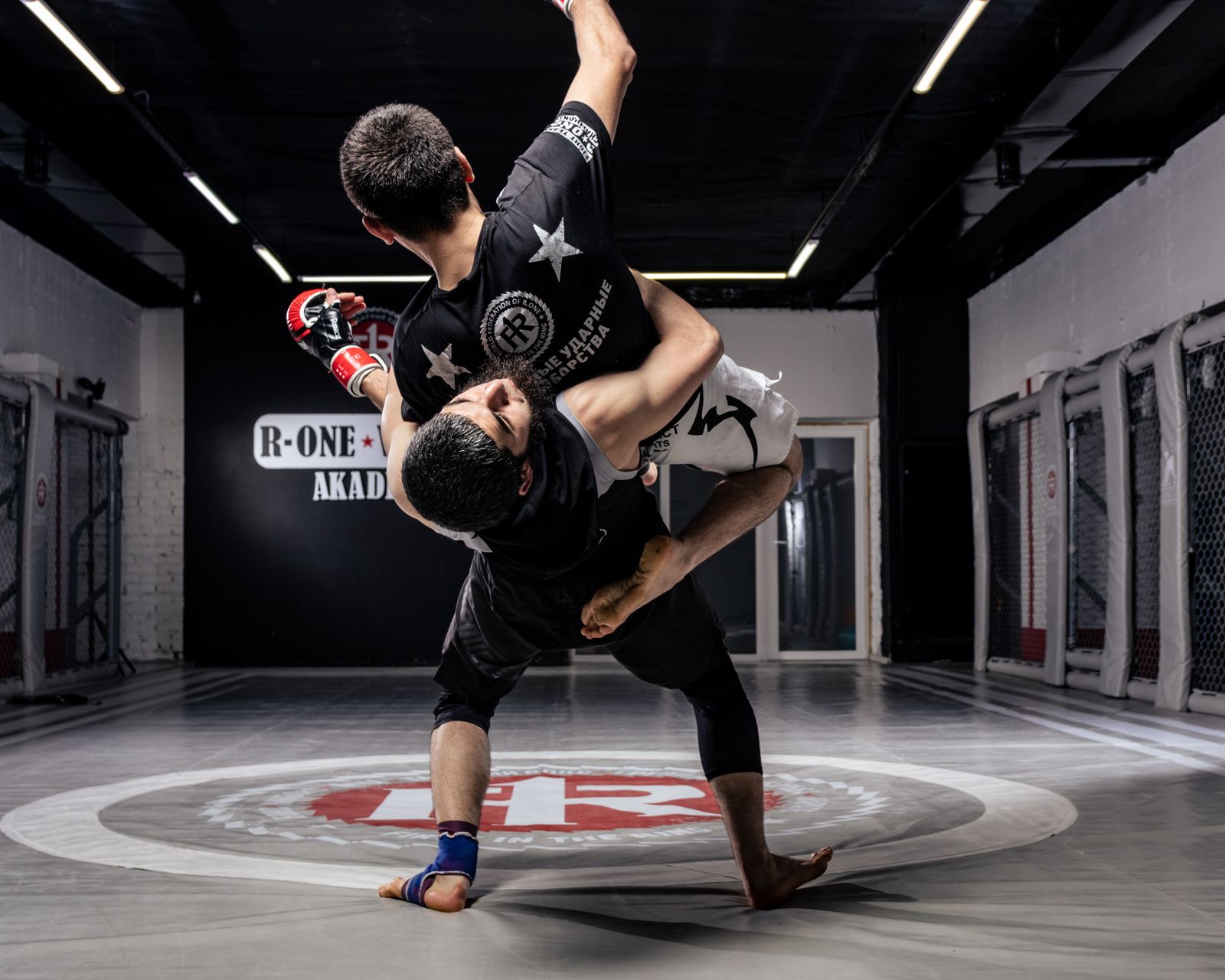
The cage is a chain wrestler’s best friend. Once you pin an opponent’s back to the fence, their sprawl loses its escape room and you can cycle through entries all day — trip, inside trip, knee tap, and back to the body lock. Open-mat wrestling gives the defender space to circle out. The cage takes that space away.
This is why so many “wrestlers” in modern MMA are really cage wrestlers. They’re not shooting from range across an open octagon; they’re closing distance, clinching, and running short-range chains against the fence where the defender can’t back up. Randy Couture practically invented this era, and Colby Covington built a title run on it. It’s grinding, it’s ugly on the judges’ eyes sometimes, and it flat-out works. A body lock against the cage removes the two things a sprawl needs: hip distance and a direction to retreat.
Finishing the Takedown and Winning the Scramble
Getting the takedown and keeping it are two different fights. The moment your opponent hits the mat, they’re already reversing, and a chain wrestler has to win that scramble or they’ve spent all that energy for nothing. Good finishers immediately climb to a dominant angle, kill the near hip, and flatten the opponent before they can turn to their knees.
The tell of an elite grappler is what happens in the two seconds after the takedown lands. Amateurs land the shot and relax. The scramble is when points, position, and finishes are actually decided. Khabib didn’t just take you down — he took your ability to stand back up. That means chest-to-chest pressure, hip control, and an immediate hunt for the crossface or the leg ride. If you can’t keep them down, the takedown was a cardio donation.

How Chain Wrestling Works in TKO Tycoon
In TKO Tycoon, wrestling isn’t one stat — it’s the interaction between your fighter’s takedown offense, scramble rating, and cardio. A high-offense fighter with a weak gas tank lands the first shot and gasses on the chain, which mirrors real MMA almost perfectly. You can’t brute-force a takedown in the game any more than you can in the cage.
The game models the same truth this whole article is built on: single attempts fail, chains succeed. Fighters with high scramble and cardio ratings convert stuffed shots into finishes at a much higher rate, because the engine lets them fire follow-up entries before the opponent recovers. Build a wrestler with knockout power and zero cardio and you’ll watch them win round one and drown in round three. If you want to train a chain-wrestling monster, invest in cardio and grappling defense before you touch striking — the same order a real coach would give you. That’s the fun of the TKO Tycoon game: the strategy that wins on paper is the strategy that wins in the cage.
Chain Wrestling in MMA: Frequently Asked Questions
What is chain wrestling in MMA?
Chain wrestling is linking several takedown attempts together so fast that your opponent can only defend one at a time. Instead of committing to a single double leg, you flow from shot to shot, using each defensive reaction to open the next entry until one takedown finishes.
Is the double leg or single leg better in MMA?
Neither wins on its own. The double leg covers more ground and scores bigger, but it’s easier to sprawl on. The single leg is harder to fully stop and pairs perfectly with the double as a chain. Elite wrestlers switch between them based on how the defender reacts.
Why do good wrestlers rarely get their first takedown?
Because trained opponents sprawl, frame, and circle out of the first attempt almost every time. The first shot is bait. It forces a reaction that leaves a limb, an angle, or the hips exposed for the real finish two or three moves later.
Can you learn chain wrestling without a wrestling background?
Yes, but it takes longer. Fighters from Muay Thai or BJJ backgrounds build chains around the clinch and the cage instead of open-mat shots. The principle stays the same: never stop on a stuffed takedown, keep flowing to the next entry.
References
- Evolve MMA – Chain Wrestling Techniques – technical breakdown of the core takedown chains referenced here
- Sherdog – fight records and takedown history for the fighters cited
- ESPN MMA – UFC takedown statistics and divisional data
- UFC.com Athlete Records – official career takedown and control-time metrics
Into BJJ? TaipeiBJJ.com covers training resources and BJJ content.
Play TKO Tycoon — the MMA management game for fight fans.
Shop on Amazon
MMA & Boxing Gear on Amazon →
As an Amazon Associate we earn from qualifying purchases.
Shop on eBay
MMA & Boxing Gear on eBay →
We may earn a commission when you shop through our eBay links.