Alexander Volkanovski Fighting Style: How The Great Became the UFC’s Most Complete Featherweight
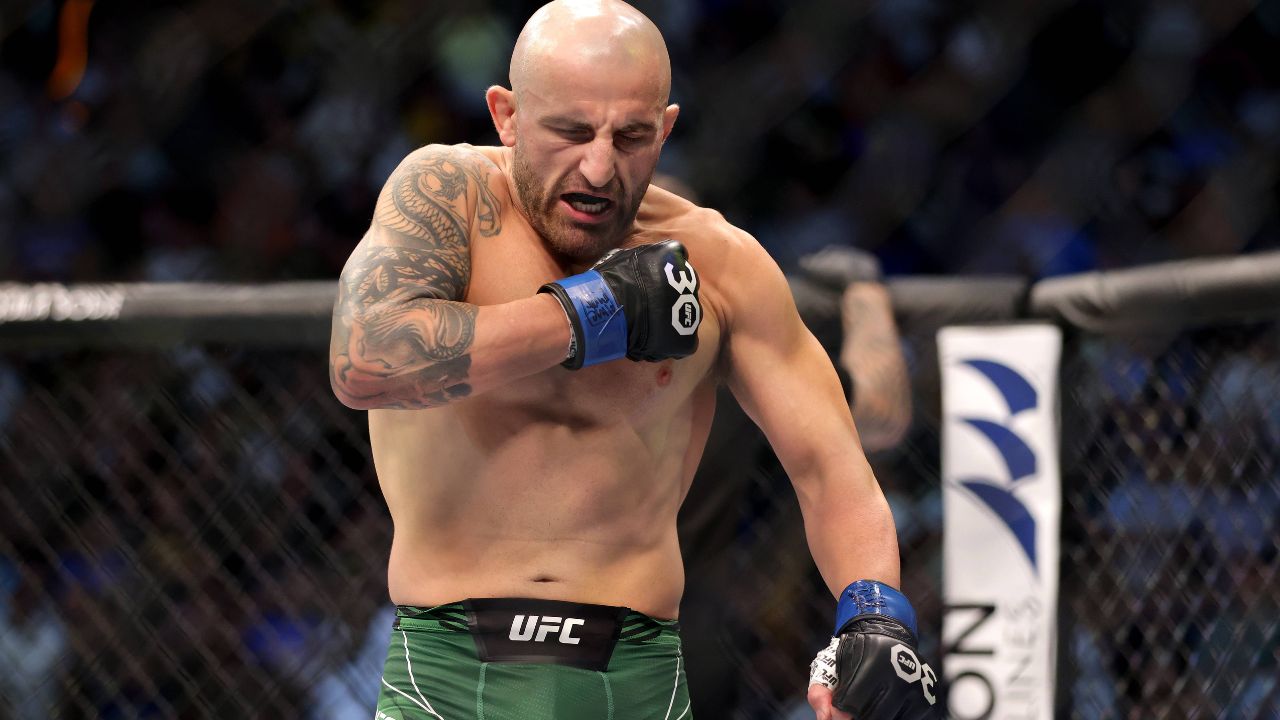
Four months after being knocked out cold by Ilia Topuria, Alexander Volkanovski stood in an octagon again at UFC 314. He was 36 years old, chasing a vacant title, and written off by a portion of the MMA world that decided the Topuria finish marked the end of an era. He won a five-round unanimous decision over Diego Lopes to reclaim the featherweight belt — and then did it again in Sydney eight months later. Two-time champion, oldest to win and defend the UFC featherweight title, tied with Jose Aldo for the most title victories in division history. Nobody builds a case like that by accident.
The Volkanovski style isn’t flashy. It doesn’t end fights in shocking single moments. What it does is make every aspect of MMA difficult for the person across from it, for 25 minutes if necessary.
Volkanovski’s Pressure Game: Always Moving Forward, Always Cutting the Cage
Volkanovski’s style is built on forward pressure that never fully relents. He doesn’t wait for openings — he creates them by walking opponents into the fence, narrowing the space they have to operate, and forcing decisions that compound over rounds. By the third round, most opponents are reacting defensively to a pressure they started round one trying to manage.
What separates his pressure from generic aggression: he moves his head while coming forward. Most fighters who walk straight ahead get tagged countering. Volkanovski bobs, changes levels slightly, takes angles — so the counter has to find a moving target. The combination of forward movement and defensive head work is what makes the pressure feel relentless rather than reckless.
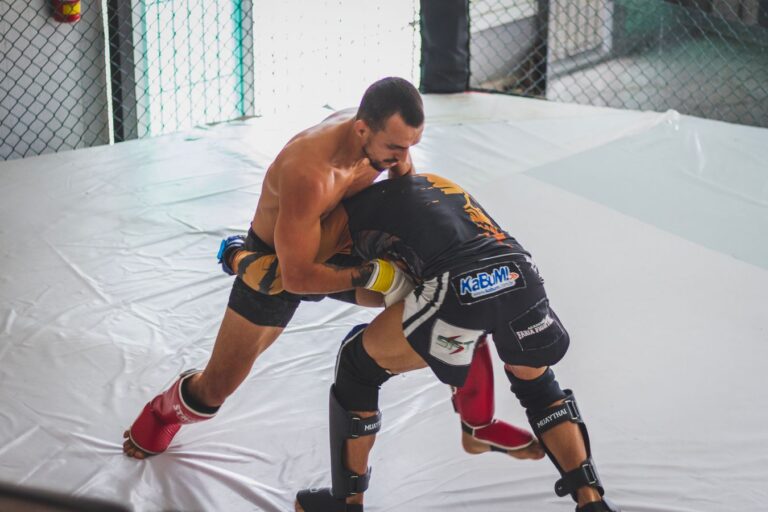
He is also excellent at using the clinch as a pressure reset. When opponents find a clean shot, Volkanovski ties up, resets the position, and resumes the forward march from a neutral spot rather than taking the full defensive damage. This is a trained skill, not a survival instinct — and it keeps the cumulative damage working in his direction across a full five rounds.
From Rugby Pitch to Wrestling Base: How Grappling Powers Everything
Volkanovski played rugby in Windang, New South Wales before he was a UFC fighter. Rugby develops a specific physical profile: low center of gravity, strong base, comfort in contact and scramble situations. He brought those instincts into MMA and built a wrestling game on top of them.
His takedown percentage isn’t the most important number here — it’s the threat. Volkanovski mixes takedown attempts into his striking combination sequences, which forces opponents to stay honest about level changes. When he shoots, he commits. When he doesn’t, the feint is real enough that hands drop or stances widen. Both outcomes serve him.
On the mat, he grinds. He doesn’t have submission finishes as his primary output, but he does land ground-and-pound that chips away at an opponent’s willingness to work off their back. The wrestling is a stamina drain as much as a scoring tool — carrying Volkanovski’s weight, defending his pressure, and getting back up repeatedly costs energy that shows up in round four and five when his combinations start landing cleaner.
The Volume Boxing Machine That Never Lets Up
Volkanovski throws in combinations, not single shots. His jab is a true multiple-function tool: it disrupts rhythm, measures distance, sets up the right hand, and scores by itself when opponents are passive. He throws it constantly and with conviction, which means it can’t be ignored.
His signature finishing sequence is the overhand right to body kick — or the body kick to overhand right. He mixes the order so opponents can’t develop a singular pattern to defend. Against Holloway in their trilogy, this combination landed through three fights because Max had to respect both threats simultaneously and couldn’t neutralize either consistently.
Against Lopes at UFC 314 and again at UFC 325, Volkanovski controlled the distance enough to make Diego’s creative striking difficult to execute. Lopes is genuinely dangerous and fights with high variety — and Volkanovski simply put him in bad positions consistently enough that the creative options were reduced. That’s volume boxing doing quiet, invisible work.
Best Wins That Validate the Alexander Volkanovski Fighting Style
The Holloway trilogy is the defining run. Max Holloway is arguably the greatest featherweight striker in UFC history, with a chin that has absorbed serious punishment without failure, and a volume output that wears down opponents who can’t match it. Volkanovski went 3-0 against him. Their first two fights were decisions; the third was a knockout. You don’t beat Max Holloway three times by getting lucky — you beat him by having a better system.
The Brian Ortega title defense (UFC 266, 2021) is worth studying. Ortega’s submission game is elite and his ability to find chokes from scrambles had caught multiple good fighters. Volkanovski controlled the clinch and the fence position well enough that Ortega’s scrambles never got clean enough to threaten. Five rounds, dominant decision, no near-submission moments that required survival instinct. Systematic dismantling.
Beating Diego Lopes twice in the same configuration — title fight, five rounds — at 36 and then 37 is the most recent proof. Lopes is younger, creative, and was the champion coming in the first time. Volkanovski was the better fighter both nights.
Where the Style Gets Cracked: The Topuria Problem
The two Topuria bouts reveal the one consistent vulnerability: a knockout artist with elite power who can land while Volkanovski is mid-pressure. Ilia Topuria does not need much space. He found Volkanovski coming forward and put him down with a right hand that finished things definitively.
Volkanovski’s head movement, good as it is, doesn’t fully neutralize a fighter who throws short, tight, and into the pocket. Against fighters with volume and output, the system is excellent. Against a counter-puncher with genuine one-shot power who stays patient, the forward march creates exposure.
The good news: that fighter profile is rare at featherweight. Topuria is elite. Volkanovski has handled most other profiles his division offers. His next test is Movsar Evloev at UFC 333 in October 2026 — a pressure wrestler himself, which sets up a genuinely interesting style matchup. Evloev’s wrestling may cancel out Volkanovski’s grappling threat; how Volkanovski’s boxing holds up against someone who takes it away becomes the central question.
How to Build a Volkanovski-Style Fighter in TKO Tycoon
The Volkanovski blueprint in TKO Tycoon is the stamina-pressure build — a fighter designed to be better in round four and five than in round one, because the style compounds damage over time rather than hunting a single finish.
Invest in conditioning and output first. A fighter built like Volkanovski doesn’t need KO power as a primary attribute — the volume does the work. Pair that with a wrestling threat high enough to force defensive decisions, and you create a fighter that opponents can never fully solve in a single game plan. They have to defend the takedown and the boxing simultaneously, which means they defend both partially.
The cage-cutting and clinch tools in TKO Tycoon directly model what Volkanovski does — use the fence to narrow the effective striking range your opponent can work in. Against AI opponents that look for space to operate, a forward pressure build removes that option systematically. The counter risk: if the opponent has high power and good timing, you absorb counters coming forward. Manage that by layering head movement attributes rather than ignoring them entirely.
Frequently Asked Questions
- What is Alexander Volkanovski’s fighting style?
-
Volkanovski fights with relentless forward pressure, volume boxing combinations, and a wrestling threat that forces opponents to defend multiple attacks simultaneously. His style is designed to accumulate damage over full five-round fights rather than seek single-shot finishes.
- How many times has Alexander Volkanovski been UFC Featherweight Champion?
-
Volkanovski is a two-time UFC Featherweight Champion. He first won the title in 2019 and held it through multiple successful defenses before losing it to Ilia Topuria in 2024. He recaptured the title at UFC 314 in April 2025 and successfully defended it at UFC 325 in January 2026.
- What martial arts background does Alexander Volkanovski have?
-
Volkanovski came from a rugby background before transitioning to MMA, which gave him a strong physical base for grappling. He trains boxing, wrestling, and Muay Thai. His overall game is well-rounded rather than specialized in a single discipline.
- Who is Alexander Volkanovski fighting next?
-
Volkanovski is scheduled to defend the UFC Featherweight Championship against Movsar Evloev at UFC 333 on October 24, 2026. Evloev is a wrestling-based pressure fighter, making it a technically interesting stylistic matchup.
References
- Wikipedia: Alexander Volkanovski — career record, title history, background
- UFC.com: Alexander Volkanovski Athlete Profile — official stats and fight history
- Sherdog: Alexander Volkanovski — complete fight record and statistics
Image credit: thesportsrush.com