Israel Adesanya’s Fighting Style: Inside the Kickboxing System That Built a Champion
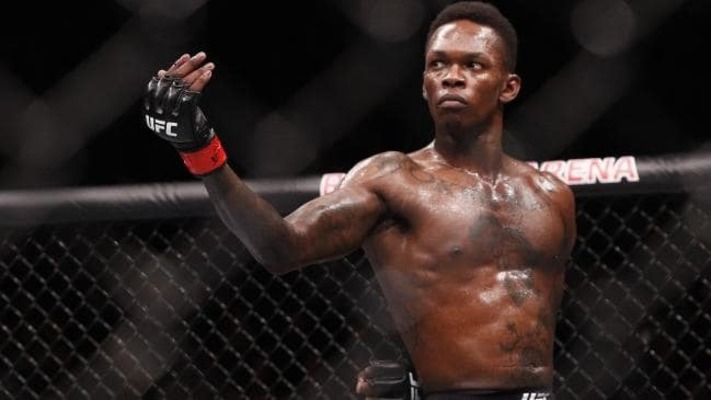
Israel Adesanya threw a spinning back kick to Robert Whittaker’s body in the second round of UFC 243 and the entire middleweight division changed in an instant. Whittaker crumpled. Adesanya became champion. And the MMA world had to reckon with the fact that a pure kickboxer — someone who moved like a karate practitioner and thought like a chess player — had solved a weight class full of wrestlers and pressure fighters.
That kick wasn’t luck. It was the product of a complete striking system built over a decade, refined under Eugene Bareman at City Kickboxing in Auckland, and applied with IQ that most fighters simply don’t have. This is how the Stylebender actually works.
The Kickboxing Foundation Behind Adesanya’s Unique MMA Approach
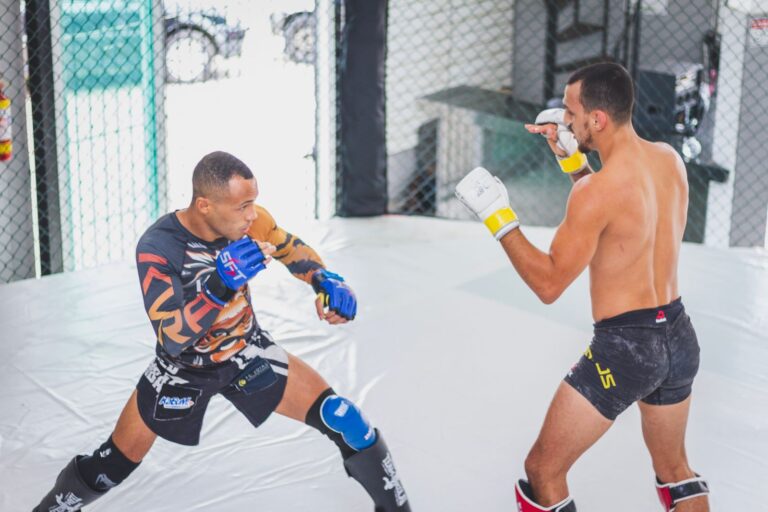
Adesanya’s style is built on kickboxing first — specifically the stand-up game he developed before transitioning to MMA. His base is closer to karate than traditional boxing, featuring an upright stance, long lead leg, and wide footwork that maximize his reach while minimizing his target profile.
Most fighters who come from kickboxing backgrounds adapt by shortening their stance and adding wrestling. Adesanya didn’t do that. He leaned into his kickboxing identity, refined what worked in the cage, and trusted that his timing and technique could overcome what he lacked in grappling credentials. For four years at the top of the middleweight division, he was right.
His trainer Eugene Bareman deserves significant credit. Bareman is one of the sharpest tactical minds in the sport, and he understood early that Adesanya’s value was in his precision and range — not his power or physicality. The game plan was always to keep opponents at distance, make them pay for closing, and never let a fight become a brawl. Clean the Stylebender never engaged in fights that required toughness — he engineered fights that required technique.
Feinting: The Real Secret to Adesanya’s Striking Dominance
Before Adesanya throws a single strike, he’s already in his opponent’s head. His feinting game is among the best in MMA — short, sharp movements that trigger defensive reactions and open the angles he actually wants to attack.
Watch him in any championship fight. His lead hand bounces, his shoulder dips, his head moves in patterns that suggest a strike is coming without committing to one. Every feint creates information. The opponent who flinches at a shoulder drop has told Adesanya his timing is reactive. The opponent who doesn’t react to a lead leg twitch probably has good composure. Adesanya catalogues all of it and adjusts in real time.
The feints also serve a physical purpose: they draw hands down, pull guards out of position, and extend moments of exposure that last just long enough for a counter to land. This is why his combinations often look so clean on replay — the target is already misaligned before the punch arrives. He didn’t get lucky. He created the angle with three feints before you even noticed.
Distance Control and the Teep: How Adesanya Owns the Octagon
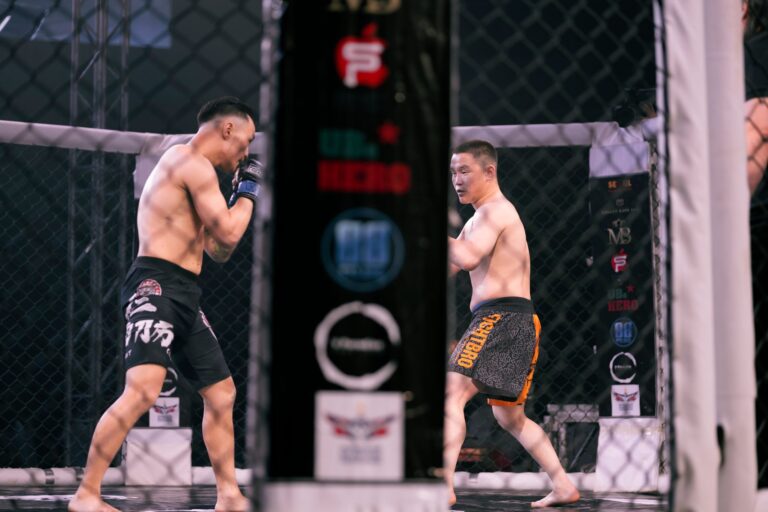
Adesanya’s most underappreciated tool is his front kick — the teep. He uses it constantly, not as a power strike, but as a range-finder and space-maker. When an opponent tries to close distance, the teep stops them in their tracks and resets the gap. When someone’s timing gets too good, a teep to the mid-section breaks their rhythm entirely.
His footwork complements the teep. He moves laterally along the cage rather than straight back, which prevents opponents from pinning him and forces constant readjustment. The lateral step-and-counter is one of his signature sequences: draw the forward pressure, step to the side, land the right hand or left body kick as the opponent walks through air. It’s simple on paper. Executing it live, at championship speed, against fighters who know it’s coming, requires exceptional timing.
He also uses the cage better than most strikers. Rather than getting trapped against the fence (a common problem for pure kickboxers making the MMA transition), Adesanya uses it as a backstop to launch off — pushing back into range when opponents think they’ve cut off his movement. The cage becomes part of his footwork pattern, not an obstacle.
Body Kicks and Spinning Attacks: The Weapons That Define His Career
Adesanya’s left body kick is a fight-ender. He throws it with full hip rotation from a disguised setup, and it lands with force that the highlight clips don’t fully convey. The Whittaker finish was this kick at its purest — perfectly timed, perfectly placed, and preceded by enough hand combinations that Whittaker had no reason to expect a body shot.
His spinning attacks — the back kick, spinning heel kick, spinning elbow — are not showboating. They’re legitimate weapons he’s drilled for thousands of hours and uses in moments where he’s read an opponent’s linear movement. The spinning back kick specifically is hard to defend because it comes from outside a fighter’s central vision and arrives with more force than a standard push kick. Adesanya doesn’t throw it randomly — he sets it up with footwork that positions him for exactly the angle the kick requires.
What ties all of this together is his shot selection. Adesanya doesn’t throw a lot. He throws correctly. High volume strikers accumulate damage by landing something — he accumulates damage by landing the right thing. His punch output per minute is often among the lowest in a given UFC card, but his accuracy numbers are consistently elite. He’d rather wait three rounds for a clean body kick than throw 150 punches in search of the same result.
What Adesanya’s Career Reveals About Style vs. Power in MMA
The chapters of Adesanya’s title reign are as instructive as the wins. He dominated a division full of wrestlers and pressure fighters for years. The fighters who eventually gave him trouble — Sean Strickland, Dricus du Plessis — disrupted his rhythm in ways that pure kickboxers don’t account for: relentless forward pressure that absorbed his counter-strikes and crowded his combinations.
That’s the honest tradeoff in his style. Against opponents who give him distance and react to his feints, the Stylebender system is almost perfect. Against opponents who walk through strikes, eat punishment, and keep coming — it struggles. His game was designed to punish fighters who respect the threat. It runs into difficulties against fighters who simply don’t.
This doesn’t diminish what he built. Three title reigns at middleweight, wins over the best the division offered, and a striking game that changed how coaches think about the pure kickboxer’s viability in MMA. That legacy is secured regardless of what comes next.
Building a Stylebender in TKO Tycoon: The Counter-Striker Archetype
If you’re building an Adesanya-style fighter in TKO Tycoon, the priority list looks different from most archetypes. You’re not maxing power. You’re building precision, footwork, and striking accuracy — then trusting that the technical edge compounds over fight time.
Invest in stand-up technique over raw power. A high-accuracy striker who lands fewer shots per round still wins rounds if his shots carry more point value and deal more cumulative damage. Footwork training translates directly to cage control stats — and cage control in TKO Tycoon, like in the real Octagon, is what gives you the right to attack on your terms rather than theirs.
The key tradeoff to manage: a pure striker archetype is punishing to play when opponents have strong wrestling. Supplement with enough takedown defense that a grappler can’t drag your Stylebender to the mat and erase everything you built on the feet. Adesanya’s evolution post-title loss was toward that balance. Your build in TKO Tycoon should start there.
FAQ: Israel Adesanya Fighting Style
- What is Israel Adesanya’s fighting style?
- Adesanya is a kickboxer who uses an upright stance, elite feinting, lateral footwork, and precise counter-striking. His game centers on controlling distance and landing high-accuracy strikes rather than high-volume exchanges. He’s considered one of the most technically gifted strikers in UFC history.
- What is Israel Adesanya’s signature move?
- His left body kick is his most dangerous finishing weapon, responsible for his knockout of Robert Whittaker at UFC 243. He also uses a spinning back kick and front kick (teep) as recurring weapons in his technical arsenal.
- What are Israel Adesanya’s weaknesses?
- His style struggles against high-pressure fighters who absorb punishment and keep moving forward, disrupting his timing and range. He’s also been vulnerable to opponents who effectively use wrestling to remove the fight from the stand-up entirely.
- Who trained Israel Adesanya?
- Adesanya is trained by Eugene Bareman at City Kickboxing in Auckland, New Zealand — one of the most respected striking coaches in MMA. Bareman’s tactical approach is a large part of what makes the Stylebender system so coherent.
Want to build your own Stylebender and test the counter-striker archetype? Fire up TKO Tycoon and see how a precision kicker holds up across five rounds against grapplers and brawlers. The footwork and accuracy stats tell the story fast.
References
- UFC.com — Official Israel Adesanya fighter profile and record
- ESPN MMA — Coverage of Adesanya’s title reigns and UFC career
- MMA Fighting — Style analysis and fight breakdowns for the Stylebender
Image credit: tapology.com