Oblique Kick in MMA: The Legal Strike That Ends Knees (and Careers)
Khalil Rountree threw one oblique kick at UFC Vegas 36 and Modestas Bukauskas folded like his leg had been switched off. No knockout. No submission. Just a flat-footed snap kick to the knee that hyperextended the joint, popped a tendon, and ended the night. Bukauskas couldn’t stand. That’s the whole pitch for the oblique kick: it doesn’t knock you out, it shuts you down.
It’s also the dirtiest-looking legal strike in the sport. Half the MMA world thinks it should be banned. The other half thinks the people complaining just don’t know how to check it. I’m in the second camp, and I’ll explain why.
What Is an Oblique Kick in MMA?
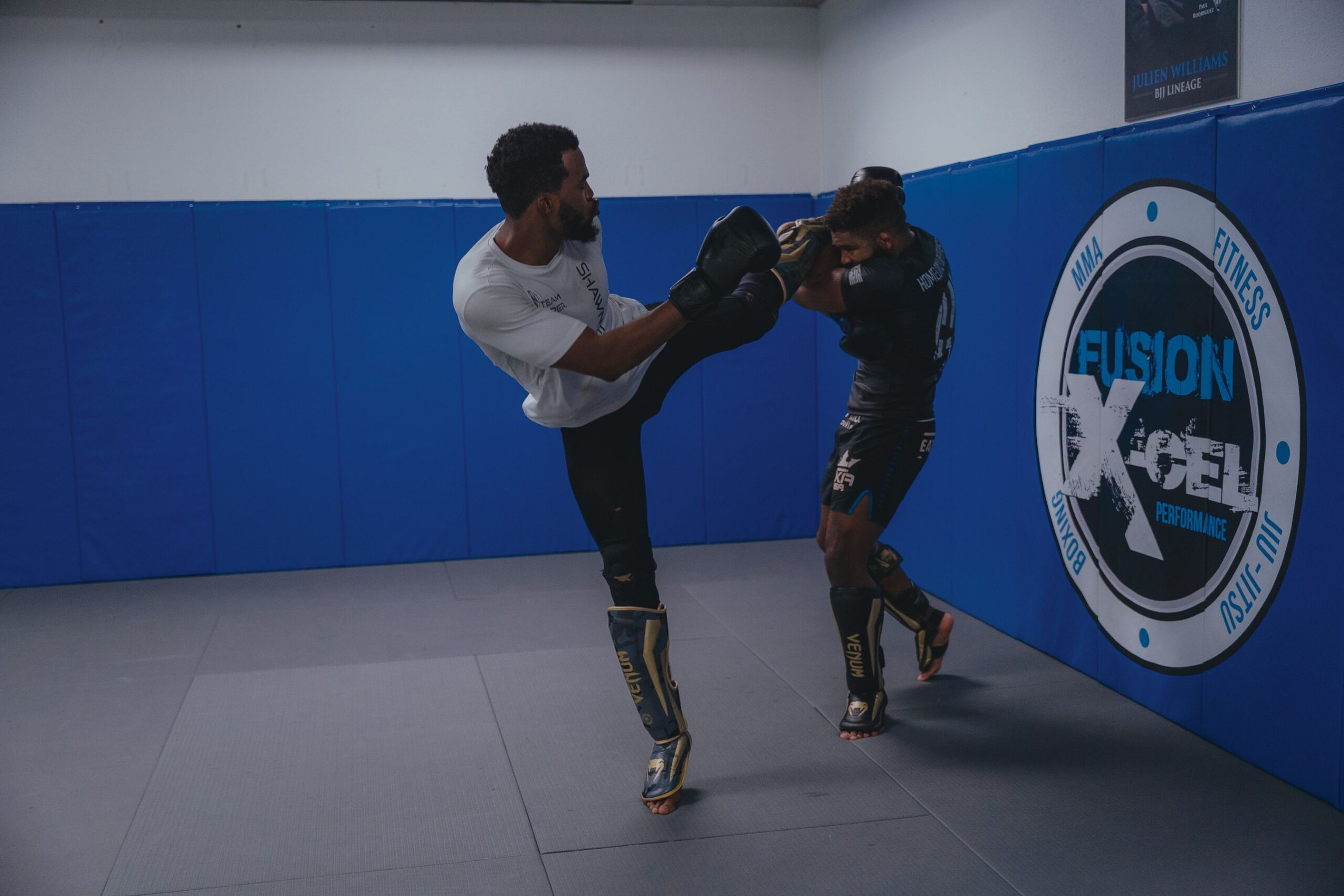
An oblique kick is a linear, stomping push kick aimed at the opponent’s knee or lower thigh, thrown with the heel or sole of the foot. Instead of swinging around the leg like a round kick, it drives straight forward to hyperextend the knee joint, jam the lead leg, and stall any forward pressure.
Think of it as a teep with bad intentions. A normal push kick targets the gut or hip to create distance. The oblique kick drops that same motion onto the knee, where the joint only bends one direction. Land it clean while the foot is planted, and the knee takes force it was never built to absorb.
How the Oblique Kick Wrecks a Knee So Fast
The damage comes from timing, not power. When a fighter’s lead foot is flat and weight-bearing, the knee is locked and can’t give. An oblique kick delivered at that exact moment forces hyperextension, which loads the MCL and ACL well past their range and can tear them outright.
Doctors who’ve broken down the Rountree finish point to the same thing every time: it isn’t about kicking hard, it’s about kicking a leg that has nowhere to go. A planted leg is a rigid lever. The kick turns the knee into the weak link in that lever. That’s why a strike that looks half-speed on replay can end careers — the ACL doesn’t care how pretty the technique was.
There’s a reason coaches drill it as a low-risk, high-reward weapon. You throw it from range, you keep your hands up, you don’t load up or overcommit. Worst case, you miss and reset. Best case, your opponent is suddenly fighting on one good leg for the rest of the night.

Why Jon Jones Made the Oblique Kick Famous
Jon Jones didn’t invent the oblique kick, but he weaponized it. During his light heavyweight reign he used it to control range against taller and shorter opponents alike, stabbing at lead knees to stop pressure before it started. By the time he beat Rampage Jackson at UFC 135, the kick was already a signature.
Rampage hated it. After that loss he told ESPN the move “should be called the illegal kick” and questioned Jones’ character for throwing it. He wasn’t alone — for years the oblique kick carried a cloud of disrespect, treated like eye pokes and groin shots in the court of fan opinion even though it sits firmly inside the rules.
What separated Jones was discipline. He didn’t headhunt with it. He used it as a spacing tool, a way to make opponents hesitate every time they stepped in, the same way a sharp jab taxes a boxer. The threat alone changed how people fought him. That’s the real lesson, and it’s the same idea behind calf kicks in modern MMA — cheap, repeatable leg damage that compounds over a fight.
Is the Oblique Kick Dirty or Just Smart?
The oblique kick is legal in the UFC and most major promotions, and it should stay that way. It targets a joint, not the back of the head or the throat. Wrestlers attack knees with leg locks, strikers chop them with calf kicks — going after the knee is a normal part of cage fighting, not a cheap shot.
Here’s my position: the “ban it” crowd is really asking the sport to protect fighters from a strike they refuse to learn to defend. Every dangerous technique in MMA — heel hooks, head kicks, ground-and-pound — can end a career. We don’t ban those. We teach defense and respect the risk.
The discomfort is aesthetic. The oblique kick looks ugly and unsporting, like you’re stomping a man’s leg instead of out-striking him. But “looks mean” isn’t a rulebook category. If you reward fighters for controlling range and punishing bad footwork, you reward the oblique kick. Banning it would just delete one of the few low-damage ways to slow a charging opponent without trading brain cells.

How to Defend the Oblique Kick Before It Lands
You defend the oblique kick the same way you defend a teep: with footwork and a light lead leg. Keep weight off a planted front foot, check or catch the incoming kick, and circle off the centerline so the strike has no straight path to your knee. A bent, mobile lead leg absorbs force a locked one can’t.
The cleanest defense is simply not standing still. Oblique kicks need a stationary, weight-bearing target. Fighters who bounce, switch stances, and keep their lead knee slightly bent give the kick nothing to hyperextend. You can also beat the timing by stepping in as the kick comes — close the distance and the kick loses its range and snap.
What the Oblique Kick Teaches You in TKO Tycoon
In a management sim, the oblique kick is a lesson about chip damage and fight IQ over raw power. Low-risk, range-control strikes don’t win highlight reels, but they win rounds by slowing opponents, stacking small damage, and protecting your own output. Building a fighter who grinds beats building one who only swings for the fences.
When you build a roster in the TKO Tycoon game, the temptation is always to max out power and chase knockouts. But the fighters who age well and win title fights are the ones with the IQ to control distance and the conditioning to keep doing it in round five. An oblique-kick style fighter — patient, range-obsessed, punishing every step forward — is exactly the kind of build that frustrates aggressive opponents into bad decisions.
That’s the through-line from real MMA to the game: damage you can repeat safely is worth more than damage you gamble everything to land once. Cardio, footwork, and ring generalship beat one big punch over a long career.

Frequently Asked Questions About the Oblique Kick
Is the oblique kick legal in the UFC?
Yes. The oblique kick is fully legal in the UFC and nearly every major MMA promotion. It targets the knee, which is a legal area, unlike strikes to the back of the head, throat, or groin. Despite ongoing fan debate, no major organization has moved to ban it.
Who popularized the oblique kick in MMA?
Jon Jones is the fighter most associated with the oblique kick. He used it as a range-control weapon throughout his light heavyweight title run, including his win over Rampage Jackson at UFC 135, which sparked years of public debate about whether the technique should be allowed.
Can an oblique kick cause permanent injury?
It can. A clean oblique kick to a planted leg can hyperextend the knee and tear the ACL or MCL, injuries that require surgery and long rehab. Khalil Rountree’s oblique kick on Modestas Bukauskas is the most cited example of a fight-ending knee injury from the technique.
How do you defend against an oblique kick?
Keep your lead leg light and bent, stay mobile, and check or catch the kick the way you would a teep. Circling off-line and stepping into the kick both rob it of the straight path and stationary target it needs to do damage.
Train the Style, Then Build It
The oblique kick rewards patience, timing, and fight IQ over raw power — the same traits that build champions in a sim. Put that thinking to work and design a range-control specialist of your own in the TKO Tycoon game.
References
- Bloody Elbow — Doctor’s breakdown of the knee damage from Rountree’s oblique kick on Bukauskas.
- Bleacher Report — Rampage Jackson’s call to ban Jon Jones’ oblique kick after UFC 135.
- The Body Lock — Technical and historical breakdown of the oblique kick as MMA’s most controversial leg attack.
- Evolve Daily — On the oblique kick as one of MMA’s most underused legal techniques.
Play TKO Tycoon — the MMA management game for fight fans.
Shop on Amazon
MMA & Boxing Gear on Amazon →
As an Amazon Associate we earn from qualifying purchases.