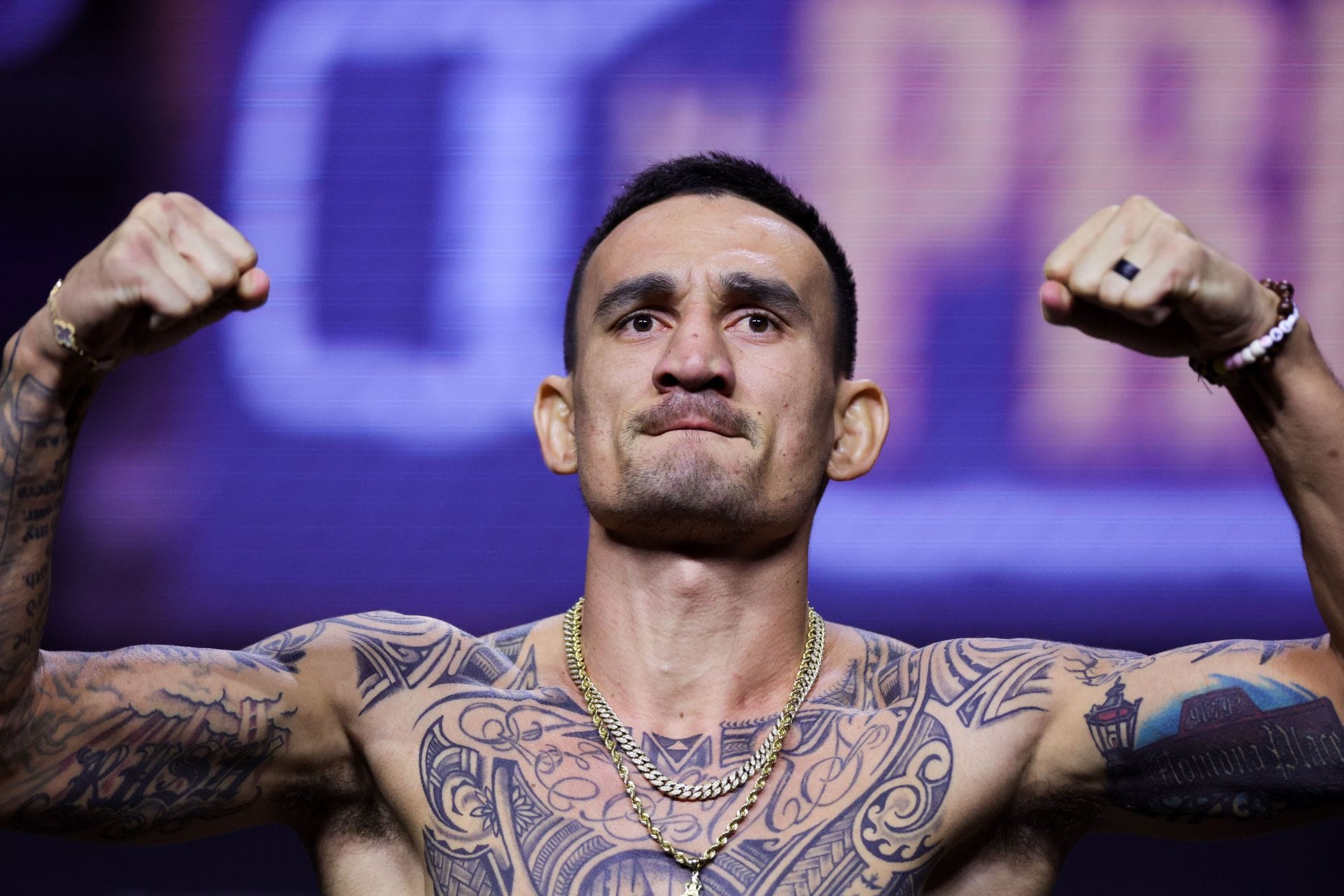
Max Holloway Fighting Style: The Blueprint That Knocked Out McGregor in 69 Seconds
Sixty-nine seconds. That’s how long it took Max Holloway to close the chapter on Conor McGregor’s comeback story at UFC 329 — not with a lucky shot, not with a fluke scramble, but with the same relentless system he’s been refining since 2012. When the left hand connected and McGregor collapsed at the T-Mobile Arena, it wasn’t a surprise to anyone who actually understands what “Blessed” does inside an octagon.
Holloway is now a two-weight champion — featherweight and BMF — with 27 wins and a resume that reads like a who’s-who of the greatest era in MMA history. He beat Frankie Edgar. He stopped Jose Aldo. He outworked Calvin Kattar so badly the commentators ran out of words. He ended the night of Justin Gaethje at UFC 300 with the now-legendary “Hawaii Five-OH” finish. And then he knocked out Conor McGregor.
But what actually makes Max Holloway’s fighting style so dangerous? Because it’s not one thing. It’s a system — and once you understand the system, you can’t unsee it.
Max Holloway’s Volume Striking: Why He Throws More Than Anyone
Holloway’s most measurable weapon is output — he consistently lands among the highest significant strike tallies in UFC history. But raw volume misses the point. The real weapon is that his output never drops in round five. He finishes fights looking like he could go two more rounds.
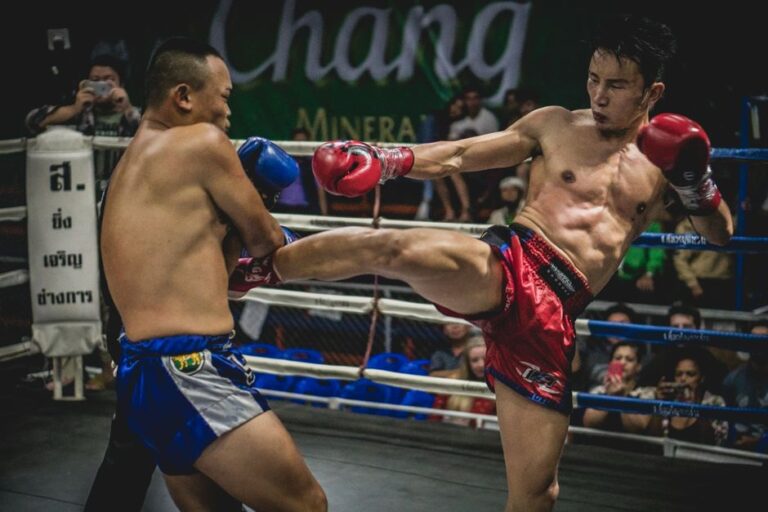
This isn’t conditioning alone, though his cardio is elite. It’s structural. Holloway doesn’t throw haymakers hunting for knockdowns — he throws combinations that flow from one into the next, with each punch positioned to make the next one easier. A jab opens the cross. The cross sets the left hook. The hook brings the straight right. By the time an opponent starts tracking the pattern, the sequence has already changed.
He averaged 7.79 significant strikes per minute over his career — well above the UFC average — but what matters more is the consistency. Most high-volume strikers slow down when hurt or fatigued. Holloway speeds up. It’s psychologically destabilizing to fight someone who gets busier as the fight goes on.
The Holloway Jab: Distance Control That Builds Into Everything Else
Holloway’s jab isn’t a scoring jab — it’s a control mechanism that dictates the entire distance of a fight. He uses it to measure range, break rhythm, and set up whatever he actually wants to land. Against McGregor, the jab kept Conor on his back foot for virtually every second they were in the octagon.
What separates his jab from most fighters is the variety. He throws the stiff jab to stop forward momentum. He feints the jab to bait counters. He double-jabs to break timing. And critically, he throws the jab to the body at unexpected moments — forcing opponents to account for multiple levels simultaneously and usually guessing wrong.
The jab also functions as a diagnostic tool. When Holloway is figuring out an opponent early, he’s throwing jabs and watching reactions — does the guy slip left or right? Does he shell up or step back? Does he counter with the right hand? Every response is data, and Holloway adapts round by round faster than almost any fighter in the sport.
Body Work: The Investment That Pays Off in Later Rounds
Holloway attacks the body systematically from round one, not as a desperation tool in the later rounds when he’s already behind. This is the fight IQ that separates him from good strikers — he understands that body shots compound. A liver kick in round two makes a left hook to the jaw land harder in round four, because the opponent is managing pain and the punch hurts differently when you’re already damaged.
Against Calvin Kattar at UFC Fight Night in January 2021, Holloway landed 182 significant strikes over five rounds. A significant portion targeted the body, softening Kattar’s defenses and visibly affecting his movement by the championship rounds. Kattar is a tough fighter — but Holloway’s body attack strategy effectively fought a five-round fight across three different levels simultaneously.
The body work also drags opponent’s hands down. When a fighter is conditioned to protect their ribs, the high line opens up. Holloway’s left hook upstairs becomes 30% more dangerous once that pattern establishes itself — and it usually establishes itself by round two at the latest.
The Chin, the Heart, and the Reason Holloway Never Quits Moving Forward
Holloway has been hurt in fights. He was rocked by Conor McGregor in their first meeting in 2013 — a fight he lost. He’s been buzzed and found himself in trouble at various points throughout his career. He still kept coming forward.
This isn’t stubbornness or recklessness. It’s confidence in his system. Holloway knows that if he stays in the pocket and keeps outputting, the math eventually works in his favor — because he’s more accurate, more durable, and better conditioned than virtually everyone he fights. He’s never been finished by strikes. He’s been stopped exactly once in his career, via submission in 2013.
The forward pressure is also a style counter. Most strikers want to fight at mid-range or long range where they can throw single shots and reset. Holloway crowds that distance, turning it into a phone booth brawl — and phone booth brawls favor the guy with better hand speed, higher output, and more combinations. That’s almost always Holloway.
UFC 300 to UFC 329: The Two Years That Made Holloway a Legend
If there’s a case for Max Holloway being the most exciting fighter in UFC history, the period from April 2024 to July 2026 makes that case definitively.
At UFC 300, Holloway faced Justin Gaethje with the BMF belt on the line — a fight everyone expected to be a war between two hard-charging knockout artists. It was exactly that. And in the final second of the final round, with the fight almost certainly going to judges, Holloway landed the right hand that ended it. He won the BMF title with literally one second on the clock. The UFC community called it “Hawaii Five-OH.” It’s one of the most replayed moments in the sport’s history.
Then came the McGregor fight. McGregor had been in a comeback narrative for years, and UFC 329 was billed as his return to contention. Instead, Holloway walked him down from the opening bell, landed the double jab into the left hook in the first 69 seconds, and that was it. Not a fluke. Not a lucky shot. A textbook application of the Holloway system against someone who had been away from elite-level competition for too long to handle it.
Max Holloway is 34 years old. He looks like he has three more years of this level of performance in him, minimum. The scary part is he might be getting better.
How Max Holloway’s Fighting Style Translates to TKO Tycoon Strategy
If you’re playing TKO Tycoon and you want to build a Max Holloway-style fighter, the stat priorities are specific: volume output, hand speed, and cardio above almost everything else.
The Holloway model doesn’t require a one-shot KO power rating. What it requires is a fighter who can throw 60+ strikes per round across five rounds without slowing down. In the game’s stamina system, that means investing heavily in conditioning early rather than chasing power multipliers — because a fighter who lands 4 strikes per round at 85% accuracy outperforms a power puncher who throws 2 per round and gasses in round three.
The jab is undervalued by most TKO Tycoon players, and that’s a mistake. A high jab-speed rating opens up combination chains, which in TKO Tycoon means more scoring opportunities per exchange. Pair that with strong body attack ratings and you’ll see late-fight finishes that replicate exactly how Holloway operates — the body work in rounds one through three setting up the clean headshots that land in four and five.
Body attack build in TKO Tycoon is the closest you’ll get to playing a Holloway archetype. It’s also one of the most satisfying — because unlike power builds that hunt for one good shot, volume builds make opponents fall apart in real time, round by round. Just like “Blessed” does it for real.
Frequently Asked Questions: Max Holloway Fighting Style
What fighting style does Max Holloway use?
Max Holloway is primarily a volume striker who relies on high-output boxing combinations, elite conditioning, and forward pressure. He uses a jab-heavy system to control distance, attacks the body consistently to wear down opponents, and is known for never slowing down regardless of how long the fight goes.
Has Max Holloway ever been knocked out?
No. Max Holloway has never been stopped by strikes in his UFC career. He has been hurt and rocked in several fights but always recovered. His only career stoppage came via submission in a 2013 loss to Conor McGregor early in both fighters’ careers.
Why is Max Holloway called “Blessed”?
Holloway’s nickname “Blessed” reflects both his Hawaiian roots and his personal philosophy. He credits his success to being gifted with natural talent, a strong support system, and the opportunity to compete at the highest level. The nickname has become especially resonant given his extraordinary run of performances in big moments.
What did Max Holloway do at UFC 300?
At UFC 300 in April 2024, Max Holloway defeated Justin Gaethje for the BMF title with a one-punch knockout in the final second of the fifth round. With literally one second on the clock, Holloway landed a right hand that dropped Gaethje — one of the most dramatic finishes in UFC history, now known as “Hawaii Five-OH.”
Ready to build your own volume-striking Holloway archetype? Head to TKO Tycoon and start stacking those combination chains.
References
- UFC.com — Max Holloway Official Profile — career record, stats, and fight history
- MMA Mania — UFC 329 fight coverage and McGregor vs Holloway 2 results
- MMA Fighting — UFC 300 Gaethje vs Holloway analysis and Hawaii Five-OH breakdown
- Sherdog — Max Holloway Fight Finder — complete fight-by-fight record and statistics
Image credit: sportskeeda.com