Joshua Van Fighting Style: The UFC Flyweight Champion Nobody Saw Coming
Eight point four three significant strikes per minute. That number belongs to Joshua Van, the UFC flyweight champion, and it is the highest in the organization’s history at any weight class. Not in the top five. Not second. First — in a sport that has produced Anderson Silva, Conor McGregor, and Max Holloway.
Van is 24 years old, born in Hakha, Myanmar, and moved to Houston, Texas around age 12. He learned to fight from YouTube videos. He turned pro in 2021. By December 2025 he was standing in the octagon as flyweight champion of the world — second youngest in UFC history, behind only Jon Jones.
The flyweight division has a new standard, and it is relentless. Here is how Joshua “The Fearless” Van actually fights, why it works, and what it means for the rematch with Alexandre Pantoja at UFC 331.
The Output Rate That Makes Van’s Striking Historically Unusual
Van lands 8.43 significant strikes per minute, a UFC record. He pairs this with the best significant striking accuracy in flyweight division history. High volume with high accuracy is rare — most fighters who throw constantly sacrifice precision, and most accurate fighters conserve output. Van does neither.
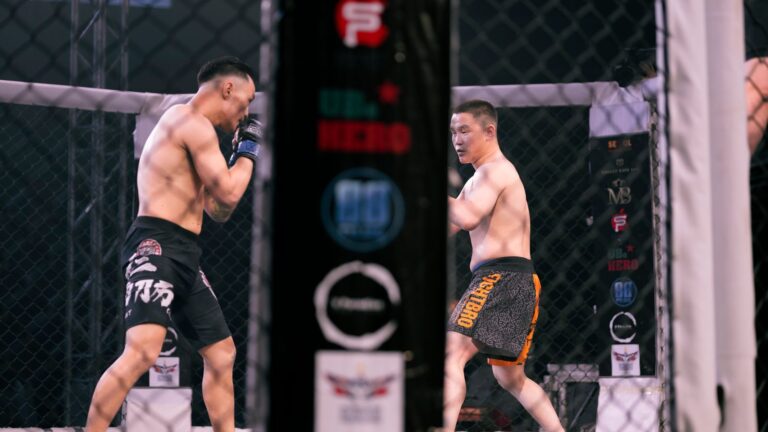
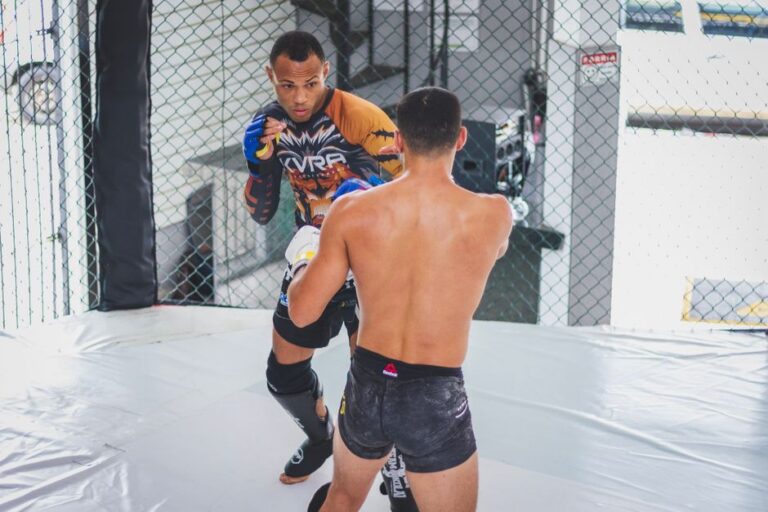
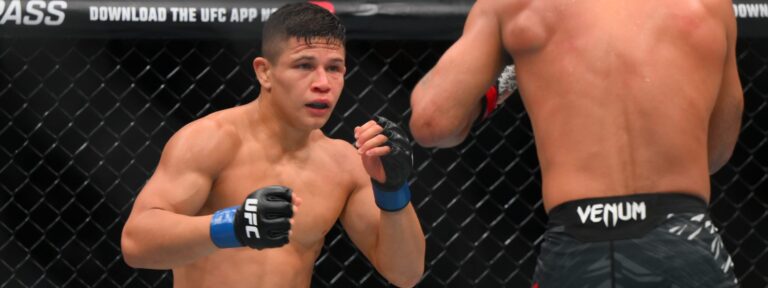
He fights behind a tight, compact guard and throws in combination from the moment contact is established. He does not telegraph punches with big wind-ups. Shots come from short distances, at angles, with the kind of timing that only comes from thousands of hours of drilling the same sequences. Watch him against Bruno Silva at UFC 316 — he threw Silva completely off rhythm within the first 90 seconds simply by changing pace between combinations. Fast-fast-slow-fast-fast, never the same tempo twice.
The result is opponents who stop thinking about attacking and start thinking about surviving. That mental shift is the fight. Once you are on the defensive against Van, his output compounds. You back up, he follows. You tie up, he breaks clean and resets immediately. He does not hold. He does not stall. He makes you work.
Volume Pressure Is Not Brawling — Van’s Forward Game Explained
Van’s pressure style is often misread as recklessness. It is not. Pressure fighting requires elite head movement, active shell defense, and the ability to read punches in the pocket. Van has all three. His forward walk is controlled, not a charge. He cuts angles while moving in rather than walking straight lines, which forces opponents into lateral movement they cannot sustain at flyweight pace.
What separates him from a generic “volume striker” is his composure under fire. The best test of this came at UFC 317 against Brandon Royval, a fight that earned UFC Fight of the Year honors. Royval is dangerous on the feet and on the mat. Van got hurt early, reset, came back with higher output, and eventually pulled away late on the cards. He did not panic. He did not switch to survival mode. He adjusted and continued pressing.
That fight showed something that stats cannot capture: Van’s ability to take damage without it changing his behavior. He does not tighten up after getting hit. His combination output in rounds 4 and 5 against Royval was actually higher than in rounds 1 and 2. Most fighters go the other direction.
Takedown Defense Built for a Flyweight That Always Gets Wrestled
Everyone tries to take Van down. He is undersized at 5’5″ with a 65-inch reach, and opponents assume his game falls apart on the mat. Van denied 17 of 21 takedown attempts against Rei Tsuruya at UFC 313 — a rate that would make a middleweight wrestler proud. Against a Japanese wrestler who trains specifically to impose his game on smaller opponents, Van stayed upright for four rounds and outstruck Tsuruya 127-47.
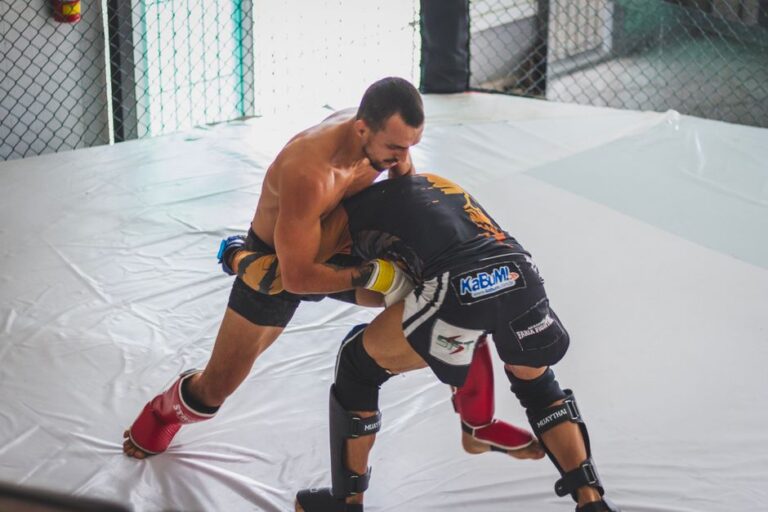
His takedown defense is technically sound rather than strength-based. He underhooks early, turns corners on single legs, and uses his balance to base out against the fence rather than fighting the takedown directly. He understands leverage. For a fighter who taught himself from videos, his defensive wrestling is remarkably structured.
This matters for the Pantoja rematch. Pantoja’s original strategy was almost certainly based around taking Van down and working from top position. The injury happened before that plan got tested, which means UFC 331 will answer questions neither fighter has fully resolved yet.
How a 26-Second Elbow Injury Changed the Flyweight Division
At UFC 323 in December 2025, Pantoja threw a high kick. Van caught it, threw him to the mat, and 26 seconds into the first round, Alexandre Pantoja’s elbow snapped on impact. Herb Dean waved it off. Van was champion.
The optics were complicated. Pantoja was the incumbent, the reigning champion, and the most dominant flyweight in years. The fight ending from a freak injury before it really started left genuine questions unanswered. Was Van going to win? Unknown. Could Pantoja have solved the pressure game? Unknown. Was this the beginning of a new era or just an unfortunate accident?
The MMA community split. Some argued that a win is a win — Van did the right technique, Pantoja got hurt, move on. Others wanted a longer fight to establish whether Van was actually championship level. The UFC made it simple: run it back at UFC 331. That is the right call. Both fighters have unfinished business, and the sport deserves clarity.
The Title Defense That Settled the Legitimacy Question
UFC 328 in May 2026 mattered more than the title win. Van defended against Tatsuro Taira, an elite Japanese grappler with a 100% takedown rate against similar opponents and legitimate submission skills. If Van’s championship was a fluke, Taira was going to expose it.
Van won by fifth-round TKO, stopping Taira at 1:32 of the final round. He survived Taira’s best grappling, kept the fight largely standing for three rounds, and broke Taira down with accumulated damage before finishing late. It was not clean or comfortable — Taira threatened several times — but Van never let the fight get away from him. He was the harder man through five rounds at flyweight pace, and that is a real credential.
The Taira win answered the legitimacy question. Van can fight. He is not a one-fight champion who got lucky. He has a definable style with genuine strengths, and he executes it at championship level against the best flyweights in the world.
What Pantoja Has to Do Differently at UFC 331
Pantoja’s problem with Van is not the striking. Pantoja has fought at flyweight for years and has seen sharp pressure fighters before. The problem is distance management. Van’s style requires specific defensive structure — staying out of his preferred range, which is closer than most opponents want to be, and not letting him set his feet for combination sequences.
If Pantoja circles to his right (Van’s left) consistently, he disrupts the rhythm of Van’s power combinations. If he mixes takedown threats with striking, he makes Van think defensively rather than offensively. Pantoja has fought at the highest level for long enough to understand these adjustments. The question is whether his wrestling can actually threaten Van or whether Van’s defensive instincts will neutralize it again.
Van’s weakness, if he has one, is the sustained grappling battle. Against Taira he survived it, but surviving is different from thriving. Pantoja has better submission skills than Taira and more octagon intelligence. If he can establish top position for extended stretches, he has a chance to drain Van’s output engine. Van threw less when pinned against the fence in rounds 2 and 3 against Taira. Pantoja noticed that. So did everyone else.
Building a Joshua Van Archetype in TKO Tycoon
If you want to replicate Van’s approach in TKO Tycoon, the build centers on two things: volume striking and cardio. A high output striker with elite endurance is different from a power puncher with similar stats. Van wins fights late because he is still throwing at round five pace in round one. His opponents are not.
In TKO Tycoon, pressure fighters require significant cardio investment to maintain output, but the payoff is an opponent whose defense degrades over time. Pair a volume striking build with solid defensive footwork rather than pure wrestling, and you get a fighter who wins by making opponents take more shots than they planned to take. That is Van’s game in every fight he has won. Relentless, accurate, and always moving forward.
The championship picture at flyweight is the most interesting it has been in years. One man won the title in 26 seconds. The other man spent months recovering and is coming back with a specific plan. September 19 at UFC 331 is going to be a real fight. Van’s style guarantees it — because “The Fearless” is not the type to wait and see what happens.
FAQ: Joshua Van UFC Flyweight Champion
How did Joshua Van become UFC flyweight champion?
Van won the title at UFC 323 in December 2025 when Alexandre Pantoja suffered an elbow injury 26 seconds into round one. Pantoja caught a high kick thrown by Van, Van threw him to the mat, and Pantoja’s arm snapped on impact. Van became the second-youngest UFC champion in history at age 24.
What is Joshua Van’s fighting style?
Van is a high-volume pressure striker who holds the UFC record for significant strikes landed per minute at 8.43. He fights with constant forward pressure, elite composure under fire, and combination striking that degrades opponents over time. He is also a strong defensive wrestler who has denied the majority of takedown attempts against him.
Where is Joshua Van from?
Van was born in Hakha in Myanmar’s Chin State and moved to Houston, Texas around age 12. He is the first Asian-born male UFC champion in history. He began fighting competitively in the regional circuit and captured the Fury FC Flyweight Championship before joining the UFC.
Who does Joshua Van fight next?
Van defends the flyweight title against Alexandre Pantoja in a rematch at UFC 331 on September 19, 2026, at the Crypto.com Arena in Los Angeles. The rematch was booked after the original title fight ended controversially due to Pantoja’s injury just 26 seconds in.
References
- ESPN MMA — Van wins flyweight title after Pantoja injured at UFC 323
- CBS Sports — UFC 323 results: Joshua Van becomes second-youngest UFC champion
- Sports Illustrated — UFC announces Van-Pantoja rematch for UFC 331
- CBS Sports — Joshua Van vs. Brandon Royval: Fight of the Year 2025
Image credit: sports.yahoo.com