UFC Weight Classes Explained: From Strawweight to Heavyweight
The UFC runs 12 weight classes today — eight men’s divisions and four women’s — and every one of them exists because of a real problem the sport had to solve: a 145 lb featherweight and a 265 lb heavyweight have no business sharing a cage. Here’s exactly where each division’s limit sits, how the system got built out over three decades, and who’s actually holding the belts right now.
Men’s Weight Classes
- Flyweight (up to 125 lbs): The lightest men’s division, added in 2012. Demetrious Johnson set the promotion’s record with 11 consecutive title defenses here. Joshua Van holds the belt today.
- Bantamweight (up to 135 lbs): Inaugurated by Dominick Cruz after the 2011 WEC merger. TJ Dillashaw and Petr Yan have both worn the belt — Yan is the current champion after beating Merab Dvalishvili.
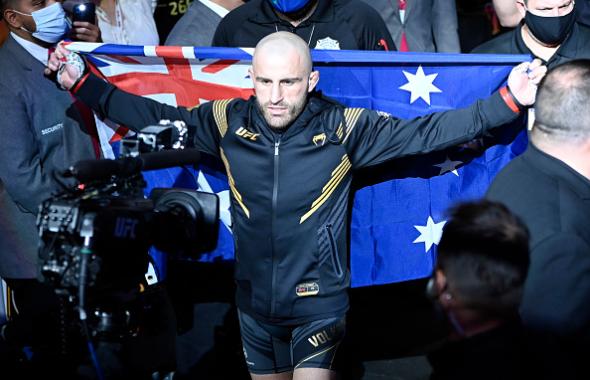
- Featherweight (up to 145 lbs): Jose Aldo was the division’s first champion under the WEC banner. Alexander Volkanovski has since tied Aldo for the most title-fight wins at 145 and is widely considered the greatest featherweight ever.
- Lightweight (up to 155 lbs): Arguably the deepest division in the sport. Khabib Nurmagomedov retired 29-0 as champion here. Justin Gaethje finally claimed the undisputed title in 2026 after two previous title-fight losses, stopping Ilia Topuria by corner TKO.
- Welterweight (up to 170 lbs): Home to Georges St-Pierre and Kamaru Usman’s long reigns. Islam Makhachev moved up from lightweight to take the belt from Jack Della Maddalena in late 2025.
- Middleweight (up to 185 lbs): Anderson Silva’s 16-fight unbeaten UFC run is the division’s benchmark. Sean Strickland currently holds the title.
- Light Heavyweight (up to 205 lbs): Jon Jones’s home division for most of his career. Carlos Ulberg won the vacant title with a first-round knockout of Jiří Procházka in 2026.
- Heavyweight (up to 265 lbs): The only division with no lower weight limit — just don’t go over 265. Tom Aspinall was elevated to undisputed champion after Jon Jones stepped away from the belt.

Women’s Weight Classes
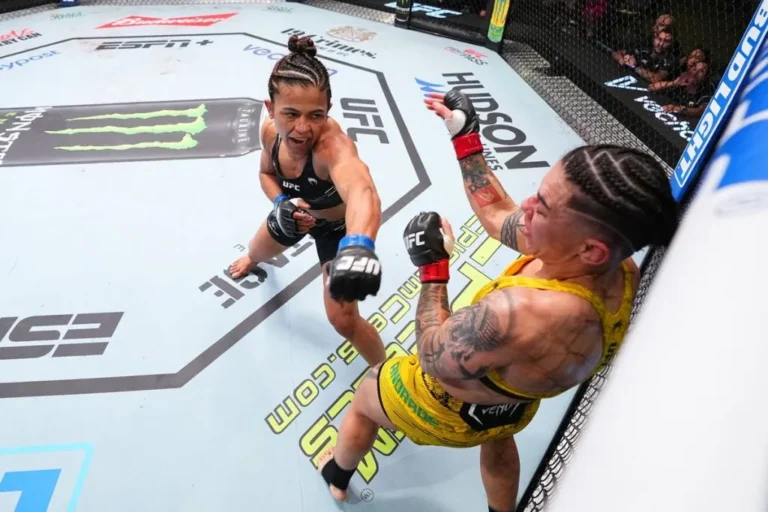
- Strawweight (up to 115 lbs): The UFC’s first women’s division outside bantamweight, added in 2014. Carla Esparza was the inaugural champion; Zhang Weili and Joanna Jedrzejczyk produced some of the best fights in UFC history here. Mackenzie Dern holds the belt today.
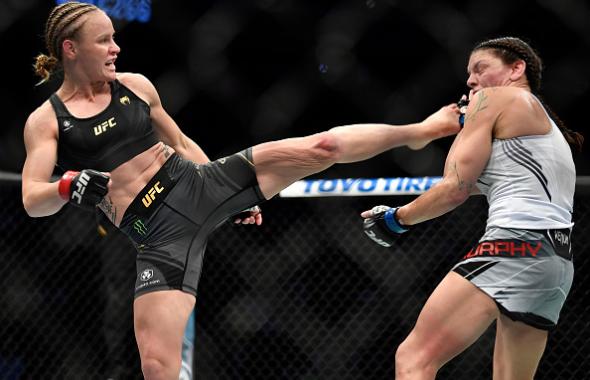
- Flyweight (up to 125 lbs): Added in 2017 with Nicco Montaño as the first champion. Valentina Shevchenko has dominated the division for most of its existence with elite Muay Thai and karate-based striking.
- Bantamweight (up to 135 lbs): The UFC’s original women’s division, launched in 2012 specifically around Ronda Rousey, who defended it six times before Holly Holm’s shocking knockout in 2015. Amanda Nunes later built a two-division legacy here before her 2023 retirement — and returned to the division again in 2026. Kayla Harrison currently holds the title.
- Featherweight (up to 145 lbs): Created specifically to give Cris Cyborg a division to headline in, with Germaine de Randamie winning the inaugural title in 2017. It remains the UFC’s smallest and least active division by roster size.
How the Weight Class System Was Actually Built
The UFC didn’t start with weight classes at all — the entire pitch of the early 1990s tournaments was “which martial art wins,” size difference included. That changed at UFC 12 in 1997, when regulatory pressure forced the promotion to introduce its first crude split: Heavyweight for anyone 200 lbs and over, Lightweight for anyone under it. It wasn’t sophisticated, but it was the first time the UFC admitted that size mattered in matchmaking.
The modern five-class system — Lightweight (155), Welterweight (170), Middleweight (185), Light Heavyweight (205), and Heavyweight (265) — was adopted in 2001 at UFC 31, once the New Jersey Athletic Control Board began regulating the sport and pushed the promotion toward a real commission-style structure.
The next major expansion came a decade later. When the UFC absorbed the WEC in 2010–2011, it inherited that promotion’s Bantamweight and Featherweight divisions wholesale, crowning WEC’s last champions — Dominick Cruz and Jose Aldo — as the first UFC titleholders at 135 and 145. Flyweight followed in 2012, filling the gap below bantamweight.
Women’s divisions came in stages: Bantamweight in 2012 (built entirely around Ronda Rousey), Strawweight in 2014, and Flyweight last, in 2017 — completing the current 12-division structure that’s stayed intact ever since, aside from the still-underused Featherweight class.

Non-Title Allowances and Catchweights
The limits above are exact only for title fights — champions and challengers must weigh in at or under the number on the nose. Non-title bouts get a one-pound cushion, so a lightweight can legally step on the scale at 156 lbs instead of 155 and still compete. It sounds small, but at the extreme end of a weight cut, that extra pound of water can matter.
Then there are catchweight fights, where both fighters agree to a custom limit outside any official division — usually because someone can’t safely make a standard number, or because a superfight only makes sense at a number in between. Conor McGregor’s move up two full divisions to face Nate Diaz at UFC 196 was contested at a 170 lb welterweight limit, non-title, precisely because neither man’s normal weight class made sense for that particular matchup. Catchweight bouts don’t count toward divisional rankings, and a title can’t change hands in one unless both camps agree to highly unusual terms beforehand.
Weight Cutting: The Hidden Battle
Almost no fighter competes at their walking-around weight. Most cut water weight aggressively in the final 24–36 hours before an official weigh-in, then rehydrate before fight night — a lightweight might walk around at 170 lbs and cut 15 lbs just to make the 155 lb limit.
The practice got measurably more dangerous after 2015, when the UFC’s new partnership with USADA banned IV rehydration infusions over 50 milliliters as an anti-doping measure — IVs could mask blood values tied to doping, so they had to go. The unintended side effect was that fighters lost their fastest, safest recovery method without losing any incentive to cut. A 2013 study had already found that 39% of fighters were still measurably dehydrated at fight time, even after rehydrating orally. Since the IV ban, the trend has only gotten more extreme: a 10 lb cut was considered aggressive in the early 2000s; by 2026, fighters routinely talk about 15+ lb same-week cuts as normal.
Athletic commissions have pushed back with early weigh-ins and same-day hydration testing at some events, but the underlying incentive — walk in bigger than the guy across the cage — hasn’t gone anywhere.
Which Division to Watch
Lightweight remains the deepest and most dangerous division top-to-bottom — Gaethje’s 2026 title win only happened after two previous failed attempts, in a division that’s chewed up contenders for a decade. But heavyweight is the one worth watching right now: Tom Aspinall inherited the belt without ever getting his unification fight against Jon Jones, and a full, healthy heavyweight title picture in 2026 is the one thing that could finally settle who the era’s best big man really is.
Weight Classes in TKO Tycoon
In TKO Tycoon, every fighter you sign is assigned a weight class based on their physical profile, just like the real sport. Lighter divisions like Strawweight and Flyweight tend to produce longer, more technical fights that go the distance. Heavyweight fights end fast — one mistake and it’s over. Manage your roster with that in mind.
Play TKO Tycoon — the MMA management game for fight fans.
Shop on Amazon
MMA & Boxing Gear on Amazon →
As an Amazon Associate we earn from qualifying purchases.
Shop on eBay
MMA & Boxing Gear on eBay →
We may earn a commission when you shop through our eBay links.