What Is a TKO in MMA? The Complete Guide to Technical Knockouts
Every MMA broadcast eventually flashes the same three letters across the screen: TKO. But a technical knockout is not the same finish as a knockout, and the difference isn’t just semantics — it’s written directly into the Unified Rules of Mixed Martial Arts, and it decides who’s still conscious when the fight ends.
TKO vs KO: The Actual Rule
A KO (Knockout) happens when a fighter is rendered unconscious, or so close to it that they simply cannot respond — they go down and stay down. A TKO (Technical Knockout) is different: the fighter is still conscious, but the referee, a ringside doctor, or the fighter’s own corner has decided they can no longer intelligently defend themselves, and stops the contest before real unconsciousness or serious injury occurs.
The word “technical” is the entire distinction. It’s a judgment call made by a licensed official under the Unified Rules of MMA, not an automatic result of the damage itself. Two fighters can take the exact same series of strikes — one stays alert enough to protect himself and the fight continues; the other stops responding to shots and the referee steps in. Same strikes, different rulings, because the standard is about defense, not just impact.
The Three Ways a TKO Is Officially Ruled
Under the Unified Rules, “TKO” actually covers three distinct scenarios, and real fight records separate all of them:
1. Referee Stoppage
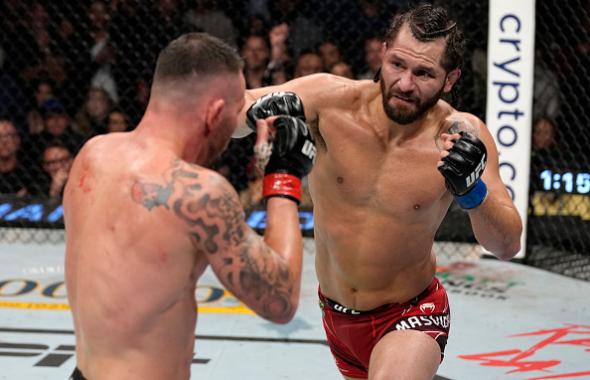
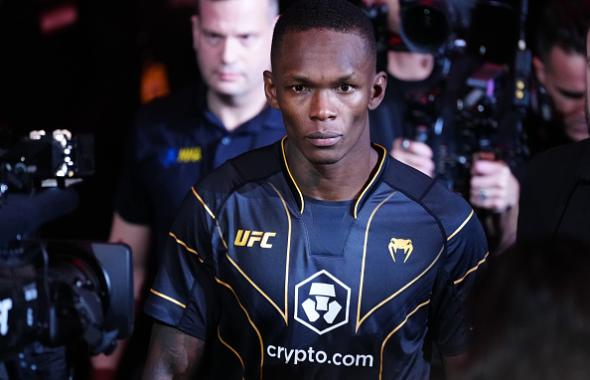
The most common route. The referee is the sole official empowered to stop the fight, and does so the moment a fighter stops “intelligently defending” — covering up without moving, no longer attempting to escape a position, or eating clean shots without any response. A clear recent example: Israel Adesanya’s loss to Joe Pyfer in March 2026, stopped by TKO (strikes) at 4:18 of round two after Adesanya could no longer answer back against the fence.
2. Doctor Stoppage
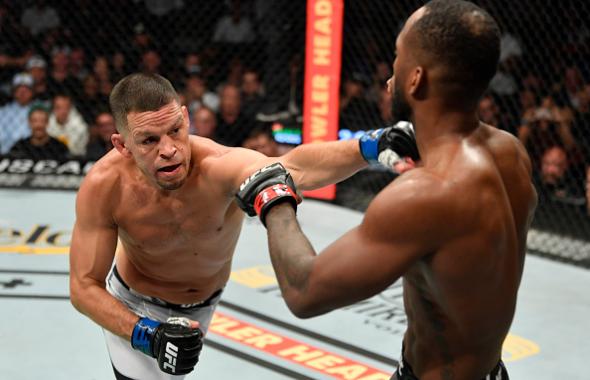
Between rounds, the ringside physician examines cuts, swelling, and other injuries and can call the fight off regardless of what the fighter or their corner wants. Jorge Masvidal’s win over Nate Diaz at UFC 244 is the textbook case — Diaz was still fighting back and wanted to continue, but a deep cut opened by an elbow-and-head-kick combination forced the doctor to end it after the third round.
3. Corner Stoppage
A fighter’s own cornermen can throw in the towel between rounds if they believe continuing is too dangerous — and it’s scored as a TKO loss for their fighter, not a no-contest. It happens more often than people realize at every level of the sport, right up to the biggest stage: when Justin Gaethje finally won the undisputed UFC lightweight title in 2026, it came when Ilia Topuria’s corner threw in the towel after four rounds of sustained damage. Nate Diaz suffered the same fate against Mike Perry earlier that year, his corner ending it after two rounds covered in cuts.
TKO vs Submission: Also Not the Same Thing
A submission and a TKO can look similar on a highlight reel — both can end with a fighter unable to continue — but they’re ruled completely differently. A submission requires the losing fighter (or, rarely, the referee on their behalf when they go unconscious or unresponsive to a choke) to signal that they’re done, whether by tapping, verbally submitting, or going out from a strangle. A TKO requires no input from the losing fighter at all; the decision belongs entirely to the referee, doctor, or corner. That’s also why a fighter can lose by TKO while still trying to fight back — the officials made the call, not them.
How Often Fights Actually End by TKO
Across UFC history — more than 8,500 bouts — knockouts and technical knockouts combined account for roughly a third of all fights, submissions for about a fifth, and the rest go to the judges’ scorecards. That split shifts hard depending on the division: in heavyweight, where a single clean shot can end anything, roughly 48% of fights finish by KO or TKO. Down at flyweight, where speed and technique matter more than raw power, that number drops to around 25%, and well over half of fights go to decision. Heavier fighters carry more one-shot power, but they also gas faster and defend takedowns worse — which is part of why TKOs cluster so heavily at the top of the scale.
Why Referees Stop Fights Early — and Why It’s Controversial
Fighter safety is the entire justification for the rule. Referees are trained specifically to watch for the moment a fighter “goes defensive” — no longer improving position, no longer returning fire, just absorbing strikes. The instant that happens, continuing serves no competitive purpose; it’s just unanswered damage.
But the judgment-call nature of the rule means referees get second-guessed constantly, and sometimes by the fighters themselves. When Henry Cejudo beat Dominick Cruz for the bantamweight title, Cruz was in the process of scrambling back to his feet when the referee stepped in — and Cruz argued publicly afterward that he was still defending himself and deserved more time. That’s the core tension built into the TKO rule: a fixed count, like boxing’s 10-count, is predictable but slow to react; a referee’s live judgment call can protect a fighter half a second before real damage happens, but it will never be perfectly consistent from one official to the next.
KO vs TKO: A Real Contrast
For a clean side-by-side, look at Conor McGregor’s title win over Jose Aldo at UFC 194. That fight ended in 13 seconds — officially ruled a KO, not a TKO, because Aldo was put down and out cold by a single counter left hand with no official stoppage decision required; the finish made itself. Compare that to Adesanya–Pyfer above, where Adesanya was still upright and conscious when the referee made the judgment call to step in. Same sport, same category of finish on a highlight reel, completely different rulings — because one required a human decision and the other didn’t.
The Bottom Line
A TKO is never just “almost a knockout.” It’s a specific, rules-based decision made by a referee, a doctor, or a fighter’s own corner, and it exists for one reason: to stop a fight before a conscious fighter absorbs damage they can no longer defend against. The next time you see “TKO” flash on screen, you’ll know it was a person, not a punch alone, that ended the fight.
TKO Tycoon and the TKO Finish
In TKO Tycoon, your fighters can win by KO or TKO depending on their power, durability, and how the round plays out — just like the real sport, a high-output striker with a weak chin opponent racks up TKO stoppages more than clean knockouts. Understanding the difference matters for how you train your roster: building toward a one-shot knockout artist is a different investment than building a volume fighter who wins by wearing opponents down until the referee steps in.
Into BJJ? TaipeiBJJ.com covers training resources and BJJ content.
Play TKO Tycoon — the MMA management game for fight fans.
Shop on Amazon
MMA & Boxing Gear on Amazon →
As an Amazon Associate we earn from qualifying purchases.