Umar Nurmagomedov Fighting Style: The Rear-Naked Choke Machine the UFC Can’t Figure Out
Six rear-naked chokes out of nine career finishes. That number tells you everything about how Umar Nurmagomedov operates: he doesn’t just try to submit you, he systematically takes your back until the choke is inevitable. At 20-1, three wins deep since losing a hard-fought title fight to Merab Dvalishvili in January 2025, the Dagestani bantamweight is building toward another title shot — starting with Song Yadong at UFC Shanghai on August 29.
If you think he’s just Khabib’s little cousin riding the family name, you haven’t watched him fight. Umar Nurmagomedov is building a case to be considered the most complete bantamweight on the planet.
The Dagestani Blueprint That Shaped Umar Nurmagomedov’s Fighting Style
Born in Kizilyurt, Dagestan, and trained under Khabib’s father Abdulmanap Nurmagomedov (before his death in 2020), Umar came through the same Combat Sambo and wrestling system that produced the most dominant UFC champion of the past decade. But saying he’s a carbon copy of Khabib undersells what makes him different.
Umar became a world Combat Sambo champion at 19. A year later, he won the WMMAA amateur MMA world championship. By the time he reached the UFC, his grappling foundation was already world-class — but what stood out immediately was how much wider his game was than expected from a fighter raised in that system.
The Dagestani system prizes constant forward pressure, chain wrestling in transition, and making every scramble work in your favor. Umar has all of that. What the system didn’t necessarily guarantee — and what Khabib himself was more limited in — is the striking game Umar has developed into a genuine weapon.
Grappling and Wrestling: Why He Gets the Back Better Than Almost Anyone
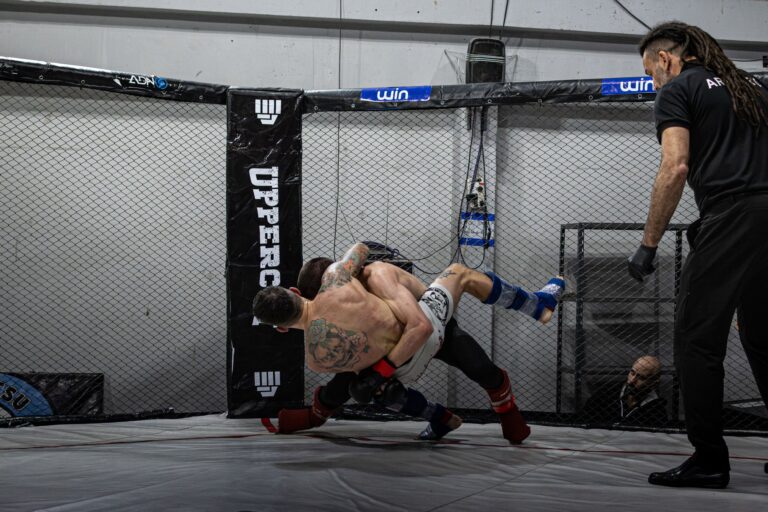
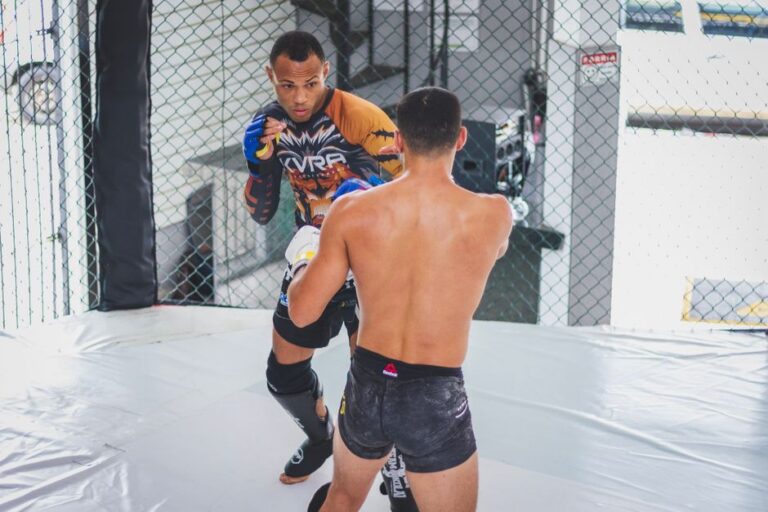
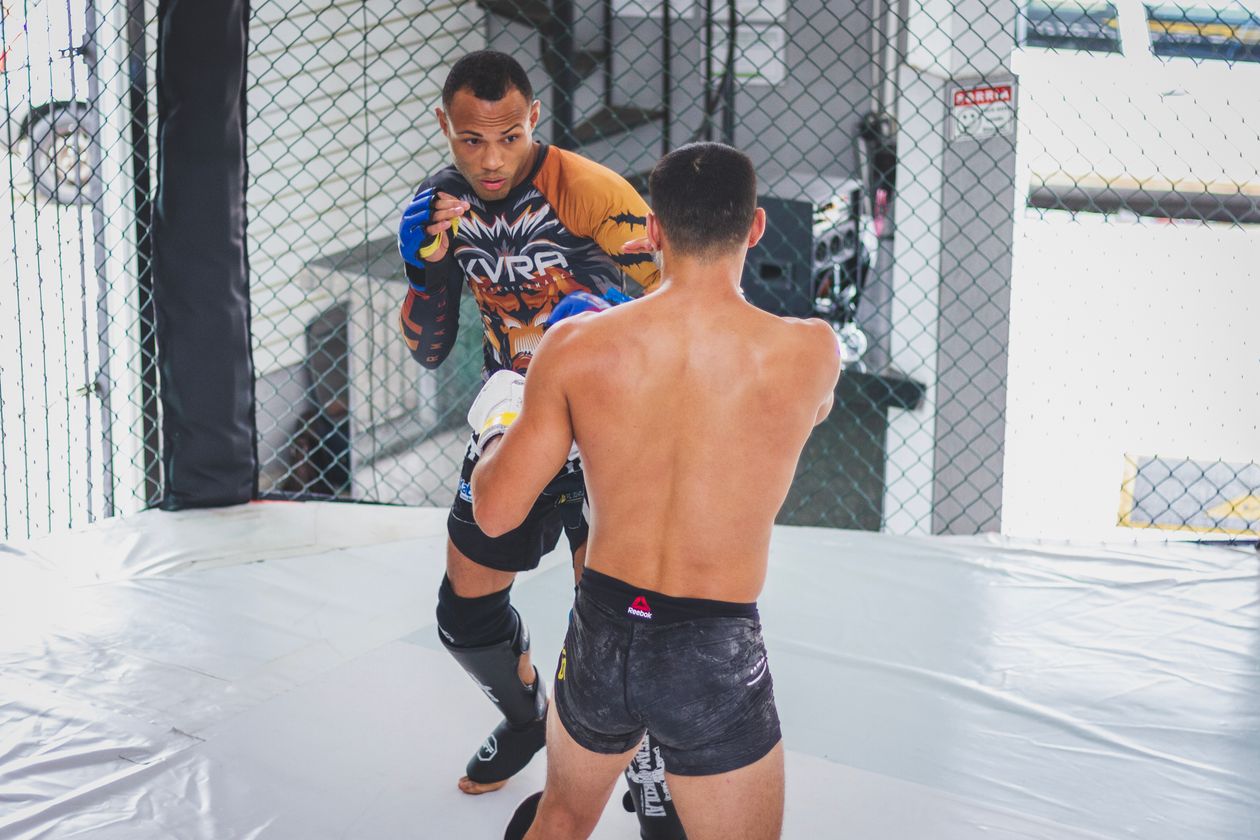
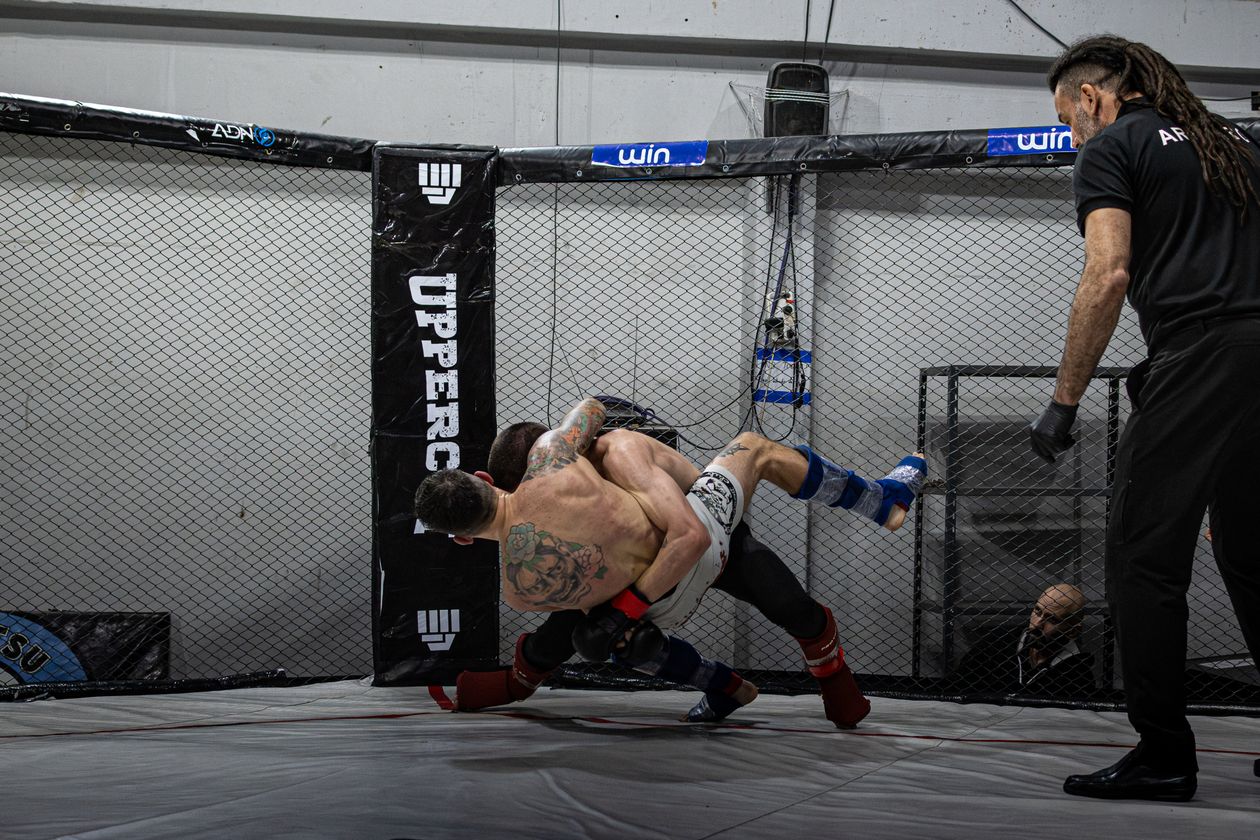
Umar Nurmagomedov takes the back and finishes with the rear-naked choke — 37% of his wins come by submission, and six of nine finishes are rear-naked chokes. His chain wrestling sequences are designed specifically to manufacture back exposure: arm drags, body lock transitions, and relentless cage pressure that forces opponents into turtle position or off-balance scrambles where back takes become available.
The mechanics are precise. Umar doesn’t rush the back take — he controls the position, moves his hips to maintain the body triangle or leg hooks, and hunts the choke only when he has full control. He rarely gifts reversals because he doesn’t expose himself in transition the way flashier grapplers do.
His wrestling base also means his takedown entries are multiple. He’ll use level changes off feints, body lock trips against the fence, and foot sweeps from clinch ties. Opponents rarely see a single-leg or double-leg coming because he disguises the entry so well under striking exchanges.
Against Cory Sandhagen — one of the best defensive grapplers in the division — Umar controlled the fight for five rounds and won by unanimous decision. That’s a statement win for someone who scouts grappling as a weakness.
Umar’s Striking Game: The Part Most People Still Underestimate
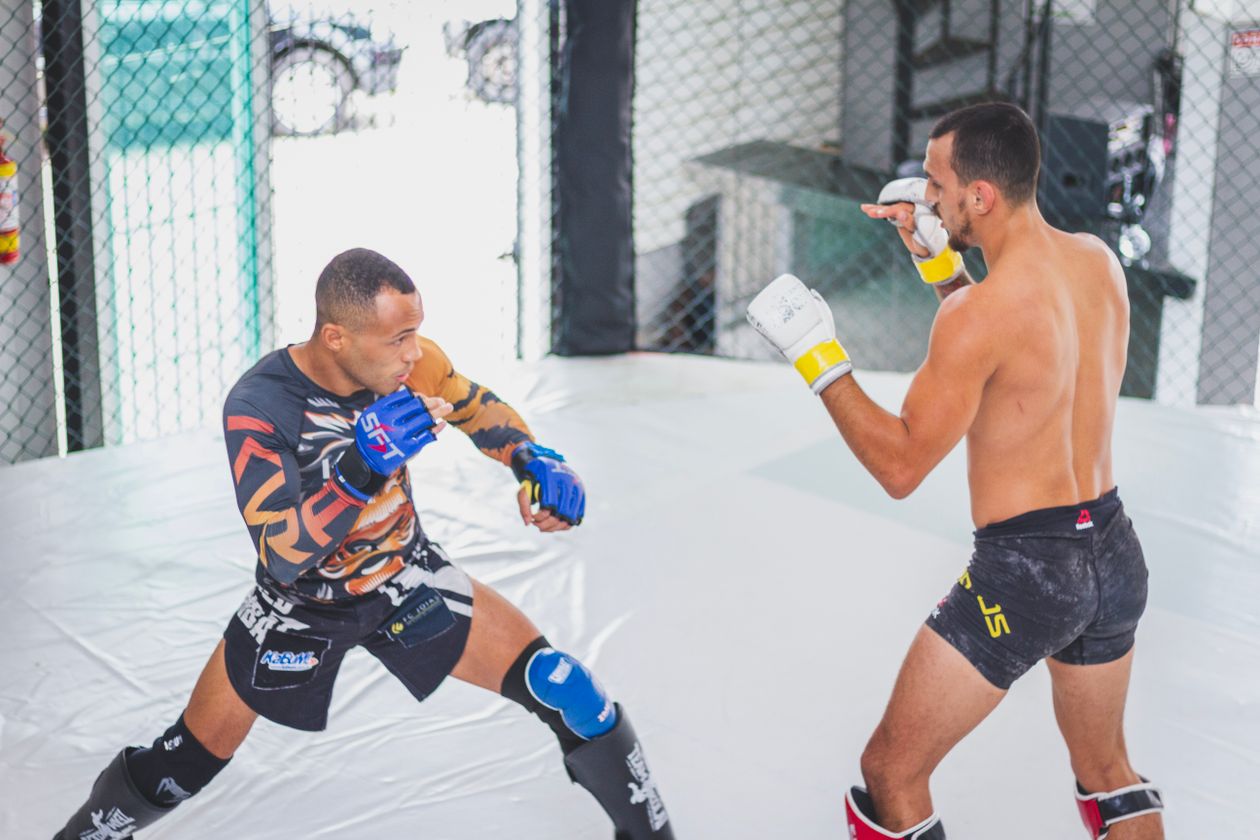
The southpaw stance, wide base, and upper body turned almost sideways — Umar’s striking looks unusual because it blends Muay Thai fundamentals with the karate-influenced positioning common in Dagestani combat sports. The practical effect is a fighter who is hard to hit cleanly while generating substantial power from unusual angles.
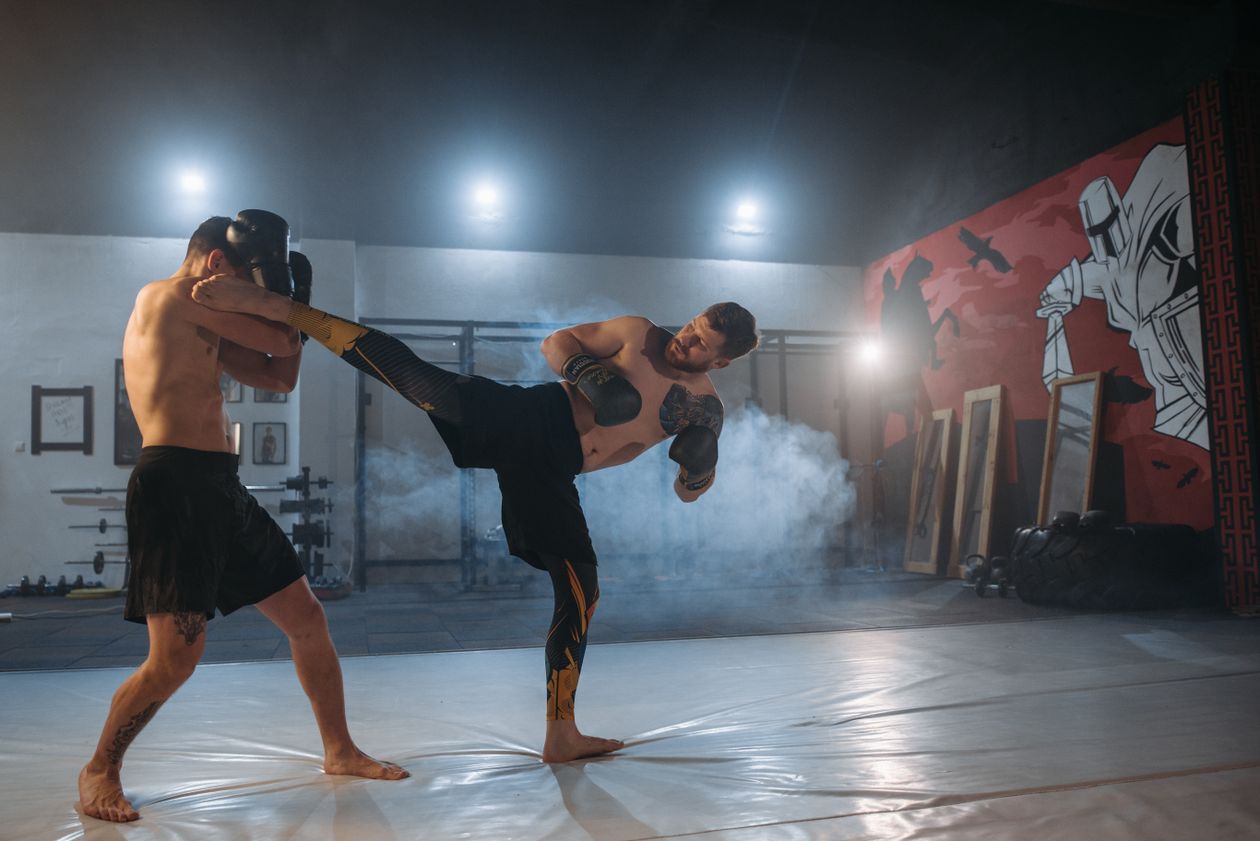
His signature strike is the question mark kick — a deceptive setup that reads as a leg kick before snapping upward to the head. It’s landed clean in the UFC and it works because opponents are conditioned to defend low after seeing the leg kick setup repeatedly. The question mark kick isn’t just a highlight reel shot; it creates distance, disrupts rhythm, and reminds anyone thinking of camping outside and using kicks that Umar can go upstairs too.
His boxing is clean enough to win striking exchanges, something that would have been unthinkable of a Dagestani grappler five years ago. He doesn’t fire wild combinations — he uses strikes primarily to set up grappling entries and to punish opponents who back up without defending. The striking is a complement to the grappling, not a replacement for it, and that balance is exactly what makes him so difficult to game-plan against.
How Umar Lost the Title Fight — and What It Revealed
The Merab Dvalishvili title fight in January 2025 is the one blemish on a record that otherwise reads like a highlight reel. Merab is a machine — the highest-pace fighter in bantamweight history, a specialist in making every opponent fight a war of attrition they aren’t built for. He beat Umar by out-working him over five rounds.
The loss matters because it shows where Umar’s ceiling is under extreme pressure: when someone matches his output level and adds 30% more volume on top, he can be outpointed. His pace isn’t the issue — his pace is elite — but Merab’s pace is something else entirely.
What the loss also showed: Umar competed at the highest level of the division in a five-round title fight, kept the fight competitive, and came away without getting finished. In his two fights since, he’s been sharper, more confident on the feet, and finishing opponents he used to just out-grind. The defeat to Merab clearly motivated refinement rather than just a return to the same playbook.
Song Yadong’s Problem: He Can’t Avoid the Grapple Forever
Song Yadong is China’s best male MMA contender and one of the more technically complete strikers at bantamweight. He submitted Deiveson Figueiredo in May 2026 in Macau and lost a close decision to Sean O’Malley at UFC 324. He can strike, he can submit people on the ground, and he fights in front of a home crowd at UFC Shanghai.
The problem: Song’s path to victory against Umar runs entirely through keeping the fight standing, and Umar’s path to victory runs through not letting that happen. Song is good enough on the ground to survive in scrambles, but he’s not a specialist against elite wrestling — the Figueiredo submission win was a submission against a fighter who was already being outworked, not a statement about Song’s ability to hold position against Dagestani wrestling.
For a full breakdown of this matchup’s title implications, see our UFC Shanghai preview where we break down the complete card.
Umar’s game plan writes itself: pressure Song to the fence, mix takedown threats with strikes to neutralize the counter opportunities, get to the body lock, take the back, finish. If Song can keep it standing and make it a kickboxing match for 15 minutes, he has a path. Song needs to be perfect. Umar just needs to be himself.
Building a Fighter Like Umar in TKO Tycoon
If you play TKO Tycoon, Umar Nurmagomedov represents one of the clearest fighter archetypes in the game: the elite grappler with credible striking who uses the ground game to control pace and position rather than just to finish. The strategic lesson from his career is that a complementary striking skill set multiplies grappling effectiveness — opponents who fear the question mark kick and the overhand left can’t focus entirely on stuffing takedowns.
In TKO Tycoon terms: don’t build your grappler as a one-dimensional specialist. A few invested points in striking creates the decision pressure that makes the grappling work. Umar’s career is a real-world proof point for that philosophy.
Frequently Asked Questions About Umar Nurmagomedov
What is Umar Nurmagomedov’s fighting style?
Umar Nurmagomedov is a Combat Sambo and Dagestani wrestling specialist who fights out of a southpaw stance. He’s best known for chain wrestling sequences that create back takes, finishing six of nine career stoppages by rear-naked choke. His striking has developed significantly and includes a southpaw boxing game and a question mark kick used as a head-level surprise.
Is Umar Nurmagomedov related to Khabib?
Yes — Umar is Khabib Nurmagomedov’s cousin and was trained by Khabib’s father Abdulmanap before his death in 2020. They share the same Dagestani wrestling and Combat Sambo foundation, though Umar has developed a more well-rounded striking game than Khabib had at a comparable stage of his career.
What is Umar Nurmagomedov’s UFC record?
As of August 2026, Umar Nurmagomedov’s UFC record is 8-1, with his only loss coming against Merab Dvalishvili in a UFC Bantamweight title fight in January 2025. His overall professional MMA record is 20-1. He’s on a two-fight win streak heading into UFC Shanghai vs. Song Yadong.
Who has Umar Nurmagomedov beaten in the UFC?
Umar’s notable UFC wins include five-round decision victories over Cory Sandhagen and Deiveson Figueiredo, a highlight finish of Mario Bautista at UFC 321 in October 2025, and earlier wins over Raoni Barcelos and Rani Yahya. The Sandhagen decision is considered his best win — Sandhagen is one of bantamweight’s elite defensive grapplers.
Ready to manage your own fighter stable? TKO Tycoon puts you in the corner — build fighters from scratch, develop their skills, and send them to the top of the rankings. Free to play in your browser.
References
- UFC.com — Umar Nurmagomedov official athlete profile
- Wikipedia — Umar Nurmagomedov career record and background
- The Fight Primer — Umar Nurmagomedov technique breakdown
- Bloody Elbow — UFC Shanghai preview and matchup analysis
Image credit: mmastalker.com